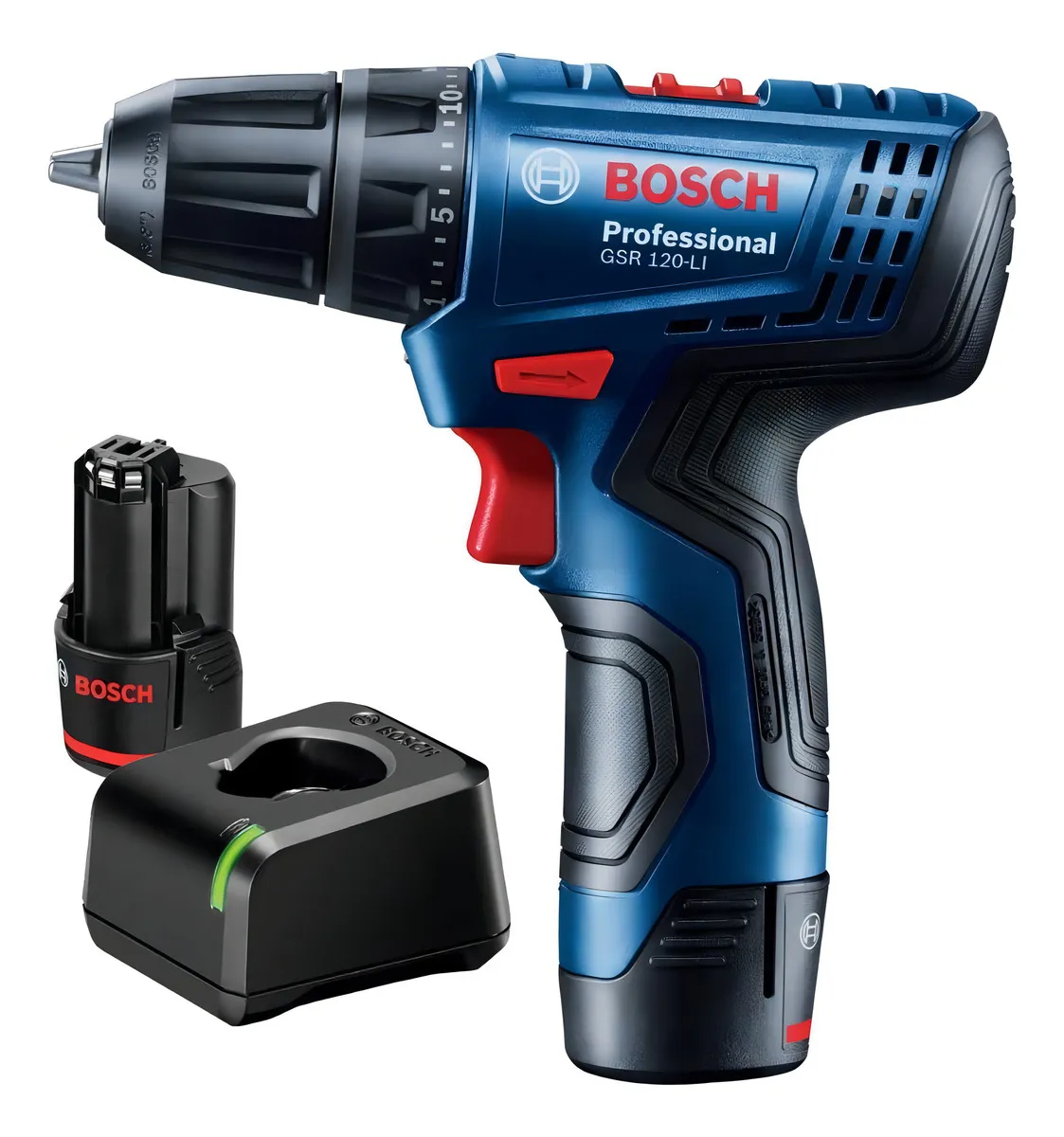
A compact cordless drill driver designed for furniture assembly, woodwork, light metal drilling and everyday maintenance tasks where control matters more than brute force.
The Bosch GSR 120-LI is worth considering if you want a lightweight 12V cordless drill driver for home projects, installation work, furniture assembly and professional light-duty use. It makes the most sense for users who value portability, torque control, Bosch Professional battery compatibility and a compact body. It is not the best choice for masonry drilling, heavy structural work or jobs that demand hammer impact.
The Bosch GSR 120-LI review starts with a simple question: do you need a compact tool for controlled screwdriving and light drilling, or do you need a heavier drill for aggressive construction work? This model clearly belongs to the first group.
Its strongest appeal is the balance between size, torque and practical usability. It is small enough for overhead work, cabinet assembly and tight corners, but still offers enough force for many common tasks in wood, steel, plastic and general maintenance.
Bosch GSR 120-LI in everyday use
The Bosch GSR 120-LI is a cordless drill driver from the Bosch Professional line. It works with a 12V lithium-ion battery system and is designed as a two-in-one tool for drilling and screwdriving.
This is not a hammer drill. That distinction is important because many buyers confuse a drill driver with a drill that can work efficiently in masonry. The GSR 120-LI is made for controlled rotation, not impact drilling.
For furniture assembly, shelves, hinges, brackets, wood panels, metal profiles and light workshop jobs, the format is very practical. The tool is compact, light and easier to control than larger cordless drills, especially when precision is more important than maximum power.
The technical profile is also well matched to this type of use. It offers two mechanical speed ranges, variable speed control, reverse function, torque adjustment and a 10 mm chuck. This means it can switch between slower, stronger screwdriving and faster drilling without feeling overly complicated.
The listed kit includes a 12V lithium-ion battery and a charger, which is enough to start using the tool without buying the basic power components separately. The listing also presents it with a cardboard box rather than a rigid carrying case, so storage expectations should be realistic.
The buying mistake: expecting a compact drill driver to behave like a hammer drill
The most common mistake with this category is looking only at the word “drill” and ignoring the type of drilling the tool is meant to do. The Bosch GSR 120-LI can drill, but it does not have hammer action.
That means it is suitable for wood, steel, plastic and similar materials when the correct bit is used. It is not the right tool if the main job is drilling concrete, brick walls or hard masonry on a regular basis.
This point matters because the tool can feel excellent in the right situation and disappointing in the wrong one. For installing cabinet handles, assembling furniture, drilling pilot holes in wood or tightening screws with control, it fits very well. For wall anchors in masonry, a hammer drill or rotary hammer is the safer decision.
The 12V format also needs to be understood correctly. It is not weak by default, but it is built around compactness and manageable power. If your work involves thick beams, large hole saws, dense hardwood or repeated heavy drilling, a stronger platform will make more sense.
For many users, that trade-off is exactly the advantage. A bigger tool may have more force, but it can also be heavier, more tiring and less precise for small fasteners. The GSR 120-LI is better when the task demands control rather than aggression.
Where the compact 12V format feels genuinely useful
The main benefit of the Bosch GSR 120-LI is how easy it is to handle. A lighter drill driver reduces fatigue when working above shoulder level, assembling furniture for a long period or moving around a job site with several small tasks.
The soft-grip handle helps with comfort and control. This matters more than it may seem, because screwdriving is often repetitive. When the tool sits securely in the hand, it is easier to avoid slipping, overdriving screws or damaging delicate surfaces.
The two-speed gearbox is another practical advantage. The lower speed range is better for screwdriving because it gives more control and torque. The higher speed range is better for drilling when the material and bit size are suitable.
The torque control system is especially useful for furniture, cabinetry and installation work. Instead of relying only on trigger feel, the user can adjust how much force is applied before the clutch slips. This helps protect screw heads, wood surfaces and fittings.
The LED light is a small feature, but it can be genuinely helpful. Inside cabinets, behind appliances, under counters or in darker corners, it improves visibility enough to make positioning easier.
The reverse function is also essential for daily use. It allows the tool to remove screws, back out stuck fasteners and correct positioning without switching to a manual screwdriver.
Battery compatibility is another strong point. The product belongs to the Bosch Professional 12V ecosystem, so it makes more sense for users who already own compatible Bosch 12V batteries or plan to build a compact tool set around the same platform.
What may disappoint in heavier work
The Bosch GSR 120-LI is not designed to replace a powerful 18V drill or a hammer drill. Its compact size is an advantage for portability, but it also defines the realistic limits of the tool.
The lack of hammer function is the first point to consider. If your routine includes drilling walls, concrete, masonry or hard brick, this model should not be your main tool. It can be part of a kit, but not the tool responsible for impact drilling.
The 10 mm chuck is suitable for many common drill bits and accessories, but it is not the choice for larger drilling accessories that require a bigger chuck or more torque. Users who work with larger bits should check accessory compatibility before buying.
The kit configuration is another point of attention. A single battery is enough for occasional tasks and many home projects, but users who work continuously may prefer having an extra battery ready. That avoids stopping the job while charging.
The cardboard box presentation is also less protective and less organized than a hard case. For someone who keeps the tool in a workshop drawer, that may not matter. For someone who carries tools between jobs, a case or separate organizer may be useful.
Another realistic limit is drilling speed in demanding materials. The tool can work in steel within its rated capacity, but proper bits, controlled pressure and patience are necessary. For frequent metal drilling, a more robust setup may be more comfortable.
Power, control and technical behavior
The Bosch GSR 120-LI uses a 12V lithium-ion battery and reaches up to 1,500 rpm in its higher speed setting. In the lower speed range, it runs from 0 to 400 rpm, which is better for controlled screwdriving and higher torque application.
The torque rating is 14 Nm for softer applications and 30 Nm for harder applications. In real use, this places the tool in a capable compact category. It is strong enough for common fastening tasks and light drilling, but still easy to manage.
The torque settings follow a 20+1 configuration. This gives the user multiple clutch positions for screwdriving plus a drilling mode. For beginners, this is useful because it reduces the chance of over-tightening. For experienced users, it makes repeatable work easier.
The chuck capacity goes up to 10 mm, which is standard for many compact drill drivers. It is suitable for common drilling and screwdriving accessories, provided the shank size fits the chuck.
In drilling capacity, the tool is positioned for up to 20 mm in wood and up to 10 mm in steel. These figures should be read as capacity references, not as a promise that every material will behave the same. Bit quality, material density and user technique still matter.
The tool weight without battery is listed at 0.8 kg. That is one of the reasons it works well for furniture assembly, electrical support tasks, cabinetry and maintenance work where a heavier drill becomes tiring.
The Electronic Cell Protection system is another practical feature. It helps protect the battery against conditions such as overload, overheating and deep discharge, supporting longer battery life when the tool is used correctly.
Noise and vibration are also relatively controlled for the category. This does not eliminate the need for eye protection, suitable bits and safe handling, but it helps make the tool more comfortable for routine jobs.
Best fit for the right kind of user
The Bosch GSR 120-LI makes the most sense for people who want a compact, reputable cordless drill driver for everyday tasks. It fits homeowners, DIY users, installers, furniture assemblers, maintenance workers and professionals who need a secondary compact tool.
It is especially attractive when the work involves screws, pilot holes and lighter drilling. Installing shelves in suitable materials, assembling flat-pack furniture, adjusting hinges, mounting brackets on wood and working on small repairs are all good examples.
The tool also suits users who prefer control over raw power. If you often work with smaller screws, visible finishes or furniture panels, the torque settings and compact body are more valuable than an oversized drill.
It can also be a good entry point into the Bosch Professional 12V system. For users who want a compact battery platform with future expansion potential, the battery compatibility adds long-term convenience.
For apartment use and indoor maintenance, the size is a major advantage. It is easier to store, easier to carry and less intimidating than larger tools, while still feeling more capable than a basic electric screwdriver.
Cases where another tool makes more sense
The Bosch GSR 120-LI is not the best match if masonry drilling is your main need. For concrete, brick and wall anchors, a hammer drill or rotary hammer is the more appropriate category.
It is also not ideal for users who expect one compact tool to handle every construction task. Heavy drilling, large-diameter holes, dense structural wood and long continuous work sessions may require more torque, a larger battery platform and a more robust body.
Users who work all day away from a charger should also think about battery setup. A single battery can be limiting in continuous professional use. In that case, a kit with an additional battery or a separate spare battery would be more practical.
If you need a hard case included, check the exact kit presentation before buying. Some Bosch variants come with different accessories, and the listing configuration matters. The model may be the same, but the package can change the experience.
It may also be excessive for someone who only needs to tighten a screw occasionally. For very rare and very light household use, a smaller electric screwdriver can be simpler. The GSR 120-LI becomes more attractive when you want a real drill driver, not just a powered screwdriver.
How it compares with other compact and full-size options
Compared with very basic cordless screwdrivers, the Bosch GSR 120-LI is more versatile. It offers a real chuck, two speeds, higher torque, drilling capability and better control for different materials. That makes it more useful for people who do more than assemble small items occasionally.
Compared with larger 18V drill drivers, it is lighter and easier to handle, but less suitable for heavy drilling. The larger platform wins in demanding work; the Bosch GSR 120-LI wins in portability, control and reduced fatigue.
Compared with hammer drill models, the biggest difference is impact capability. A hammer drill is more appropriate for masonry, while the GSR 120-LI is more comfortable for screwdriving and light drilling in non-masonry materials.
Compared with cheaper compact alternatives, the Bosch advantage is mainly the Professional ecosystem, ergonomic design, battery protection and the confidence of a well-known tool platform. The decision depends on whether you value long-term compatibility and refined handling.
For users choosing a first drill driver, the GSR 120-LI is a balanced option if the main tasks are indoor projects, light workshop jobs and routine maintenance. For users choosing only one tool for construction work, a stronger model may be the better primary choice.
The practical buying decision
The Bosch GSR 120-LI is a smart purchase when your priority is a compact cordless drill driver that feels controlled, practical and capable for everyday jobs. It is not trying to be the strongest tool in the category, and that is part of its appeal.
Its value is in the combination of low weight, useful torque, two-speed control, lithium-ion battery compatibility and Bosch Professional build positioning. It gives enough performance for many real tasks without becoming bulky.
The best buyer is someone who understands its role: screwdriving first, light drilling second, and masonry drilling not as its main purpose. Used that way, the tool fits very well.
The main reason to skip it is not poor quality, but wrong expectation. If your work demands impact drilling, large accessories or long heavy-duty sessions, choose a more powerful category from the start.
Is the Bosch GSR 120-LI good for home use?
Yes, the Bosch GSR 120-LI is very suitable for home use when the tasks involve furniture assembly, small repairs, pilot holes, shelves in suitable materials and general maintenance. It is compact enough for indoor work and easier to control than larger drills. It is not the right choice if most home tasks involve drilling concrete or masonry.
Can the Bosch GSR 120-LI drill into walls?
No, it is not the ideal tool for drilling into masonry walls because it does not have hammer function. It can drill materials such as wood, plastic and steel within its capacity, but wall drilling usually requires impact action. For concrete, brick or hard masonry, a hammer drill or rotary hammer is the better choice.
Is the Bosch GSR 120-LI powerful enough for professional work?
Yes, it can be useful for professional light-duty work, especially for installers, maintenance tasks, cabinetry, furniture assembly and controlled screwdriving. It is not meant to replace heavier 18V tools on demanding jobs. Professionals will get the best result when using it as a compact, precise tool rather than a heavy construction drill.
What materials can the Bosch GSR 120-LI drill?
It can drill wood, steel, plastic and similar materials when used with the correct bit and within its rated capacity. The tool is listed for up to 20 mm in wood and up to 10 mm in steel. Material hardness, bit quality and drilling technique will affect the actual performance.
Does the Bosch GSR 120-LI include battery and charger?
Yes, the listed configuration includes a 12V lithium-ion battery and a compatible charger. This makes it ready for basic use without buying the power components separately. Buyers should still check the exact kit configuration because Bosch tools can appear in different packages with different accessories.
Is one battery enough for this drill driver?
Yes, one battery is enough for occasional use, home maintenance and shorter jobs. For continuous work, an extra battery is more convenient because it reduces downtime while charging. Users who plan to work professionally or for long sessions should consider whether a second battery fits their routine better.
What is the main advantage of the Bosch GSR 120-LI?
The main advantage is the balance between compact size and practical performance. It offers good control for screwdriving, enough capacity for light drilling and a comfortable body for repeated use. It is especially useful when a larger drill would be tiring or too bulky for the task.
Who should avoid the Bosch GSR 120-LI?
Users who mainly drill masonry, concrete or thick structural materials should avoid relying on this model as their main tool. It is also not the best choice for large accessories or heavy continuous drilling. In those cases, a hammer drill, rotary hammer or stronger cordless platform will be more appropriate.
The Bosch GSR 120-LI is a strong choice for buyers who want a compact cordless drill driver with real usefulness for everyday work. It is easy to handle, flexible enough for common materials and well suited to controlled screwdriving.
It earns its place when used for the tasks it was designed to handle: furniture, woodwork, maintenance, installations and light drilling. It becomes less convincing only when the buyer expects masonry performance or heavy-duty construction power.
For the right user, the decision is clear. Choose it for compact control, Bosch Professional battery compatibility and practical versatility. Choose something stronger if impact drilling, long heavy sessions or larger drilling accessories are part of your routine.