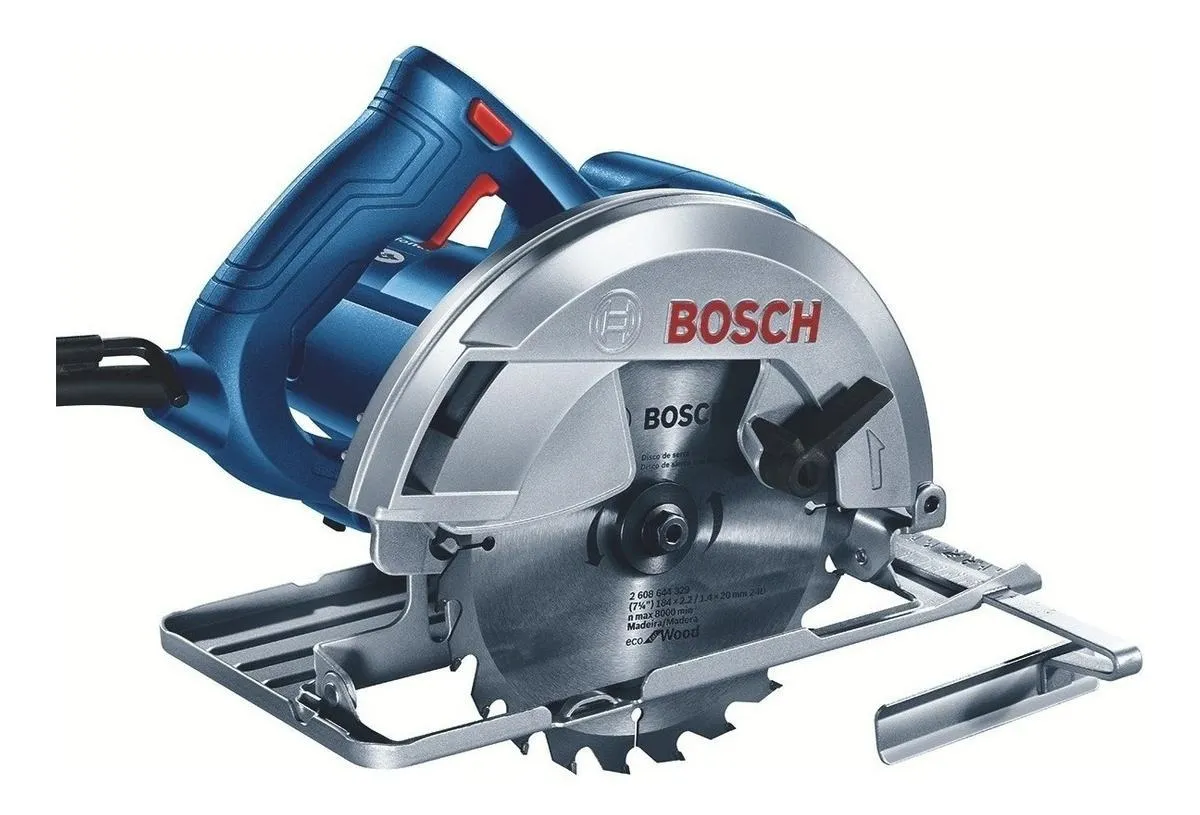
The Bosch GKS 150 is a corded circular saw aimed at buyers who want solid cutting power, useful depth capacity, and Bosch Professional durability without stepping into a more specialized or bulkier class of saw.
If you want a straightforward corded circular saw for wood cutting, repeated jobsite use, and dependable straight cuts, the Bosch GKS 150 makes sense. It is especially easy to justify for users who care more about power, control, and practical depth capacity than rail compatibility or furniture-grade finish quality straight out of the box.
It is a weaker fit if you specifically want a compact trim saw, a cordless platform tool, or a model designed to work with a guide rail system. In those cases, this saw can feel more basic than limiting, but it is still basic.
The reason many people hesitate before buying a circular saw like this is simple: the numbers look strong, but numbers alone do not tell you how the tool behaves on real work. A saw can have enough power on paper and still disappoint if the handling feels awkward, the cut line is hard to follow, or the included setup does not match the kind of work you actually do.
That is where the Bosch GKS 150 stands out. It is not trying to be everything at once. This is a full-size corded circular saw built for wood cutting, with a 1500 W motor, a 184 mm blade, 6,000 rpm no-load speed, and cutting depth figures that are strong enough for common framing, panel, and site work. The appeal is not novelty. The appeal is that it covers the core jobs most users really need from a corded saw and does so in a familiar, work-ready format.
What the Bosch GKS 150 is really built for
The Bosch GKS 150 is best understood as a practical site saw for straight wood cuts rather than a niche precision tool. Bosch positions it as an accessible but dependable Professional model, and that description fits the product well. It gives you a serious motor, a full-size blade, and a conventional layout that experienced users will recognize immediately.
That matters because many buyers do not actually need advanced electronics, plunge mechanisms, or track-saw refinement. What they need is a circular saw that can rip boards, break down sheets, crosscut timber, and keep doing that work consistently. In that context, the GKS 150 looks well judged. Its max cut depth of 64 mm at 90° and 45 mm at 45° puts it in a useful range for common wood tasks, while the 3.7 kg weight keeps it substantial without pushing into unnecessarily heavy territory.
The included package also makes the tool feel honest. Bosch lists a parallel guide, a 24-tooth Eco for Wood blade, a hex key, and a box in the standard variant. That is not a flashy bundle, but it covers what most buyers need to start working without making the product feel padded by extras that do not improve the cut.
The mistake that leads to the wrong kind of circular saw
The biggest buying mistake in this category is choosing by wattage alone. More power helps, but the real question is whether the saw matches your workflow. With the GKS 150, the right buyer is someone who wants a traditional corded circular saw experience: stable stance, straightforward controls, and enough capacity for regular wood cutting.
The wrong buyer is often the person who secretly wants a different tool type. If your work depends on guided sheet breakdown, cabinet-level finish expectations, or ultra-tight interior work where a smaller body matters more than raw cutting depth, this model can feel like the wrong answer even though nothing is wrong with the saw itself.
One detail makes that distinction especially important: Bosch says the GKS 150 is not compatible with a guide rail. That alone removes one common reason people upgrade from an entry-level or general-purpose circular saw. If you already know you want rail-based precision, buying this model and trying to force it into that role will create frustration that has more to do with fit than with quality.
Why it feels capable in everyday cutting
The first practical advantage is the balance between blade size, motor output, and speed. A 1500 W corded saw spinning a 184 mm blade at 6,000 rpm gives you a setup that feels ready for repetitive cutting without the hesitation that smaller or lighter-duty tools sometimes show in thicker stock. This does not automatically make every cut cleaner, but it does make the saw feel more confident when the material asks for steady progress rather than delicate finesse.
The second advantage is usable depth. A lot of buyers care less about the motor spec than about one simple question: will this cut through the stock they work with most often in one pass? On that front, the GKS 150 answers well for typical jobsite lumber and many wood-based boards. You are not buying an oversized specialist, but you are getting capacity that covers a broad slice of practical work.
The third advantage is control. Bosch highlights a visible cutting sight on the base plate and a robust auxiliary handle for better stability. Those details matter more than marketing language suggests. On a circular saw, confidence comes from being able to track the line, keep both hands settled, and let the tool move with less correction. Even moderate improvements there can matter more than adding a little more power.
There is also a durability angle. Bosch describes the design as compact, robust, ergonomic, and built with durable materials. That does not mean indestructible, but it does signal the intent of the tool. This is not a lifestyle purchase or a one-project novelty. It is clearly aimed at users who expect regular use and want a saw that feels like part of a working kit.
Where expectations should stay realistic
The most important limitation is that the GKS 150 is still a general-purpose corded circular saw. It is not a substitute for a track saw, and it is not the ideal tool for buyers whose main goal is finish-ready edges with minimal tear-out. The included 24-tooth blade tells you a lot about the default setup. Out of the box, the saw leans toward practical cutting speed and general wood work rather than refined finish quality.
That does not mean the cuts must be rough. It means blade choice will shape your result more than buyers sometimes expect. If your work involves visible plywood edges, melamine-faced boards, or cleaner trim-focused results, the saw may still suit you, but the included blade should not be treated as the final word on what the tool can deliver.
Mobility is another obvious trade-off. Because this is a corded model, it rewards stable, repetitive work more than fast movement between scattered cut locations. Some buyers prefer that because there is no battery management and no runtime anxiety. Others will feel constrained immediately. That difference is not small. It changes how the tool fits your day.
The body size can also work against some users. A full-size 184 mm circular saw has real advantages in depth and confidence, but it is less natural for people who mostly make short, light cuts on benches or need a more compact machine for overhead or awkward-position work. If that is your routine, this saw can feel bigger than necessary.
The specs that actually matter before you buy
On paper, the Bosch GKS 150 gives you a clean set of numbers that are easy to interpret in real use:
- Motor power: 1500 W
- Blade diameter: 184 mm
- No-load speed: 6,000 rpm
- Arbor size: 20 mm
- Max cutting depth at 90°: 64 mm
- Max cutting depth at 45°: 45 mm
- Weight: 3.7 kg
- Base plate dimensions: 290 x 150 mm
- Guide rail compatibility: no
- Included standard accessories: parallel guide, 24-tooth blade, hex key, box
Each of those numbers points to the same conclusion. This is a conventional, full-size wood-cutting saw that prioritizes job-ready performance over feature layering. The weight is substantial enough to help the tool settle into a cut, but still reasonable for a saw in this class. The blade size and cut depth combination give it real utility, especially for users who want a single corded saw to handle the majority of their wood-cutting jobs.
The spindle lock is another practical touch. It will not decide the purchase on its own, but it does make blade changes more straightforward. Over time, that matters more than it seems, especially for users who regularly swap blades to suit different materials or finish expectations.
There is also a detail that often gets overlooked: Bosch reports that the tool is not compatible with a guide rail. Buyers who already know that rail-guided sheet accuracy is central to their work should treat that as a major buying filter, not a minor footnote.
Who will get the most out of this saw
The Bosch GKS 150 makes the most sense for users who want a dependable corded saw for regular wood work and who value simplicity. That can include tradespeople, site crews, workshop users who prefer mains-powered tools, and serious DIY buyers who want something sturdier than a light occasional-use saw.
- Users who cut dimensional lumber and sheet goods regularly
- Buyers who prefer corded consistency over battery management
- People who want strong depth capacity without moving into a larger specialist saw
- Anyone who values a familiar two-hand circular saw layout with practical control
- Buyers who want Bosch Professional build quality in a more accessible format
It is also a sensible option for the user who wants one main circular saw rather than several overlapping tools. If your work is centered on straight cuts in wood and you do not need a rail system, the GKS 150 covers that role with less complication than many buyers expect.
Who may be happier with a different setup
This saw is harder to recommend for buyers whose work is primarily finish-sensitive, highly mobile, or space-constrained. Those users are not wrong to want something else. They simply need a tool tuned to a different kind of job.
- Users who want guide rail compatibility for repeat precision on large panels
- People who prioritize cordless freedom above all else
- Buyers focused on ultra-clean finish cuts straight from the included blade
- Users who mainly need a smaller, lighter saw for occasional quick trimming
- Anyone expecting one tool to replace both a site saw and a precision sheet-cutting system
If that sounds like your workflow, the GKS 150 can still look attractive on paper, but it is likely to feel like a compromise in practice. The better decision is to buy for the job you really do, not for the idea of versatility.
How the GKS 150 compares with other circular saw choices
Against smaller cordless saws, the Bosch GKS 150 usually wins on sustained cutting confidence, depth capacity, and the simple advantage of continuous corded power. That makes it more appealing for repeated heavy use, thicker stock, and buyers who do not want runtime to shape their workday.
Against more compact corded saws, it feels more like a primary tool than a backup. The 184 mm blade and 64 mm depth capacity give it room to handle common wood tasks with fewer compromises. You gain range and presence, though you also accept a larger body and a more traditional working feel.
Against track-compatible or precision-focused saws, the picture changes. The GKS 150 becomes the more straightforward, less specialized option. It is usually the better fit for users who want familiar jobsite simplicity. It is the weaker fit for users who care most about guided panel accuracy, cabinetry workflow, or system-style cutting.
Against heavier-duty premium corded saws, the Bosch holds up well if your priority is practical coverage rather than feature intensity. You may give up some refinement, accessories, or specialization, but you keep the essential formula intact: enough power, enough depth, reasonable weight, and Bosch Professional positioning.
Should the Bosch GKS 150 earn a place in your kit?
The strongest case for the Bosch GKS 150 is not that it does something unusual. The strongest case is that it gets the fundamentals right for the buyer who wants a no-nonsense wood-cutting saw. The motor output is serious, the cut depth is useful, the handling details are purposeful, and the overall package feels grounded in real work rather than marketing decoration.
The main caution is equally clear. Do not buy it for a role it was not built to fill. If you expect rail-based precision, hyper-portable convenience, or a finish-first out-of-box blade setup, you will end up judging the tool against a different category. That is where many disappointing tool reviews really begin.
Viewed on its own terms, the Bosch GKS 150 is easy to respect. It is a sensible circular saw for wood cutting, especially for buyers who want corded reliability, solid depth capacity, and Bosch Professional credibility without chasing a more complex system.
Is the Bosch GKS 150 good for professional use?
Yes, for the right kind of professional work it is. Bosch places it in the Professional line, and the spec set supports regular wood-cutting tasks on site or in a workshop. It makes the most sense for users who want a dependable general-purpose corded saw, not a rail-based precision system or a specialist finish tool.
Can the Bosch GKS 150 cut hardwood?
Yes, it can handle hardwood cutting within the limits of blade choice and feed technique. The 1500 W motor and 184 mm blade give it the kind of foundation that suits tougher wood work. Cleaner results and easier progress will depend heavily on using a blade matched to the material, not only on the saw itself.
Will it cut common construction lumber in one pass?
Yes, that is one of the reasons this model is attractive. With a maximum cutting depth of 64 mm at 90°, it covers a broad range of common lumber tasks without forcing unnecessary workarounds. That makes it more practical than smaller saws when you want one main corded tool for everyday jobsite cutting.
Is the included blade enough for plywood and sheet goods?
Yes, it is enough to get started, but it should not be treated as the final setup for every sheet material. The included 24-tooth blade favors general cutting speed more than refined edge quality. For cleaner plywood or panel results, many users will want a blade that is better suited to finish-sensitive work.
Does the Bosch GKS 150 work with a guide rail?
No, Bosch says this model is not compatible with a guide rail. That is a key buying filter rather than a minor detail. If guided straightness on large panels is central to your workflow, you should treat that limitation seriously before buying, because it affects the entire way the tool fits your work.
Is the Bosch GKS 150 easy for beginners to control?
Yes, relatively speaking it should feel approachable for a full-size saw. Bosch highlights the visible cutting sight and the robust auxiliary handle, both of which support stable two-hand use. That said, it is still a serious corded circular saw, so comfort will improve a lot with correct setup, blade choice, and safe technique.
Is this a better choice than a cordless circular saw?
Yes, if your priority is continuous cutting power and predictable all-day use. A cordless model can be more convenient on scattered jobs, but the GKS 150 makes more sense when you want corded consistency and do not want battery runtime to shape your work. The better choice depends more on workflow than on trend.
If your goal is to buy a circular saw that feels honest, capable, and ready for repeated wood cutting, the Bosch GKS 150 is a strong candidate. It does not hide what it is. It gives you a solid motor, practical depth, dependable handling cues, and a format that fits real work.
For buyers who want a reliable full-size corded saw and are comfortable choosing the right blade for the job, this model is easy to recommend. For buyers chasing rail precision or maximum portability, it is better to keep looking. That clarity is exactly why the GKS 150 remains a relevant option.