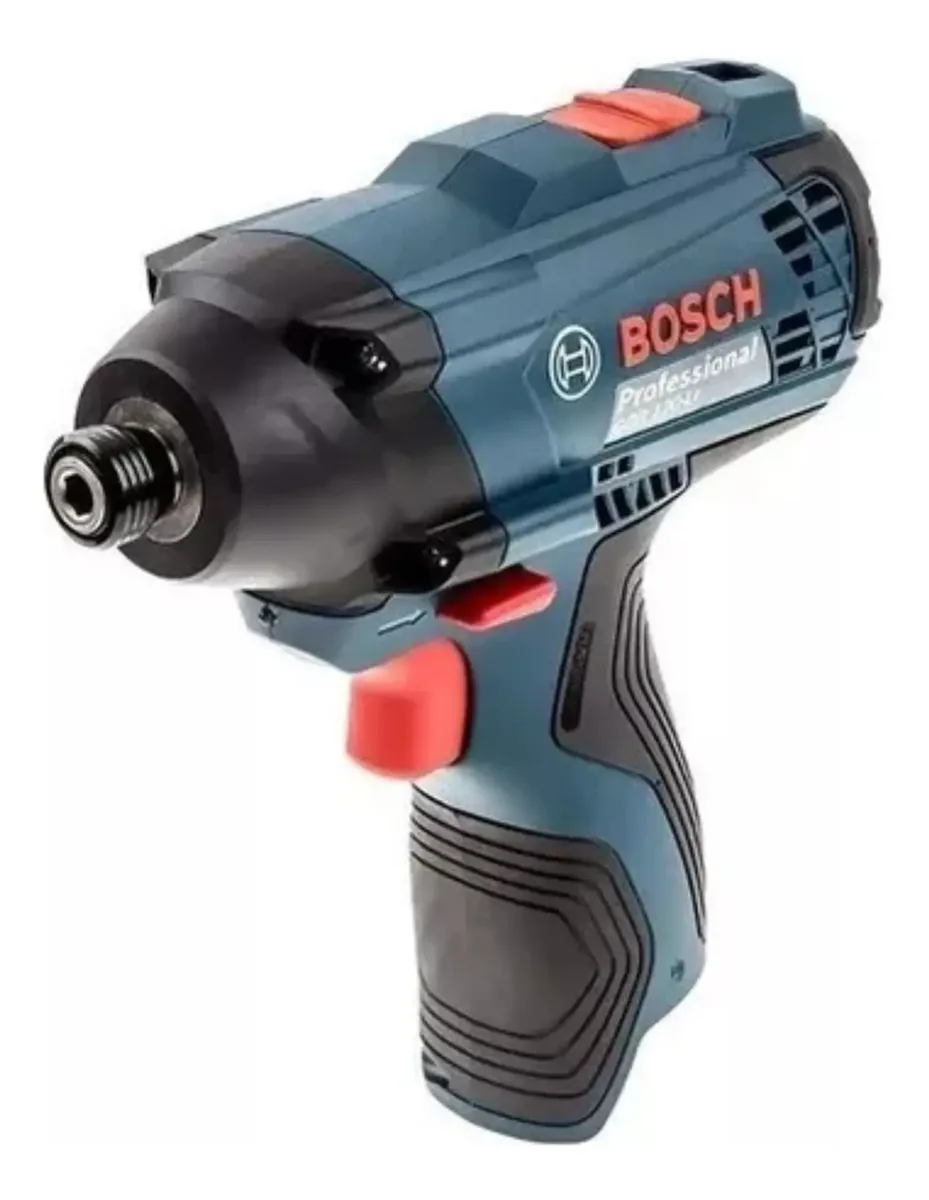
A practical look at the Bosch GDR 12-LI for users who need compact impact power for screwdriving, assembly and maintenance tasks without moving into a larger tool platform.
The Bosch GDR 12-LI makes sense for buyers who already use Bosch Professional 12V batteries or want a compact impact driver for frequent screwdriving in wood, metal fittings, furniture assembly, brackets and light professional maintenance. It is not the best choice if you expect the brute force of a full-size 18V impact driver, or if you do not already have a compatible battery and charger and want a complete ready-to-use kit.
The Bosch GDR 12-LI is the kind of tool that looks simple at first, but can make a big difference in daily work when chosen for the right job. Its appeal is not only power; it is the combination of compact size, impact mechanism, quick bit changes and easier handling in tight spaces.
The key point is understanding what this tool is built to do. It is an impact driver, not a standard drill driver and not a heavy impact wrench. That distinction matters because it affects comfort, control, fastening strength, accessory choice and the type of work where the tool feels genuinely useful.
A compact Bosch impact driver for screwdriving jobs
The Bosch GDR 12-LI is designed for fastening applications where a regular drill driver can feel slow, bulky or strained. It uses an impact mechanism to deliver rotational force in pulses, helping drive screws with less constant wrist effort from the user.
This makes it especially useful for repetitive screwdriving. Cabinet installation, furniture assembly, light framing, metal brackets, hinges, shelves, profiles and maintenance tasks are the kind of jobs where a compact impact driver can feel faster and more comfortable than a conventional cordless drill.
The tool belongs to Bosch’s compact professional 12V class, so the main advantage is maneuverability rather than maximum brute power. A smaller body is easier to use above shoulder height, inside cabinets, around corners and in spaces where a larger 18V tool may feel excessive.
For many users, the best reason to choose this model is the balance between size and fastening force. It can handle a broad range of everyday screwdriving tasks while staying easier to carry, store and control than heavier tools.
The version identified as being sold without battery and charger deserves special attention. For users who already own compatible Bosch Professional 12V batteries and a charger, this can be a clean way to add an impact driver to the kit. For a first-time buyer, however, it means the tool alone is not enough to start working.
Battery and charger compatibility is the detail to check first
The biggest mistake with this type of purchase is focusing only on the tool body and forgetting the battery platform. A cordless impact driver depends entirely on battery compatibility, charger availability and the condition of the batteries used with it.
If you already have Bosch Professional 12V batteries, the Bosch GDR 12-LI becomes much more attractive. It can fit naturally into an existing setup, reducing clutter and making it easier to rotate batteries between tools.
If you do not have compatible batteries, the buying decision changes. You need to consider the complete system, not only the tool body. A battery and charger are essential, and buying them separately can change the practical appeal of the product.
It is also important to distinguish Bosch Professional 12V batteries from unrelated battery systems. Similar voltage numbers do not automatically mean compatibility. Before buying, the safest path is to confirm the exact battery format accepted by the tool and match it with the charger you intend to use.
This matters even more when product names look similar. Bosch has offered compact impact drivers with names that can appear close to one another, including models in the GDR 12V and GDR 120-LI families. The safest decision is to check the exact model reference and what is included in the box before purchase.
What the impact mechanism changes in real work
An impact driver is built to drive screws with quick rotational impacts. Instead of relying only on smooth continuous rotation, it adds repeated striking force through the drive system. This helps when screws become harder to turn, especially in denser materials or longer fastening jobs.
The result is a tool that can feel more confident than a standard drill driver when used for fastening. It reduces the sensation that the tool is fighting the screw, and it can make repetitive work feel less tiring.
Another practical advantage is compactness. Because the impact mechanism delivers force differently, the tool can remain small while still offering strong fastening performance for its size class. This is one of the main reasons impact drivers are popular among installers, carpenters, maintenance workers and serious DIY users.
The bit holder is another part of the appeal. A quarter-inch hex holder is designed for quick bit changes and works well with impact-rated screwdriver bits and compatible accessories. For users who often switch between screw types, this is faster than dealing with a traditional drill chuck.
The trade-off is that impact drivers are not as delicate as drill drivers for every task. They can be louder, more aggressive and less ideal for very fragile materials unless the user has good trigger control and uses the correct bit.
Where the 12V format can hold you back
The Bosch GDR 12-LI is compact by design, and that is both its strength and its natural boundary. It is a smart choice for many fastening jobs, but it should not be treated as a substitute for a heavy-duty 18V impact driver.
If your work involves large structural screws, demanding construction tasks, frequent heavy fastening into dense material or long sessions where maximum torque is required, a larger platform may be more appropriate. The 12V class is about portability, access and control, not replacing every heavier tool in the workshop.
Another point to consider is drilling. Although impact drivers can be used with certain hex-shank drill bits, they are not the same as a dedicated drill driver. For clean drilling, controlled holes and general drilling versatility, a drill driver remains the more complete tool.
The Bosch GDR 12-LI also requires compatible impact-rated bits for the best experience. Standard low-quality bits can wear quickly under impact force, especially when driving harder screws. A good impact driver performs much better when paired with proper accessories.
Noise is another practical detail. Impact drivers are usually louder than standard drill drivers during demanding fastening. That may not matter on a jobsite, but it can be noticeable in apartments, indoor assembly or work done late in the day.
Torque, speed control and bit holder in real work
The Bosch GDR 12-LI sits in the compact impact driver category, with a 12V battery platform and a quarter-inch hex tool holder. Depending on the exact model version, Bosch’s compact GDR line is associated with strong torque for its size and speed levels that help adapt the tool to different fastening tasks.
In practice, torque is not only about a large number on a specification sheet. What matters is how controllable the tool feels when starting a screw, how well it continues under resistance and whether it allows the user to stop before damaging the material or fastener.
For smaller screws, control matters more than raw power. A compact impact driver can still overdrive fasteners if the user is not attentive. Good trigger discipline and the right bit are essential when working with softer wood, thin profiles, furniture boards or delicate hardware.
For medium-duty fastening, the impact mechanism becomes more valuable. It helps maintain momentum when resistance increases, reducing the need to push aggressively. That can improve comfort and reduce wrist strain during repetitive assembly.
The quarter-inch hex holder is best suited to screwdriver bits, nut setters and compatible hex accessories. It is not meant to replace a traditional chuck for every drilling task. This makes the tool excellent for fastening-focused users, but less universal for someone who wants a single tool for all drilling and screwdriving needs.
The compact body also matters for precision. In confined areas, a smaller tool often allows a straighter angle and better visibility. That can be more useful than extra power when installing hinges, drawer slides, supports, electrical boxes, wall brackets or assembled panels.
The buyer profile that gets the most from this Bosch
The Bosch GDR 12-LI makes the most sense for users who already understand the value of a dedicated fastening tool. It is especially appealing for people who drive screws often and want something faster and easier to handle than a traditional drill driver.
Installers can benefit from the compact body when working inside cabinets, around furniture, in corners and above shoulder height. The lower weight and smaller format can reduce fatigue during a full day of light to medium fastening.
DIY users can also get good value from it if they frequently assemble furniture, install shelves, repair fixtures or handle small renovation projects. It feels more purposeful than a basic cordless screwdriver while remaining easier to manage than a large jobsite impact driver.
It is also a good addition for users who already have a Bosch Professional 12V setup. In that case, the bare-tool version can be a practical way to expand the kit without adding another charger or incompatible battery family.
The tool also suits users who care about storage and portability. A compact impact driver is easy to keep in a toolbox, service bag or small workshop space. For mobile maintenance work, that can be a major advantage.
When a larger tool is the safer choice
This Bosch is not the best match for users who mainly work with heavy structural fastening. If the job regularly involves large lag screws, thick beams, demanding metal fastening or high-resistance construction work, a stronger 18V impact driver is usually the better direction.
It may also disappoint someone expecting one cordless tool to cover drilling, delicate screwdriving and heavy fastening equally well. The Bosch GDR 12-LI is more specialized. It shines when driving fasteners, but it is not the most versatile option for users who need a drill chuck and broad drilling compatibility.
First-time buyers should also think carefully if they do not already own compatible batteries and a charger. A tool sold without those accessories is not ready to use by itself. That does not make it a bad purchase, but it changes the real setup required.
For users working mainly on fragile furniture boards, small electronics, very thin materials or finish work where every screw needs delicate control, a drill driver with clutch settings may feel safer. Impact drivers can be controlled, but they require more attention from the user.
Finally, if low noise is a priority, a standard cordless drill driver may be more comfortable indoors. The impact mechanism is effective, but it is naturally louder when the tool starts striking under load.
How it compares with drill drivers and 18V impact drivers
Compared with a standard cordless drill driver, the Bosch GDR 12-LI is more fastening-focused. It is usually faster and more confident for driving screws, especially where resistance increases. The impact mechanism helps the tool keep turning without requiring as much pushing force from the user.
A drill driver, however, remains more versatile for drilling and delicate screw control. Its clutch settings make it easier to avoid overdriving screws in soft materials. If you only want one tool for general home use, a drill driver may be the simpler first choice.
Compared with larger 18V impact drivers, the Bosch GDR 12-LI is easier to handle but less suited to demanding jobs. The 18V class is stronger for heavy construction, larger fasteners and longer high-load sessions. The Bosch 12V approach is better when access, weight and everyday convenience matter more.
Compared with basic cordless screwdrivers, the Bosch feels more capable and professional. Compact screwdrivers are convenient for very light tasks, but they usually cannot match the fastening confidence of an impact driver. For repeated assembly or maintenance, the difference can be significant.
The most strategic way to view this product is as a second tool in a practical setup. A drill driver can handle drilling and controlled screwdriving, while the Bosch GDR 12-LI takes over repetitive fastening and tougher screwdriving jobs. Together, that combination is more efficient than forcing one tool to do everything.
A clear purchase decision for the Bosch GDR 12-LI
The Bosch GDR 12-LI is a strong choice when the buyer wants a compact, professional-style impact driver for screwdriving rather than a universal drill. It is particularly convincing for users who already own compatible Bosch Professional 12V batteries.
Its strongest practical qualities are compact handling, fastening confidence, quick bit changes and usefulness in tight work areas. These advantages matter more in daily use than simply chasing the largest possible torque figure.
The purchase is less convincing if you need a complete kit and the selected version comes as a bare tool. It is also less ideal if your work regularly demands the strength of an 18V impact driver or the precision clutch of a drill driver.
For the right user, though, this Bosch can become one of the most frequently used tools in the kit. It is easy to grab, easy to position and useful for the kind of fastening jobs that appear constantly in home projects, workshops and maintenance routines.
Is the Bosch GDR 12-LI good for home use?
Yes, it is a good choice for home users who frequently assemble furniture, install shelves, repair fixtures or drive screws into wood and light metal fittings. It is more capable than a basic cordless screwdriver, but still compact enough for indoor projects. For occasional delicate work only, a drill driver may feel easier to control.
Does the Bosch GDR 12-LI come ready to use?
No, not if the selected version is sold without battery and charger. In that case, the tool body alone needs a compatible Bosch Professional 12V battery and the correct charger before it can be used. This version makes the most sense for buyers who already own the same battery platform.
Can the Bosch GDR 12-LI drill holes?
Yes, it can drill with compatible hex-shank bits, but that is not its main purpose. It is designed primarily for fastening with impact-rated screwdriver bits and related accessories. For clean, controlled drilling in different materials, a dedicated drill driver is usually the better and more versatile tool.
Is an impact driver better than a drill driver?
Yes, for many screwdriving tasks, an impact driver can be faster and more comfortable because it delivers rotational impacts under resistance. A drill driver is still better for drilling and delicate screw control because of its chuck and clutch settings. The best choice depends on whether fastening or all-around versatility matters more.
Who should choose the bare-tool version?
The bare-tool version is best for users who already have compatible Bosch Professional 12V batteries and a charger. It avoids duplicating accessories and can expand an existing kit efficiently. Buyers without the battery platform should consider the full setup required before choosing this version.
Is the Bosch GDR 12-LI suitable for professional work?
Yes, it can suit professional users for light to medium fastening, installation, maintenance and assembly tasks. Its compact body is useful for tight spaces and overhead work. However, professionals who regularly drive large fasteners or work under heavy load may need a stronger 18V impact driver.
What bits should be used with this impact driver?
Impact-rated quarter-inch hex bits are the best match. They are designed to handle the repeated impact forces generated by the tool. Low-quality standard bits may wear quickly, slip or break more easily, especially when used with harder screws or longer fastening sessions.
Is the Bosch GDR 12-LI too powerful for small screws?
It can be if used carelessly. The tool is compact, but the impact mechanism can still overdrive small screws in soft or delicate materials. Good trigger control, the correct bit and careful pressure are important. For very fragile work, a drill driver with clutch adjustment may be safer.
The Bosch GDR 12-LI is a practical compact impact driver for buyers who know they need fastening performance in a small, easy-to-handle tool. Its best role is not replacing every cordless tool, but making screwdriving faster, more comfortable and more efficient in everyday jobs.
Choose it if you already use Bosch Professional 12V batteries, work often with screws and value compact handling over maximum size and force. Look elsewhere if you need a complete starter kit, heavy-duty impact power or one tool mainly for drilling. In the right setup, this Bosch is a smart and highly usable addition.