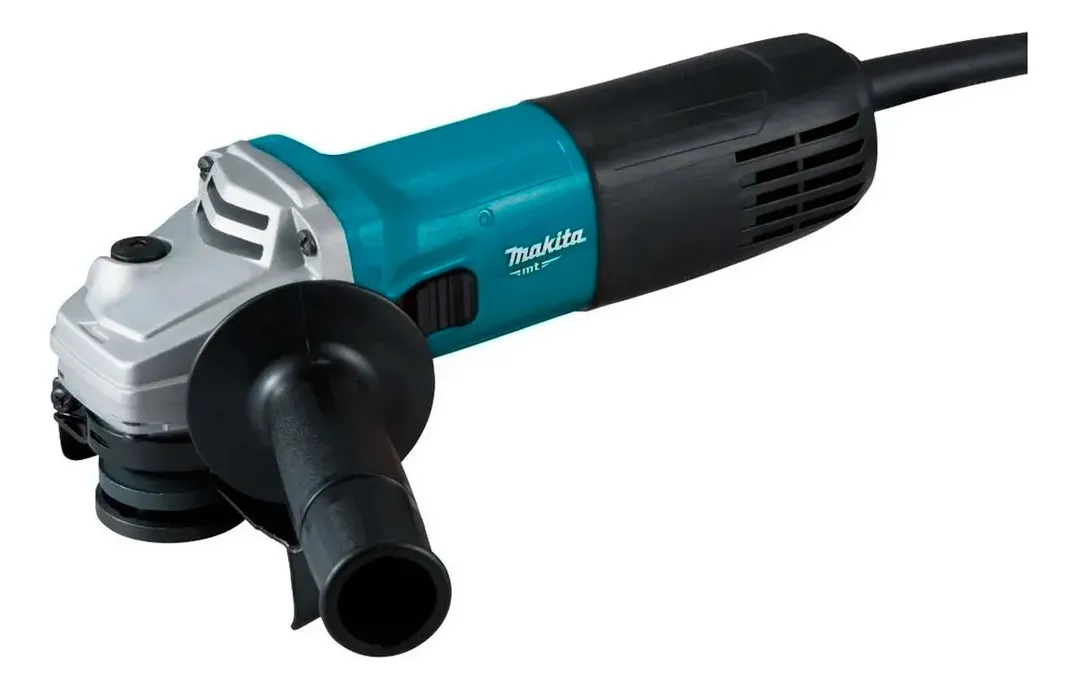
A compact corded grinder made for metal cutting, surface grinding and general maintenance jobs where controlled handling matters as much as power.
The Makita M9510B is worth considering if you need a simple, corded 4-1/2 inch angle grinder for metalwork, workshop tasks, construction maintenance and occasional heavier home use. Its 850 W motor, 11,000 rpm speed, 115 mm disc compatibility and compact body make it practical for users who want a reliable grinder without advanced electronic features.
The main question with the Makita M9510B is not whether it is powerful enough for common grinding and cutting tasks. The real decision is whether its straightforward, corded design matches the way you work.
This is a tool for users who prefer constant power, simple operation and a manageable size. It makes less sense for buyers expecting variable speed, soft start, anti-vibration extras or cordless convenience.
What the Makita M9510B is built to do
The Makita M9510B is an angular grinder from Makita’s MT line, designed around a 4-1/2 inch disc format. That size is one of the most common choices for cutting, grinding and deburring metal because it keeps the tool compact while still giving enough working capacity for many daily jobs.
Its 850 W motor places it above very basic entry-level grinders, especially for users who need more confidence when cutting metal profiles, cleaning welds or handling maintenance work. It is not a large industrial grinder, but it has enough power for a wide range of practical tasks when used with the correct disc.
The tool runs at 11,000 rpm and uses 115 mm discs. This combination favors fast material removal and efficient cutting, especially in metal applications where a compact grinder is easier to control than a larger machine.
One of its strongest points is the balance between power and handling. At about 2 kg, it is light enough for controlled use but still has the solid feel expected from a corded grinder. This matters when the job requires accuracy, repeated movements or longer working sessions.
The Makita M9510B is also a corded model, not a battery-focused tool. That makes it better suited to users who work near an outlet and prefer not to depend on charging cycles, battery condition or runtime limits.
The disc size decision that matters before buying
The most important buying decision is whether a 115 mm grinder is the right size for your work. The Makita M9510B is made for the 4-1/2 inch class, which is excellent for many metalworking and maintenance tasks, but it is not the best option for every kind of cut.
A 115 mm disc is practical for cutting thinner metal, trimming rods, cleaning edges, removing burrs, preparing surfaces and working in tighter areas. It is also easier to handle than a bigger grinder, especially for users who want better control in one-handed positioning while still using the side handle for stability.
The trade-off is cutting depth. This model is listed with a maximum cutting depth of about 1.5 cm, so it should not be chosen for jobs that require deep cuts in thick materials. If your regular work involves heavy structural pieces, thicker masonry or deeper channels, a larger grinder may be the more appropriate choice.
This is where many buyers make the wrong choice. They focus only on motor power and ignore disc diameter. Power helps the grinder keep pace, but the disc size defines what kind of access, cutting depth and control you can realistically expect.
The Makita M9510B makes the most sense when the work fits the 115 mm format. In that scenario, the compact size becomes an advantage rather than a compromise.
Where the 850 W motor helps in real work
The 850 W motor is one of the main reasons this grinder stands out in its class. It gives the tool enough strength for common cutting and grinding jobs without making the body unnecessarily large or difficult to manage.
For metal cutting, the extra confidence is useful when working with bars, tubes, sheets, brackets and general repair materials. The grinder is not designed to replace a larger machine, but it can handle many workshop and construction maintenance tasks when paired with a suitable disc.
For surface grinding, the motor helps maintain rotation under moderate pressure. This is important when cleaning welds, removing rust, smoothing edges or preparing a surface before finishing. A weaker grinder can feel strained in these situations, especially if the user applies too much force.
The fixed high speed also suits common abrasive work. Since the model does not offer speed regulation, it is better for users who mainly cut and grind metal rather than those who need delicate speed control for polishing, finishing or more heat-sensitive materials.
The Makita M9510B is also described as having dust-resistant protection for the motor area. That is useful in a grinder, because abrasive dust is part of the job. It does not remove the need for cleaning and careful use, but it is a relevant feature for durability in dusty work environments.
Trade-offs to know before choosing this grinder
The Makita M9510B is a direct and practical grinder, but it is not loaded with advanced comfort or safety electronics. That is not necessarily a problem, as long as the buyer understands what the tool offers before purchasing.
It does not have soft start. This means the grinder can feel more immediate when switched on, especially for users who are used to machines that build speed gradually. Experienced users may not see this as an issue, but beginners should pay attention to grip, posture and disc position before starting.
It also does not have variable speed. That makes the tool simpler, but it reduces versatility for users who want one grinder for cutting, grinding, sanding, polishing and more controlled finishing work. If you need speed adjustment for different accessories, another model may suit you better.
The model does not include automatic braking or anti-kickback systems. Proper disc choice, correct guard positioning and careful technique become especially important. This is normal in many straightforward grinders, but it should still be considered before buying.
Another point is storage and accessories. The product includes a wrench and a disc guard, but buyers looking for a full kit with case, multiple discs or quick-adjust convenience may find the package basic. For many users, that is acceptable; for others, it means planning accessories separately.
Power, speed, size and handling details
The Makita M9510B uses an 850 W motor and reaches 11,000 rpm. This fixed-speed setup is well matched to cutting and grinding with 115 mm discs, especially for users who want predictable operation without complex controls.
The grinder weighs about 2 kg, with compact body dimensions that make it easier to transport, store and position. The size is useful in workshops, home garages, maintenance kits and job sites where a larger grinder would feel excessive.
The 2 m power cord gives basic working reach, although users in larger spaces may still need an appropriate extension cord. Since it is a corded grinder, it is best for people who value consistent power over portability away from outlets.
The side handle improves control during cutting and grinding. This should not be treated as an optional comfort detail. A grinder is safer and more stable when held correctly, especially under load or when working at awkward angles.
The disc lock button helps with accessory changes, and the included wrench supports disc installation and removal. The guard is included and should be kept correctly positioned for the type of work being done.
Noise is listed at 88 dBA for sound pressure, so hearing protection should be considered during use. Eye protection, gloves suited to the task, a face shield and careful control of sparks are also important when working with metal or abrasive discs.
The jobs where this Makita makes the most sense
The Makita M9510B fits users who need a compact grinder for metal cutting, weld cleaning, edge smoothing, rust removal and general repair work. It is especially appropriate when the user wants a dependable corded tool rather than a battery system.
It can be a good match for small workshops, maintenance teams, construction support work, serralheria tasks and demanding home users who already understand basic grinder safety. Its compact format makes it useful when the work area is limited or when precision matters.
The tool also makes sense for buyers who prefer a simple machine from a recognized power-tool brand. There are no complex settings to manage, which can be an advantage when the priority is getting the job done with consistent speed and straightforward operation.
It is also a sensible choice if your jobs are frequent enough to justify a stronger compact grinder, but not so heavy that you need a larger disc size. That middle ground is where this model feels most natural.
For occasional users, the grinder can still be attractive because it is not oversized. The main condition is that the buyer must be comfortable using a corded angle grinder and must respect the safety requirements of the tool.
Cases where another tool may fit better
The Makita M9510B may not be the best match if you need deeper cuts, advanced safety electronics or variable speed. These are not small details; they directly affect how flexible the grinder will be across different tasks.
If your work involves thick materials or larger cutting capacity, a grinder with a bigger disc may be more efficient. The 115 mm format is practical, but it has a natural limit. Trying to force a compact grinder into jobs meant for a larger tool can reduce control and productivity.
If you work far from power outlets, a cordless grinder may be more convenient. The Makita M9510B gives continuous corded operation, but it depends on access to electricity and cable management.
If comfort features are a priority, look carefully before choosing this model. It does not include an anti-vibration handle, soft start or automatic braking. Users who grind for long periods every day may prefer a higher-feature tool designed around fatigue reduction.
If you mainly want to polish, sand delicate surfaces or work with accessories that require lower speeds, a variable-speed grinder is likely a better fit. The M9510B is strongest when used for classic cutting and grinding, not for every finishing task.
How it compares with other grinder choices
Compared with smaller or weaker grinders, the Makita M9510B offers a more confident motor while keeping the compact 4-1/2 inch format. That makes it a better fit for users who want a tool that feels capable without jumping to a larger and heavier machine.
Compared with larger grinders, it is easier to handle and more practical for controlled work. The downside is cutting depth and heavy-duty capacity. A larger grinder can remove more material and cut deeper, but it is also less convenient in tight spaces and can be more tiring.
Compared with cordless options, the M9510B favors continuous power and simpler ownership. There are no batteries to charge, replace or match with a platform. The trade-off is reduced mobility, especially outdoors or on job sites without easy electrical access.
Compared with premium grinders that include soft start, speed control and braking systems, this Makita is more straightforward. It appeals to users who prefer simplicity, but it may feel basic for professionals who depend on added control features throughout the day.
The best way to compare it is by use case. If you need compact corded power for common metal tasks, it is a strong candidate. If you need deeper cuts, advanced controls or cordless freedom, another grinder category may be more appropriate.
A clear buying decision for practical users
The Makita M9510B is a good choice for users who want a compact, corded 4-1/2 inch angle grinder with enough power for common metal cutting and grinding tasks. It is simple, direct and focused on practical work rather than advanced electronic features.
Its strongest qualities are the 850 W motor, the 11,000 rpm rotation, the manageable 2 kg body and the common 115 mm disc size. These elements make it useful for workshops, maintenance jobs, construction support and home users who need more than a very basic grinder.
The decision becomes less favorable if you need variable speed, soft start, automatic braking, cordless portability or deep cutting capacity. Those are legitimate reasons to choose a different tool.
For the right user, the M9510B is not trying to be the most feature-rich grinder. It is trying to be a compact work tool with reliable power and simple handling. That is exactly why it can be a smart purchase when the job profile matches its design.
Is the Makita M9510B good for cutting metal?
Yes, the Makita M9510B is well suited for common metal cutting tasks when used with the correct 115 mm cutting disc. Its 850 W motor and 11,000 rpm speed make it practical for bars, tubes, brackets and general metal maintenance. It is not the right choice for very deep cuts or oversized materials.
Can the Makita M9510B be used for grinding welds?
Yes, it can be used for grinding welds, cleaning edges and removing surface imperfections in metalwork. The compact body helps with control, while the motor provides enough strength for moderate grinding tasks. For continuous heavy industrial grinding, a larger or more advanced model may be more comfortable.
Does the Makita M9510B have variable speed?
No, the Makita M9510B does not have variable speed. It runs at a fixed high rotation, which is suitable for typical cutting and grinding work. Buyers who need lower speeds for polishing, sanding delicate surfaces or using specialized accessories should consider a grinder with speed adjustment.
Is this grinder better for home use or professional work?
It can serve both demanding home users and professionals who need a compact grinder for routine tasks. It is especially useful for maintenance, metalwork and construction support. For daily heavy-duty industrial use, professionals may prefer a model with more safety electronics, comfort features or a larger disc size.
Does the Makita M9510B work without a power cable?
No, this is a corded angle grinder and needs an electrical connection to operate. The advantage is consistent power without depending on battery runtime. The disadvantage is that the user must manage the cable and work near an outlet or use a suitable extension cord.
What disc size does the Makita M9510B use?
The Makita M9510B uses 115 mm discs, also commonly referred to as 4-1/2 inch discs. This size is popular because it offers a good balance between control, accessibility and cutting ability. It is ideal for many general tasks, but not for deep cutting in thick materials.
Is the Makita M9510B easy to handle?
Yes, it is relatively easy to handle for a corded grinder because it has a compact body and weighs about 2 kg. The side handle improves control during cutting and grinding. Even so, users should always operate it with proper protection, correct grip and attention to disc position.
What should I check before choosing this grinder?
Check whether the 115 mm disc size, corded operation and fixed-speed design match your work. This grinder is strongest for common metal cutting and grinding. It may disappoint users who need deeper cuts, cordless mobility, soft start, automatic braking or speed control for finishing work.
The Makita M9510B is best understood as a compact corded grinder for users who want reliable power in a simple format. It handles common cutting and grinding jobs well, especially in metalwork and maintenance, without becoming bulky or complicated.
Choose it if your priority is a manageable 4-1/2 inch grinder with solid motor output, straightforward controls and a practical body size. Look elsewhere if your work depends on advanced electronics, cordless freedom or larger cutting capacity. For the right job profile, this Makita offers a strong balance between control, power and everyday usefulness.