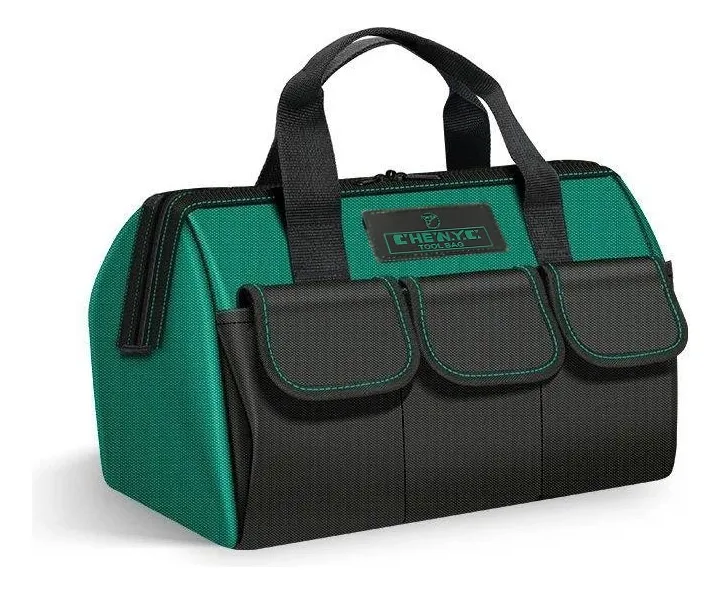
A practical review of a compact canvas tool bag designed for carrying essential hand tools, small accessories and everyday repair items without moving around with a rigid toolbox.
The 14-inch thick canvas tool bag makes sense for users who need a simple, portable and flexible organizer for light to moderate tool transport. It is a good fit for home repairs, basic maintenance, small jobs and users who prefer quick access over a bulky hard case. It may not be the best match for very heavy tools, specialized equipment or anyone who needs a fully structured professional storage system.
The 14-inch thick canvas tool bag is aimed at people who want a more practical way to carry tools without depending on a heavy plastic or metal box. Its appeal is straightforward: it offers a compact format, flexible storage and a durable-looking canvas construction for common daily tasks.
For buyers comparing tool bags, the real question is not only whether the bag looks strong. The more important point is whether its size, material and layout fit the way the tools will actually be used, carried and stored.
What this 14-inch canvas tool bag is designed to solve
This type of tool bag is built for users who need mobility. Instead of storing everything in a rigid toolbox, the canvas format gives more flexibility when carrying screwdrivers, pliers, measuring tape, utility knives, small hammers, fasteners and other essential items.
The 14-inch size places it in a compact category. That means it is easier to carry, easier to keep in a car, closet, workshop corner or service area, and more convenient for quick jobs where taking a large toolbox would be excessive.
Its proposal is especially useful for people who do not want their tools scattered across drawers or bags that were not made for this purpose. A dedicated tool bag helps reduce clutter and keeps the most used items in one place.
The thick canvas construction is one of the central points of the product. Canvas is commonly chosen for tool transport because it offers flexibility, resistance to everyday friction and a less rigid feel than plastic cases. For regular household use and general maintenance, this kind of material can be more comfortable to handle than a hard case.
Another practical advantage is the open, accessible nature of a tool bag. Depending on the internal layout and how the user organizes the contents, it can be faster to grab frequently used tools than opening and searching through a compartmentalized toolbox.
The size decision that matters before choosing this bag
The main buying mistake with a compact tool bag is expecting it to behave like a large professional toolbox. A 14-inch model is not made to carry an entire workshop. It is better understood as a portable organizer for essential tools and daily-use items.
This size works well when the user already knows what needs to be carried. A basic setup might include screwdrivers, pliers, tape measure, small wrench set, electrical tape, fasteners and a few accessories. For this type of kit, the format is practical and easy to move.
It may feel restrictive if the buyer expects to carry power tools, large hammers, bulky measuring tools, long accessories or many heavy metal parts at the same time. In those cases, a larger bag, a reinforced toolbox or a rolling organizer will usually make more sense.
The 14-inch format also affects balance. A compact bag is easier to lift, but it depends on smart weight distribution. Loading one side heavily can make the bag less comfortable to carry and may increase stress on seams, handles and the base.
For home users, electricians doing small interventions, hobby users, apartment maintenance tasks and car emergency kits, the compact size can be an advantage. For construction-heavy routines, daily professional transport of many tools or rough jobsite use, the buyer should be more cautious.
Practical advantages during everyday use
The strongest point of a thick canvas tool bag is convenience. It gives the user a dedicated place for frequently used tools while remaining lighter and easier to move than many hard toolboxes.
For small repairs around the house, this can make a real difference. Instead of walking back and forth looking for tools, the user can keep the essentials together and carry them directly to the room, garage, car or work area.
The flexible canvas body is also useful in tight spaces. A rigid box needs a stable place to sit and open, while a canvas bag can usually be placed more easily on the floor, a shelf or inside a vehicle trunk.
Another benefit is visual simplicity. The product does not try to be an advanced modular storage system. It is a straightforward tool carrier for people who want organization without overcomplicating the setup.
For users who own only a moderate number of tools, this is often better than buying a much larger organizer. A large toolbox with too much empty space can become messy, while a compact bag encourages a more focused selection of essential items.
The bag can also work as a secondary organizer. Someone with a main workshop setup can use this model to separate the tools used most often, keeping them ready for quick tasks without opening a larger storage system every time.
What to keep in mind before relying on it for heavier jobs
The product’s main caution point is load expectation. A canvas tool bag can be useful and durable in normal conditions, but it should not be treated as if it were designed for unlimited weight or severe industrial use unless the product specifications clearly support that kind of demand.
Thick canvas helps with everyday resistance, but the full durability of any tool bag also depends on stitching, zipper quality, handle reinforcement, base structure and how the weight is distributed. These details matter more than the material name alone.
If the buyer plans to carry dense tools such as multiple wrenches, metal parts, sockets, hammers and accessories together, it is important to avoid overloading the bag. Excess weight can reduce comfort and may shorten the useful life of the handles and seams.
Another point is organization depth. A compact canvas bag is usually better for quick access than for highly separated storage. Users who need many individual compartments, labels or rigid divisions may prefer a more structured organizer.
It may also not be ideal for wet, dirty or abrasive environments if the user expects high protection against impact or moisture. Canvas can handle normal use, but a sealed hard case or specialized tool box is usually more appropriate when protection is the priority.
Material, handling and performance in real use
The product is presented as a strong and durable thick canvas tool bag. That positioning suggests a focus on resistance for everyday tool transport rather than decorative storage or occasional light carrying.
Canvas is a practical material for this category because it combines flexibility with a work-oriented feel. It can adapt better to irregular tool shapes than a rigid case, and it is usually easier to place in small storage areas.
Performance will depend on how the buyer uses it. For a light to moderate kit, the bag should be more than enough for organizing essential tools and moving them between rooms, vehicles or job areas. For heavy daily professional use, the decision should be more selective.
The 14-inch size is part of the performance profile. It favors portability over maximum capacity. That means the bag is at its best when used with a curated set of tools rather than as a place to throw every accessory available.
In practical terms, the best use is to organize a kit around a clear purpose. For example, one setup for household repairs, another for basic electrical tasks, another for car emergency tools or another for small maintenance jobs.
The more focused the kit, the better the bag will perform. When a compact tool bag is overloaded with unrelated tools, it loses the very advantage that makes it attractive: quick access and easy carrying.
Best-fit users for this compact tool organizer
This tool bag is a strong match for people who want a simple way to keep common tools organized and ready. It is especially useful for home users, renters, small workshop owners, DIY users and anyone who performs occasional repairs.
It also fits users who need a portable kit for moving between different areas. If the goal is to carry essential hand tools from a garage to a room, from a car to a work area or from one small job to another, the format is convenient.
Professionals can also use it, but with the right expectation. It makes more sense as a secondary bag for selected tools than as the only storage option for a complete professional setup.
For electricians, installers, maintenance assistants and technicians who carry a limited group of tools for smaller interventions, the compact profile can be useful. The key is keeping the load compatible with the bag’s size and construction.
It is also a sensible option for people building a first tool kit. Instead of buying a large toolbox immediately, a compact canvas bag can help organize the basics while keeping the setup easy to transport.
Cases where a different storage option makes more sense
This bag may not be the right choice for users who need high-capacity storage. If the goal is to carry many tools, heavy hardware, large power tools or several tool sets together, a larger and more structured solution is likely better.
It may also disappoint buyers who expect rigid protection. A canvas bag is flexible, which is helpful for portability, but it does not protect tools from impact in the same way as a hard case.
Users who need very precise organization may also prefer a tool box with trays, drawers or dedicated compartments. A compact bag can be organized well, but it usually requires more discipline from the user to avoid mixing small parts and tools.
Another situation where caution is needed is daily exposure to harsh environments. If the bag will be dragged across rough surfaces, left in wet areas or loaded heavily every day, the buyer should consider a model specifically designed for that level of use.
For someone who simply wants one place for a few tools, this product makes sense. For someone who needs a professional mobile workshop, it is better to look at larger, reinforced or modular alternatives.
How it compares with hard toolboxes and larger tool bags
Compared with a hard toolbox, this 14-inch canvas tool bag is easier to carry and more flexible to store. It is also less bulky, which makes it practical for smaller homes, vehicles and quick tasks.
A hard toolbox has the advantage of structure. It usually protects tools better from crushing, keeps a fixed shape and may offer trays for small parts. For fragile instruments or highly organized storage, that can be a better match.
Compared with larger tool bags, the 14-inch model is more portable but less spacious. A larger bag can carry more tools and may offer more compartments, but it also becomes heavier and less convenient for small jobs.
This product sits in the middle of a very practical use case. It is not trying to replace a full professional organizer, and it is not just a casual fabric bag. Its best role is carrying essential tools in a compact, work-ready format.
Buyers choosing between sizes should think about their actual tool list. If most tools are small hand tools, this compact format is sensible. If the list includes bulky equipment or several specialized tools, a larger model will feel more comfortable in the long run.
A sensible choice when portability matters more than maximum capacity
The 14-inch thick canvas tool bag is most convincing when viewed as a practical everyday organizer. It gives the buyer a dedicated place for common tools, improves mobility and avoids the bulk of a traditional rigid toolbox.
It is a good choice for users who value quick access, compact storage and simple handling. It is also useful for building a focused tool kit for home, car, small maintenance tasks or occasional service work.
The decision becomes less favorable when the buyer expects high-capacity storage, rigid protection or professional-grade structure for heavy daily use. In those cases, a bigger bag, reinforced case or modular system will be more appropriate.
For its intended role, the product is easy to understand: a compact canvas tool bag for keeping essential tools together and ready to carry. If that matches the way the buyer works, it can be a very practical addition to the tool setup.
Is the 14-inch thick canvas tool bag good for home use?
Yes, it is a practical option for home use because it can hold essential hand tools without taking up much space. It suits small repairs, furniture assembly, basic maintenance and quick fixes around the house. The compact size helps keep the most used tools together instead of scattered across drawers or cabinets.
Can this tool bag replace a hard toolbox?
Yes, it can replace a hard toolbox for users who carry a limited number of essential tools and prefer flexibility. However, it is not the same type of storage. A hard toolbox offers more rigid protection, while this canvas bag focuses more on portability, light handling and quick access.
Is a 14-inch tool bag large enough for professional work?
It depends on the type of professional work. For small interventions, maintenance visits or a secondary kit with selected tools, the size can be useful. For carrying many heavy tools, power tools or specialized equipment, a larger and more reinforced storage option will usually be more appropriate.
What tools fit best in this type of canvas bag?
Small and medium hand tools fit best in this type of bag. Screwdrivers, pliers, tape measure, utility knife, small wrench sets, electrical tape, fasteners and similar accessories are good examples. The bag works better when the tool selection is focused instead of overloaded with unrelated items.
Is thick canvas a good material for a tool bag?
Yes, thick canvas is a good material for everyday tool carrying because it offers flexibility and practical resistance. It is useful for normal friction and regular movement. Still, durability also depends on stitching, handles, zipper quality and how much weight the user puts inside the bag.
Is this tool bag easy to store in a car?
Yes, the compact 14-inch format makes it suitable for car storage. It can be useful for an emergency tool kit, basic maintenance accessories or items needed during travel. The flexible body usually makes it easier to place in a trunk or storage corner than a rigid toolbox.
Who should choose a larger tool bag instead?
Users who carry many tools, bulky items or heavy equipment should consider a larger tool bag. A bigger model makes more sense for professional routines that require more capacity, better separation and stronger load distribution. The 14-inch version is better for essential kits and lighter mobility.
Does this bag work well for a first tool kit?
Yes, it works well for a first tool kit because it encourages a simple and organized setup. New users can keep the most important tools together without buying a large storage system too early. It is especially useful when the goal is basic repair readiness and easy access.
The 14-inch thick canvas tool bag is a smart option for anyone who wants a compact, flexible and easy-to-carry organizer for essential tools. Its strongest value is not maximum capacity, but practical everyday use. It keeps the basic kit close, reduces clutter and makes small repair tasks easier to start.
It is best chosen with realistic expectations. Use it for focused tool sets, light to moderate carrying and quick access. Avoid expecting it to behave like a heavy-duty professional storage system. When portability, simplicity and everyday organization are the priorities, this tool bag fits the job well.