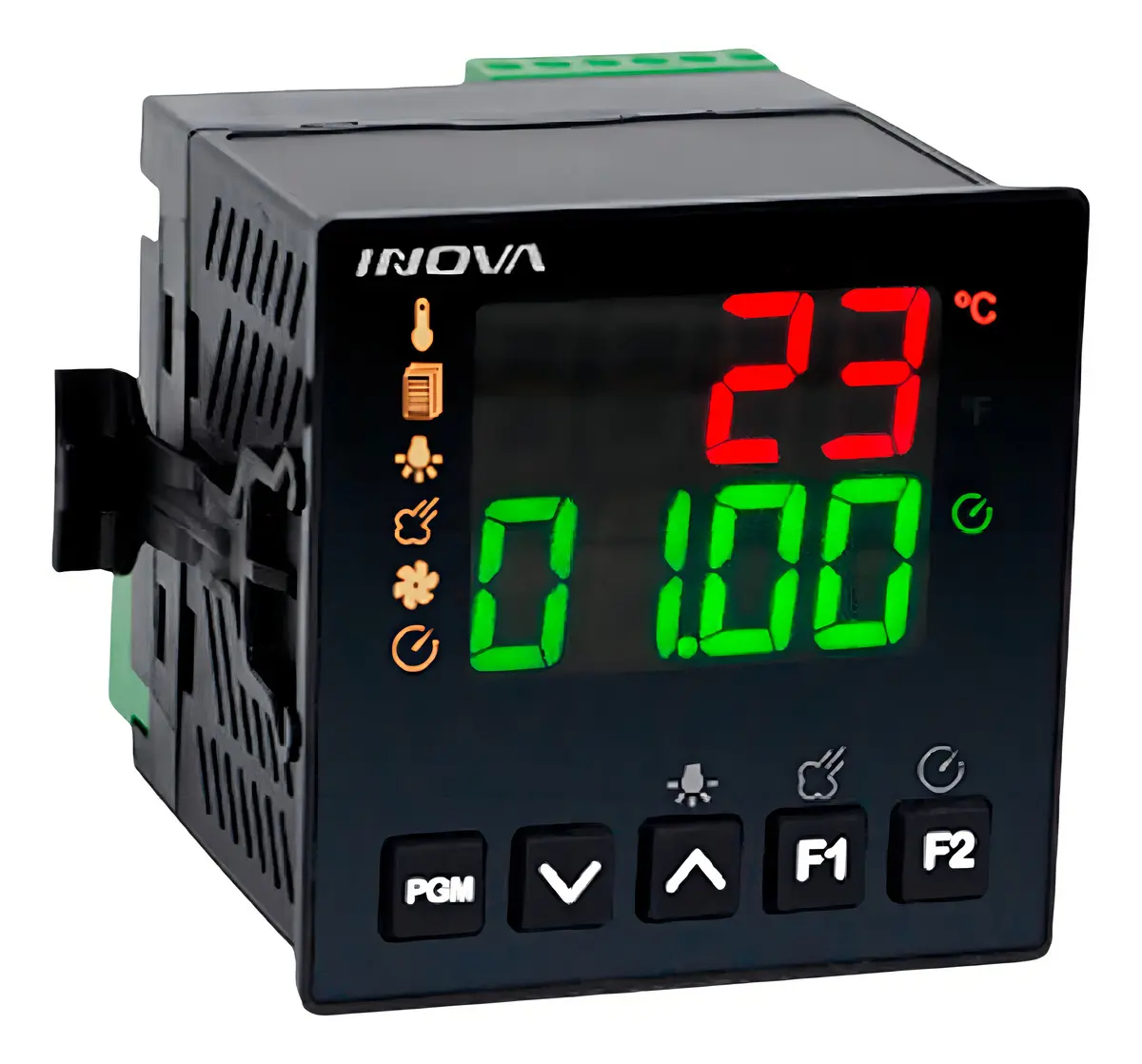
A practical look at this Inova controller for ovens and heating systems, focusing on compatibility, daily use, installation points, and the kind of buyer it serves best.
The Inova INV-YB1-11-J-H is a strong choice for users who need a dedicated temperature and time controller for gas, electric, or wood-fired systems. It makes the most sense when the installation already depends on a Type J thermocouple, relay outputs, timer control, door input, flame sensor inputs, and a compact panel-mounted format. It is not the best option for buyers looking for a simple plug-and-play household thermostat or a controller to use without checking electrical compatibility.
The Inova INV-YB1-11-J-H review matters because this is not a casual accessory. It is a technical control component, and the right decision depends less on appearance and more on whether the controller matches the system where it will be installed.
For bakeries, small industrial ovens, equipment maintenance, and replacement projects, this model can be very useful. For general home users, however, it requires more caution because installation, sensor compatibility, relay load, and wiring details are essential parts of the buying decision.
What the Inova INV-YB1-11-J-H is built to control
The Inova INV-YB1-11-J-H is a digital temperature and time controller designed for systems that need coordinated heat control and timer operation. Its typical use is connected to ovens and thermal equipment where the operator needs to manage temperature behavior and working time from the same front panel.
Its proposal is especially relevant for gas, electric, and wood-fired systems. That makes it more specific than a basic thermostat because the device is not limited to reading temperature and switching a single output. It is designed for more complete operating logic, including time control and integration with external signals.
The model uses a Type J thermocouple as the temperature sensor reference. This is one of the first points a buyer should check, because the sensor type directly affects compatibility. The sensor is not something to assume; the system must be prepared for the correct thermocouple type, and the product information indicates that the sensor is not included with the controller.
The controller also works with a wide supply range, identified as 85 to 250 VAC at 50 to 60 Hz. In practice, this gives it flexibility in many installations, but it does not remove the need for proper electrical verification. A technical product like this should be installed according to the equipment diagram and local electrical safety practices.
The panel format is compact, with a 72 x 72 mm front size and a depth suitable for panel installation. This matters for replacement projects because a controller can be electrically correct but physically inconvenient if it does not fit the existing cutout or internal space.
Compatibility is the decision point that matters most
The most common mistake with this type of controller is buying by model name alone and ignoring the installation environment. A temperature and time controller is not like a universal remote control. It must match the sensor, supply voltage, relay requirements, panel size, and the logic expected by the machine.
The INV-YB1-11-J-H is associated with Type J temperature measurement and control. That is suitable for many oven applications, but it is not the same as choosing a multi-sensor controller without checking the exact version. If your equipment uses another sensor type, the decision requires extra care before purchase.
The second point is output capacity. This model has relay outputs rated for control functions, but the relays should be treated as control outputs, not as permission to connect any load directly without evaluating the circuit. In many systems, the controller commands contactors, solenoids, alarms, turbines, or related components through a designed electrical panel.
The third point is the existing machine logic. The controller has inputs related to flame sensors, door microswitch behavior, and timer start or stop. These features are valuable when the oven or system was designed around those signals. They may be unnecessary, or even confusing, in a simpler installation that only needs a basic heating thermostat.
This is why the best buying approach is to compare the current controller code, sensor type, wiring layout, panel dimensions, and operating functions before choosing the replacement. The product can be very capable, but only when the surrounding system is compatible.
Where this controller makes daily operation easier
The main advantage of the Inova INV-YB1-11-J-H is the combination of temperature control and timer control in one device. For ovens and heating processes, this matters because operators often need to manage not only the target heat level, but also how long the process remains active.
In practical use, this can reduce the need for separate devices on the panel. A setup with independent timer and thermostat modules can work, but it may be less convenient for the operator and less clean for maintenance. A combined controller keeps related functions in one interface.
The internal buzzer is another useful point for process awareness. In environments such as bakery production, an audible alert can help operators notice the end of a timed cycle or another relevant event without constantly watching the display.
The presence of multiple relay outputs also gives the controller more integration potential than a basic on-off temperature switch. The system can be configured around heating, timer functions, turbine behavior, lighting, or other supported control actions, depending on the equipment design.
For gas systems, the flame sensor inputs are especially important. They show that the controller was designed with more complex oven behavior in mind, not only temperature reading. That does not turn it into a standalone safety device, but it does make the product more aligned with equipment that uses flame-related signals as part of its control logic.
Another practical strength is its compact front panel. A 72 x 72 mm format is common enough in industrial and commercial control panels, which can make replacement more direct when the previous installation used a similar cutout.
Trade-offs to check before replacing your current unit
The first trade-off is that this controller is technical by nature. It is not aimed at buyers who want a consumer appliance accessory that can be installed without electrical knowledge. If the user does not understand sensor wiring, relay outputs, supply voltage, and panel installation, professional support is the safer route.
The second point is sensor dependency. Since the product is designed around Type J thermocouple use in this version, the buyer must confirm that the existing system matches that requirement. A mismatch can lead to incorrect readings, poor control behavior, or a product that simply does not fit the intended use.
The third point is that the thermocouple may need to be purchased or verified separately. A controller without the correct sensor is not a complete temperature measurement solution. This is a normal situation in industrial components, but it can surprise buyers who expect every required part to arrive in the same package.
There is also a setup curve. The device offers several control possibilities, but those possibilities depend on correct programming. If the controller is replacing an older model, the installer may need to review parameters rather than assuming the new unit will behave identically out of the box.
Another point of attention is that the controller should not be treated as the only protection layer of the equipment. Heating systems, gas systems, and industrial ovens may require additional safety devices, independent protections, proper grounding, and correct electrical panel design.
Technical behavior and installation factors that affect performance
The INV-YB1-11-J-H works with a Type J thermocouple range suitable for many heating applications. The stated measurement and control range for this sensor type reaches from low negative temperature to high oven-level temperatures, which is consistent with bakery and thermal process use.
Its supply range of 85 to 250 VAC at 50 to 60 Hz gives flexibility across different mains environments. Even so, the installation should not be decided only by the supply range. The controller must also match the control circuit, load interface, grounding, panel protection, and the rest of the electrical design.
The unit includes relay outputs rated for resistive loads. This is important because real installations may involve inductive loads, contactor coils, valves, motors, or other components that behave differently from pure resistive loads. When in doubt, the relay should be used within the limits of a proper control circuit.
The device also supports inputs for flame sensors, a door microswitch, and timer start or stop. These inputs are not just extra details; they influence how the equipment behaves during operation. Door behavior, timer interruption, and flame-related logic can change the user experience and the safety architecture of the machine.
For panel installation, the physical box size and connector format must be checked carefully. A controller may appear visually similar to an older model, but connector type and wiring arrangement can differ. Careful comparison before installation helps avoid rework and downtime.
Performance also depends on parameter setup. Temperature control is not only about the maximum range of the sensor. Hysteresis, proportional behavior, timing logic, turbine behavior, and process response all affect the final result. For professional use, correct configuration can be just as important as choosing the right controller.
Best fit in real-world use
This model is a good fit for users replacing a compatible Inova controller in bakery ovens, commercial heating equipment, or similar thermal systems. It is especially attractive when the existing setup already uses the expected sensor type and panel format.
It also makes sense for maintenance technicians who need a controller with temperature and timer functions in the same unit. In a service context, the value is not only in the component itself, but in reducing the need to adapt the entire panel when the equipment already follows the same control logic.
Small businesses that operate ovens may also benefit from this type of controller when reliability, repeatability, and process control matter. A bakery oven, for example, depends on predictable heating and timing. A suitable controller helps the operator maintain a more organized production routine.
The product is also relevant for users who need integration with door input, flame sensor signals, and multiple relay outputs. These features are beyond what a basic thermostat usually offers, so they matter most in equipment that actually uses those functions.
It is also a sensible choice when the buyer wants a controller from a known manufacturer in the industrial and commercial control segment. For this category, brand familiarity and availability of technical documentation can make installation and maintenance easier.
Situations where another controller may make more sense
This is not the ideal choice for someone who only needs a simple temperature display. If the application does not require timer control, relay integration, flame-related inputs, or door input behavior, a simpler controller may be easier to configure and maintain.
Another controller may also make more sense if the system uses a different temperature sensor type. The sensor version is not a minor detail. Choosing a controller that does not match the sensor architecture can create avoidable problems from the first installation step.
It may also be excessive for basic hobby projects. While the product can be technically capable, hobby use often favors simpler modules with easier wiring and fewer industrial control assumptions. The INV-YB1-11-J-H is better understood as a panel component for equipment control, not as a casual DIY gadget.
Users who need advanced data logging, remote monitoring, app connectivity, or network integration should also evaluate other options. This product is focused on local control of temperature and time. It should not be chosen expecting smart-device behavior unless the wider system adds those capabilities separately.
Finally, if the existing equipment is old, modified, or poorly documented, it may be safer to identify the current wiring and control logic before selecting any replacement. The right controller is the one that fits the system, not just the one with a similar front panel.
How it compares with simpler thermostats and broader control modules
Compared with a basic thermostat, the Inova INV-YB1-11-J-H is more complete because it combines temperature management with timer-related operation. That makes it more suitable for ovens and process equipment where time and heat work together.
A simple thermostat can be easier to install in small applications, but it usually does not offer the same process logic. If the machine needs door input, timer start and stop, buzzer signaling, flame sensor inputs, and multiple relay outputs, a basic thermostat may not be enough.
Compared with broader programmable controllers, the INV-YB1-11-J-H is more focused. A programmable controller may offer more flexibility, but it can also require more design work, programming knowledge, and external interface components. For a compatible oven or heating system, a dedicated controller can be more direct.
The model sits in a useful middle ground. It is more specialized than an entry-level temperature controller, but less open-ended than a full automation platform. That is a good position for buyers who want a practical replacement or a dedicated control component without rebuilding the entire control architecture.
In terms of decision-making, the strongest argument for this model is not that it does everything. The strongest argument is that it does a specific job well when matched to the right system: controlling temperature and time in compatible heating equipment.
A practical verdict for ovens and controlled heating systems
The Inova INV-YB1-11-J-H is worth considering when the goal is to control temperature and time in a compatible oven or thermal system. Its value is clearest in environments where a simple thermostat would be too limited and a broader automation solution would be unnecessarily complex.
The key is compatibility. The buyer should confirm the Type J thermocouple requirement, supply voltage range, relay use, panel dimensions, connector arrangement, and the need for inputs such as door and flame signals. When these points match, the product becomes a logical and practical choice.
It is less attractive when the buyer wants a universal controller without checking technical details. This product rewards careful selection. It can be very useful in the right panel, but it is not the type of item that should be chosen only by photo, size, or a familiar brand name.
For professional maintenance, bakery equipment, and compatible heating systems, it offers a strong balance between dedicated function and operational practicality. For casual users or uncertain installations, the smarter decision is to confirm the system requirements before buying.
Is the Inova INV-YB1-11-J-H suitable for bakery ovens?
Yes, it is suitable for compatible bakery ovens that require temperature and time control. Its design makes sense for gas, electric, or wood-fired systems when the oven uses the correct sensor and control logic. The buyer should still confirm the current wiring, panel size, and sensor type before treating it as a direct replacement.
Does this controller include the temperature sensor?
No, the available product information indicates that the Type J thermocouple sensor is not included. This matters because the controller needs the correct sensor to read and control temperature properly. Before buying, it is important to confirm whether the existing sensor can be reused or whether a compatible new sensor is required.
Can the INV-YB1-11-J-H replace an older Inova controller?
Yes, it may replace specific older Inova models when the application and version match. However, replacement should not be decided by brand alone. The sensor type, voltage, connection format, relay outputs, panel dimensions, and parameter setup must be compared carefully to avoid installation errors or unexpected behavior.
Is this controller easy for a beginner to install?
No, it is better suited to technicians or users familiar with electrical control panels. The product involves supply wiring, sensor input, relay outputs, and equipment-specific logic. A beginner may understand the display and buttons, but safe and correct installation usually requires technical knowledge.
What is the main advantage of this model?
The main advantage is combining temperature control and timer control in one compact panel device. That is useful in ovens and thermal processes where heat and operating time need to work together. The additional inputs and relay outputs also make it more capable than a very simple thermostat.
Can it be used in gas systems?
Yes, it is designed for compatible gas systems as well as electric and wood-fired applications. The flame sensor inputs are especially relevant in gas-related setups. Even so, gas equipment requires careful installation and proper safety architecture, so the controller should be part of a correctly designed system.
Is it a good option for home DIY projects?
Not usually, unless the user has the necessary technical knowledge and a compatible control setup. The INV-YB1-11-J-H is more appropriate for equipment panels, ovens, and maintenance applications. For simple DIY temperature tasks, a less specialized controller may be easier and safer to use.
What should be checked before choosing this controller?
The most important checks are the sensor type, supply voltage, relay requirements, panel size, connector format, and the functions used by the equipment. It is also wise to compare the existing controller code and wiring diagram. These checks help confirm whether this model is the right match.
The Inova INV-YB1-11-J-H is a focused, practical controller for users who need temperature and time management in compatible heating equipment. It stands out when the system requires more than basic temperature switching, especially in oven applications with timer logic, relay outputs, door input, and flame-related signals.
The decision should be based on technical fit rather than impulse. If the existing system matches the Type J thermocouple version, the electrical requirements, and the panel installation format, this controller is a sensible choice. If those details are uncertain, confirming compatibility before purchase is the most important step.