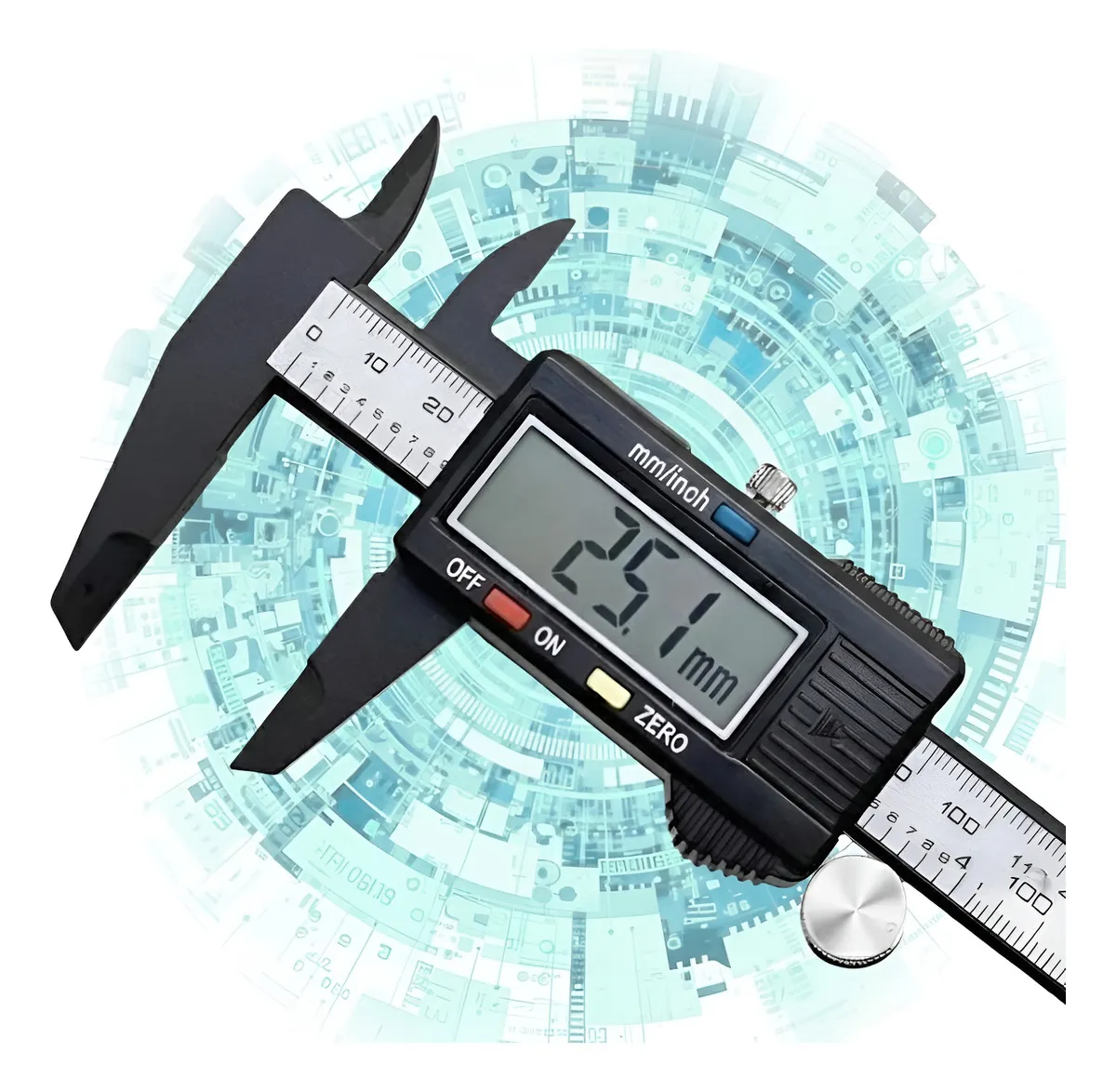
This digital caliper 150mm review looks at a compact 6-inch measuring tool made for quick checks, small projects, workshop adjustments and everyday dimensional measurements.
The Digital Caliper 150mm makes sense for users who need a simple, fast and easy-to-read measuring tool for home repairs, DIY work, crafts, light mechanical checks and basic workshop tasks. It is a practical entry-level choice if you want digital readings, metric and inch measurement, and included batteries without moving into a more advanced inspection-grade tool.
It is not the best match for professional machining, strict quality control or work that depends on certified metrology. The main decision is simple: choose it for convenience and practical measuring, but look for a higher-grade metal or certified caliper if your work demands maximum repeatability and industrial durability.
The Digital Caliper 150mm is aimed at buyers who want faster and clearer measurements than a ruler can provide. It is especially useful when you need to check widths, diameters, thicknesses or small gaps without interpreting tiny scale markings.
The product’s appeal is its simplicity. The digital screen reduces reading errors, the 150 mm measuring range covers many common objects, and the included batteries make it easier to start using the tool right away.
What this 150 mm digital caliper is built to do
This tool belongs to the compact digital caliper category, with a measuring capacity of 150 mm or 6 inches. That range is enough for many daily measuring jobs, including screws, small parts, craft materials, tubes, fittings, printed pieces, hardware items and household objects.
The digital display is the main reason to choose it over a traditional ruler or manual vernier caliper. Instead of reading a scale by eye, you get a direct number on the screen, which is easier for beginners and faster for repeated checks.
The tool is designed for practical dimensional measurement. In typical use, a caliper like this can help with external measurements, internal checks and depth-style measurements when the design includes the standard measuring points found on digital calipers.
It is important, however, to understand the product’s real position. This is not the kind of caliper you choose as a primary instrument for a professional metrology bench. It is better understood as a convenient measuring tool for everyday precision rather than a specialized industrial reference instrument.
That does not make it useless. For many users, this type of digital caliper is exactly enough. The value is in speed, readability and versatility for small measurements where a ruler feels too rough and a premium caliper would be excessive.
The detail that most buyers should check before choosing a budget digital caliper
The most important point is not the digital screen. It is the level of precision and consistency you actually need. Many buyers see the words “high precision” and assume the tool will behave like a professional calibrated instrument, but that is not always the right expectation for this category.
A digital caliper can show fine increments on the screen while still being limited by body rigidity, jaw alignment, pressure applied by the user and overall build quality. For casual use, that may not matter much. For technical inspection, it can matter a lot.
If you are measuring a screw, checking a 3D printed part, comparing a tube diameter or confirming whether a small object fits into a slot, this caliper can be very helpful. If you are machining parts with strict tolerances, checking production batches or documenting measurements for technical approval, you should be more demanding.
The buying mistake happens when the user expects a low-complexity digital tool to replace a certified, high-end caliper. This model should be considered a practical helper, not a laboratory instrument.
For most home and hobby tasks, the better question is whether the tool gives repeatable enough readings for your project. If it does, it can save time and reduce guesswork. If your project requires formal accuracy, the safer route is a higher-grade caliper with clear technical documentation.
Where it makes measuring easier in real use
The strongest advantage is readability. A digital display is much easier to interpret than a small engraved scale, especially for users who do not work with measuring tools every day.
Another advantage is speed. You can place the jaws around a part, read the number and move on. That makes it useful for quick checks during repairs, assembly, organization, woodworking, electronics projects and general workshop tasks.
The 150 mm range is also a practical size. It is large enough for many common items but still compact enough to keep in a drawer, toolbox or workbench organizer. A larger caliper may be necessary for bigger parts, but it is usually less convenient for small daily tasks.
The metric and inch reading capability is useful for people who deal with products, parts or instructions that use different measurement systems. Being able to switch between units reduces conversion friction and makes the tool more flexible.
The included batteries are a small but useful detail. For a digital tool, being ready to use matters, especially if the buyer does not already keep compatible spare batteries at home.
This product also suits people who want a friendlier measuring experience. A manual vernier caliper can be accurate in trained hands, but it requires practice. A digital model lowers the barrier and makes the tool less intimidating for occasional users.
Trade-offs to understand before relying on it
The main trade-off is durability. Entry-level digital calipers are usually chosen for convenience, not for heavy-duty use. If your work environment includes oil, metal chips, impacts, dust or daily professional handling, a more robust model may be a better fit.
Another point of attention is consistency. Digital readings can vary if the jaws are not fully seated, if the user applies uneven pressure or if the tool is not zeroed correctly before measuring. This is normal for calipers in general, but it matters more on simpler models.
You should also avoid assuming that every “high precision” claim means the same thing. For serious technical work, the specification details, calibration status and material quality are as important as the number shown on the screen.
The tool may frustrate users who expect a premium feel. If you want a heavier body, smoother slide, stronger jaw alignment and long-term professional use, a stainless-steel caliper from a more technical line will usually feel more appropriate.
Battery dependence is another small limitation. A digital caliper is easier to read, but it needs power. Keeping spare batteries nearby is a simple way to avoid interruption.
For occasional measuring, these trade-offs are acceptable. For professional inspection, they become reasons to choose a higher-tier tool.
Measuring range, display behavior and day-to-day accuracy expectations
The key specification is the 150 mm, or 6-inch, measuring range. This is the standard compact size for many digital calipers and covers a wide variety of small parts and everyday materials.
The digital display is intended to provide quick reading in millimeters and inches. This makes the tool especially useful when comparing product dimensions, checking hardware sizes or working with mixed measurement references.
Before each measurement session, it is good practice to close the jaws gently and reset the reading to zero. This simple step improves confidence and helps avoid errors caused by a shifted starting point.
When measuring external dimensions, the jaws should sit flat against the object without squeezing too hard. Excess pressure can slightly distort the reading, especially with softer materials or lighter tool construction.
For internal measurements, the smaller jaws should be opened carefully until they touch both inner surfaces. This type of measurement requires steadier handling because it is easier to tilt the tool inside a hole or opening.
For depth checks, the result depends on keeping the tool straight and stable. If the caliper is angled, the reading may look precise but still be wrong in practical terms.
The best way to use this model is to treat the digital number as a helpful measuring guide, then repeat important measurements two or three times. If the readings are consistent, you can trust the result more for everyday decisions.
The buyer profile that fits this tool best
This digital caliper is a good match for users who want a simple measuring tool for light and medium everyday tasks. It fits home toolkits, hobby benches, craft rooms, repair drawers and small workshop setups.
It is especially useful for DIY users who need to check the thickness of materials, the diameter of screws, the width of small parts or the fit of components before assembly.
People working with 3D printing can also benefit from this type of tool. It helps compare printed parts with intended dimensions, check filament-related objects, measure slots and verify whether pieces are close enough for practical assembly.
Woodworking and craft users may find it useful for checking smaller pieces, fittings and accessories. It is not a replacement for every measuring tool in a shop, but it fills the gap between a ruler and a more advanced precision instrument.
Students and beginners can also use it to understand measurement more clearly. The direct digital reading makes it easier to learn how dimensional checks work without struggling with vernier scale interpretation.
The product makes the most sense for someone who values convenience, quick reading and broad usefulness more than professional certification.
Cases where a more advanced caliper makes more sense
This is not the right choice if your work depends on documented calibration, strict tolerance control or repeated measurement in demanding environments. In those cases, the safer option is a higher-grade caliper with clearer technical specifications and stronger construction.
Professional machinists should be careful. A basic digital caliper can be useful as a secondary tool, but it should not be the only measuring instrument for precision machining work.
It may also be insufficient for users who measure larger parts. The 150 mm range is convenient, but it has a clear size limit. If you regularly work with longer components, you will need a larger caliper or a different measuring tool.
Users who prefer a premium tactile feel may also want something more refined. Slide smoothness, jaw firmness and body rigidity can affect the measuring experience, especially during repeated use.
If you often work outdoors, in dusty areas, near liquids or in harsher shop conditions, look for a caliper designed with stronger protection and more robust construction. A simple digital model is better kept for cleaner and lighter tasks.
How it compares with manual, metal and certified alternatives
Compared with a ruler, the Digital Caliper 150mm is much more useful for small dimensional checks. A ruler is fine for general length, but it is less practical for diameters, inner widths and small thicknesses.
Compared with a manual vernier caliper, this model is easier to read. The manual option has no battery dependence and can be very reliable, but it requires more skill. The digital option is friendlier for users who want quick results.
Compared with a heavier metal digital caliper, this product is more entry-level in its proposal. A more robust metal tool usually feels better for frequent work and may offer greater long-term confidence, especially when the jaws need to stay aligned under repeated handling.
Compared with a certified professional caliper, the difference is purpose. Certified tools are chosen for traceability, documented accuracy and inspection environments. This model is chosen for practical convenience.
That comparison is important because it keeps expectations realistic. The Digital Caliper 150mm is not trying to be the most advanced measuring tool in a professional lab. Its strength is giving ordinary users a fast and readable way to measure small objects more accurately than they could with basic household tools.
The practical choice for light measuring work
The Digital Caliper 150mm is a sensible choice if your priority is quick, readable and convenient measurement for everyday tasks. It gives you a compact 6-inch range, a digital screen and practical flexibility for common measuring situations.
It is best for home use, DIY, crafts, light repairs, basic workshop organization, student projects and hobby measurements. In those scenarios, it can make measuring faster and less frustrating.
The main reason to avoid it is not that it lacks usefulness. The reason is that some users need a more serious instrument. If your work involves strict tolerances, production inspection or professional machining, choose a higher-grade caliper with stronger construction and clearer technical assurance.
For the right buyer, this tool offers a good balance between simplicity and utility. It is not the final word in precision measuring, but it can be exactly the kind of practical caliper that makes small measurement tasks easier.
Is the Digital Caliper 150mm good for home use?
Yes, it is a good fit for home use when the goal is quick and practical measurement. It works well for checking small objects, hardware, fittings, craft materials and repair parts. The digital display makes it easier to read than a traditional scale, especially for users who only need occasional measurements.
Can this 6-inch digital caliper measure in millimeters and inches?
Yes, the product is presented as a digital caliper for millimeter and inch readings. That makes it useful when working with parts, instructions or product dimensions that use different measurement systems. This flexibility is one of the main reasons to choose a digital model over a basic ruler.
Is a 150 mm measuring range enough?
Yes, 150 mm is enough for many common measuring tasks. It covers small parts, screws, tubes, accessories, printed components, craft pieces and many household objects. It is not enough for larger materials, so users who frequently measure long components should choose a larger measuring tool.
Can it be used for mechanical work?
Yes, it can help with basic mechanical checks, but it should be used with realistic expectations. It is useful for quick measurements of small parts, bolts and fittings. For machining, engine work or strict tolerance verification, a higher-grade or certified caliper is the more appropriate choice.
Is this better than a manual vernier caliper?
Yes, it is better for users who want easier reading and faster results. A manual vernier caliper can be reliable, but it requires more practice to read correctly. The digital screen reduces interpretation effort, although it also means the tool depends on battery power.
What should I do before taking an important measurement?
Always close the jaws gently and reset the tool to zero before measuring. Then take the same measurement more than once and check whether the readings remain consistent. This habit improves reliability and helps identify user error, jaw misalignment or pressure differences during measurement.
Is it suitable for 3D printing projects?
Yes, it can be useful for 3D printing projects where you need to check part dimensions, wall thickness, slots, holes and fit. It is especially helpful for hobby-level calibration and comparison. For engineering-grade printed parts, use a more advanced measuring process and stricter verification.
Do the included batteries make a difference?
Yes, included batteries make the tool more convenient because you can start using it without buying power separately. Since digital calipers rely on battery power, it is still smart to keep spare batteries available, especially if you plan to use the tool regularly.
The Digital Caliper 150mm is most appealing as a practical measuring upgrade for users who want speed, readability and everyday versatility. It brings digital convenience to small measurements and works best when treated as a helpful tool for daily tasks rather than a professional inspection instrument.
Choose it if you need a compact caliper for DIY work, home repairs, crafts, student use, 3D printing checks or general workshop measurements. Choose a more robust or certified alternative if your work demands strict precision, heavy-duty durability or formal measurement control.