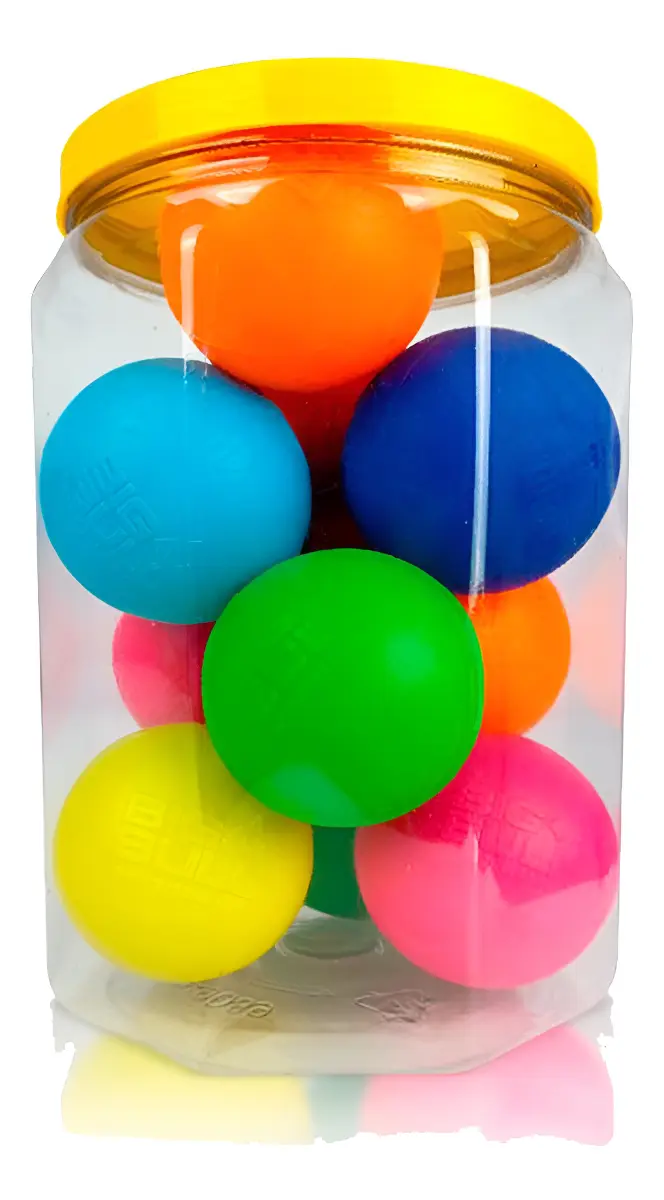
A simple, solid rubber pet ball designed for active play, chasing, bouncing and supervised chewing sessions with dogs and some playful cats.
The Big Bull Pet 5.5cm rubber ball makes sense for pet owners who want a durable, easy-to-use toy for movement, fetch and everyday enrichment without electronics or complicated features. It is a better fit for pets that enjoy chasing, biting and bouncing toys than for animals that need a soft plush toy, a treat dispenser or an automatic moving ball.
The Big Bull Pet 5.5cm rubber ball enters a crowded category: simple pet toys that promise more activity with less effort from the owner. Its main appeal is not technology, lights or sound, but a compact solid-rubber format that can encourage physical play indoors or outdoors.
For buyers, the main question is practical: does this ball offer enough value as an interactive toy for dogs and cats, or is it just another basic rubber ball? The answer depends on your pet’s size, bite style, play habits and the kind of enrichment you expect from the toy.
What the Big Bull Pet 5.5cm rubber ball is trying to solve
The Big Bull Pet 5.5cm rubber ball is a compact pet toy made for movement-based play. Its role is straightforward: give the animal something to chase, bite, push, carry and search for during short play sessions.
Unlike automatic pet balls, it does not depend on charging, batteries or movement sensors. That makes it simpler, easier to introduce and less prone to technical frustration. It also means the interaction comes mostly from the pet, the bounce of the ball and the owner’s participation.
The 5.5cm diameter places it in a practical middle zone. It is small enough for many small and medium dogs to interact with, but still large enough to avoid feeling like a tiny cat ball. For cats, the experience depends more on personality, because not every cat enjoys a solid rubber ball with the same enthusiasm as a rolling feather, plush mouse or light plastic toy.
The product’s strongest angle is active enrichment. It can help turn a simple moment at home into a more stimulating session, especially for pets that become bored when they have nothing to chase or chew. It is not a training device by itself, but it can support routines involving fetch, impulse control, searching games and short bursts of exercise.
The size and bite profile matter more than the name suggests
The biggest buying mistake with this type of toy is choosing by the word “interactive” alone. A rubber ball becomes interactive only when it matches the animal’s size, mouth, bite force and play behavior.
At 5.5cm, this ball is more naturally aligned with small dogs, many medium dogs and pets that like compact toys. It may not be the right match for very large dogs with a strong jaw, especially if the animal tends to destroy toys quickly. In that case, a larger or more specialized heavy-duty toy may be safer and more appropriate.
For smaller dogs, the point of attention is comfort. The pet should be able to push, chase and grip the ball without struggling. If the ball feels too large for the mouth, play becomes less fluid. If it feels too small for a stronger dog, supervision becomes even more important.
For cats, the question is not only size but texture and weight. Some cats enjoy chasing balls across the floor, especially if the toy rolls unpredictably. Others prefer lighter toys that react to a soft paw tap. This Big Bull Pet ball can work for curious cats, but it is more convincing as a dog toy with possible use for cats than as a cat-first toy.
Where this ball performs best in daily use
The strongest use case is classic fetch. A solid rubber ball with bounce can make short play sessions more exciting, especially for dogs that already understand the game and enjoy returning toys. The bounce adds unpredictability, which helps keep the pet engaged.
It also works well for independent play under supervision. Some dogs like carrying a ball around, chewing it lightly or pushing it with the nose. In these moments, the toy can help reduce boredom, mainly when used as part of a rotation with other toys.
The rubber format is another advantage for pets that dislike very soft toys or quickly lose interest in plush items. A firmer ball usually feels more satisfying for dogs that enjoy pressure and resistance while biting.
Another practical benefit is simplicity. There is no app, remote control, charging cable or internal mechanism to manage. That is useful for owners who want a toy that can be used immediately and stored easily after play.
The ball also has a more versatile profile than toys designed for one very specific function. It can be used for throwing, rolling, hiding, retrieval games or basic enrichment. This flexibility is important because pets often get bored when a toy only does one thing.
- Good for movement: useful for chasing, fetch and quick activity sessions.
- Simple to use: no electronic setup, charging or app required.
- Compact format: easier to store and rotate with other pet toys.
- Solid rubber feel: better suited to pets that like firmer toys.
What may disappoint certain pets and owners
This is not the best choice for owners expecting an automatic interactive toy. The ball does not move by itself, does not dispense snacks and does not create entertainment without the pet or owner initiating the action.
It may also frustrate pets that prefer soft textures. Dogs that love plush toys, ropes or squeaky toys may not immediately connect with a solid rubber ball. Cats that prefer feather wands, tunnels or very light balls may also ignore it after a few minutes.
Another point is chewing style. No rubber toy should be treated as indestructible for every animal. Pets with destructive chewing habits need close monitoring, because durability can vary depending on jaw strength, intensity, age and behavior.
The ball is better understood as a durable everyday play item, not as a substitute for supervision. If a dog tends to tear pieces from toys, the safest approach is to remove the ball after the play session and inspect it regularly.
Owners should also consider the surface where the toy will be used. On hard floors, a bouncing rubber ball can be more energetic and may create noise. In small apartments, rolling play may need some control to avoid disturbing the environment or losing the ball under furniture.
Material, bounce and practical performance
The central feature is the solid rubber construction. That matters because solid rubber usually offers a firmer bite feel and better resistance than thin hollow toys. It also gives the ball a more substantial presence during play.
The 5.5cm size is one of the most important specifications for purchase decision. It makes the toy compact, but not tiny. This size can be convenient for everyday play, especially with pets that are active but do not need oversized toys.
The bounce is part of the fun. A ball that rebounds can stimulate chasing and keep the pet alert, because the movement is less predictable than a toy that simply rolls in a straight line. This is useful for dogs that enjoy fast reactions and short bursts of energy.
Because it is a manual toy, performance depends on the environment and the routine. It can feel much more engaging when the owner throws, rolls or hides it than when it is left on the floor all day. Like most simple toys, it works better when introduced with intention.
Maintenance should be straightforward. Rubber toys are generally easier to clean than plush toys, especially after outdoor use. Even so, cleaning should be frequent when the toy is used on floors, gardens or shared pet areas.
It is also worth checking the ball before and after play. Small cracks, deep bite marks or loose fragments are signs that the toy should be replaced. This is not a flaw specific to this product; it is a normal safety habit with any chewable pet toy.
The pets most likely to enjoy it
The Big Bull Pet 5.5cm rubber ball makes the most sense for dogs that enjoy chasing, fetching, biting and carrying toys. It is especially appealing for pets that need quick daily activity but do not require a complex puzzle toy.
It can also suit owners who want a low-maintenance toy for supervised play. If you prefer something simple, washable and easy to use, this ball is a practical option. It does not ask for setup, and that simplicity is part of its appeal.
For puppies and younger dogs, it may help channel energy into a more appropriate object, as long as the size is suitable and play is monitored. It should not replace teething-specific guidance, but it can be part of a healthier toy rotation.
For cats, it is more selective. It can serve curious, active cats that like rolling toys, but it may not win over cats that prefer soft, noisy or feather-based stimulation. In multi-pet homes, the dog may end up using it more than the cat.
When another toy will make more sense
This ball is not the strongest option for very large dogs with extreme bite force. A stronger dog may need a larger, reinforced toy designed specifically for heavy chewing. Choosing the right size is not only about fun; it is also about safer play.
It is also not ideal for pets that need food-based enrichment. If your goal is to slow down eating, hide treats or create a longer mental challenge, a treat dispenser or puzzle feeder will be more appropriate.
For anxious pets, this ball can support activity, but it should not be treated as a complete behavioral solution. Anxiety, destructive chewing and stress-related habits often need a broader routine involving exercise, environment, training and sometimes professional guidance.
Owners looking for a toy that entertains the animal without participation may also prefer an automatic ball. The Big Bull Pet model is interactive in a physical, traditional sense, not in an electronic or self-moving sense.
How it compares with other pet ball options
Compared with plush balls, the Big Bull Pet rubber ball is firmer, easier to clean and better suited to pets that like biting resistance. Plush toys can be more comforting, but they are usually easier to damage and may hold more dirt after repeated use.
Compared with treat-dispensing balls, this model is simpler and more focused on movement. A dispenser can create stronger mental engagement, especially for food-motivated pets, but it also requires filling, cleaning and monitoring of food intake.
Compared with electronic interactive balls, this rubber ball is less stimulating on its own but more predictable and durable in daily handling. Electronic models can be fun for pets that like moving targets, but they involve charging, mechanisms and sometimes noise that sensitive animals dislike.
Compared with rope toys, the ball is better for chasing and bouncing. Rope toys may be better for tug games and dental-style chewing sessions, depending on the pet. The best choice depends on whether your animal prefers pursuit, tugging, chewing or problem solving.
In a balanced toy rotation, this Big Bull Pet ball works best as the “movement and chase” item. It does not need to do everything. Its value is clearer when paired with other toys that cover different needs, such as chewing, comfort, food enrichment and owner-led training.
A clear buying decision for everyday play
The Big Bull Pet 5.5cm rubber ball is worth considering if you want a simple, solid and active toy for dogs that enjoy chasing and biting. It is not the most advanced product in the pet toy category, but it does not need to be.
Its best quality is clarity. You know what you are getting: a compact rubber ball for physical play. That makes it a sensible choice for owners who do not want electronics, apps, treat compartments or complicated cleaning.
The main caution is fit. Before choosing it, think about your pet’s mouth size, chewing intensity and play style. If those points match, the ball can become a useful everyday toy. If they do not, another format will probably deliver a better experience.
Is the Big Bull Pet 5.5cm rubber ball good for dogs?
Yes, it is a good option for many dogs that enjoy chasing, fetching and biting firm toys. The compact rubber format works best for supervised play sessions, especially with small and medium dogs. For very strong chewers or large breeds, a bigger heavy-duty toy may be a safer and more appropriate choice.
Can cats play with this Big Bull Pet ball?
Yes, some cats can play with it, but it depends heavily on the cat’s preferences. Cats that enjoy rolling and chasing toys may interact with the ball, while cats that prefer feathers, soft plush toys or very light objects may ignore it. It is more convincing as a dog-focused toy with possible cat use.
Is this an automatic interactive pet ball?
No, this is not an automatic or electronic moving ball. Its interaction comes from rolling, bouncing, chasing, biting and owner-led play. That makes it simpler and easier to maintain, but it will not entertain a pet in the same way as a rechargeable ball with motion sensors.
Is the 5.5cm size safe for every dog?
No, the 5.5cm size is not ideal for every dog. It can suit many small and medium pets, but very large dogs or animals with powerful jaws may need a larger toy. The safest choice depends on mouth size, bite strength and whether the dog tries to swallow or destroy toys.
Does the ball help reduce boredom?
Yes, it can help reduce boredom when used as part of an active play routine. The ball encourages movement, chasing and engagement, especially when the owner throws or rolls it. However, it should not be the only enrichment tool for pets that need mental challenges or longer independent activities.
Is solid rubber better than plush for this type of toy?
Yes, solid rubber is usually better for pets that like firm bite resistance and active play. Plush toys can feel softer and more comforting, but they may wear out faster with chewing. Rubber is also easier to clean after floor or outdoor use, which makes it practical for regular play.
How should this ball be used safely?
Use it under supervision and inspect it regularly. The ball should be removed if it develops cracks, loose pieces or heavy damage from chewing. It is also best to match the toy to the pet’s size and play style, because durability and safety depend strongly on the animal’s behavior.
Is it a good choice for puppies?
Yes, it can be useful for some puppies if the size and firmness are appropriate. Puppies need supervised play because they explore toys with their mouths and may chew intensely. If the puppy struggles to grip the ball or damages it quickly, a softer or more size-specific toy may be better.
The Big Bull Pet 5.5cm rubber ball is a practical buy for owners who want a straightforward toy that supports movement, chasing and supervised chewing. It stands out most when expectations are realistic: it is a solid rubber play ball, not a smart device, not a snack puzzle and not a universal solution for every pet.
For small and medium dogs that like active play, it can be a useful addition to the toy rotation. For cats, large dogs or destructive chewers, the decision needs more care. Choose it if the size, texture and play style match your pet; skip it if your animal needs something softer, larger, automatic or food-based.