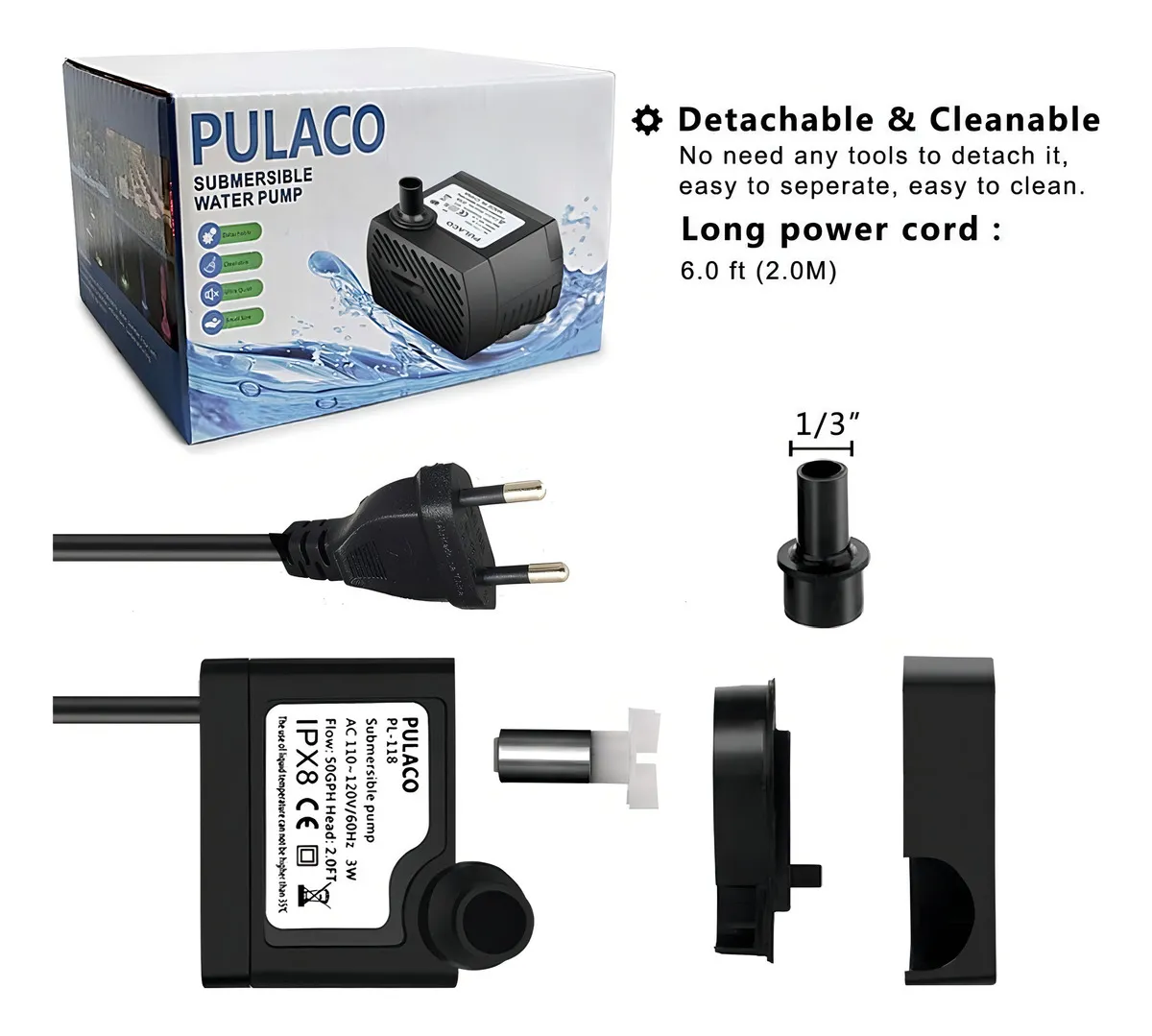
A compact submersible water pump designed for low-demand circulation in aquariums, tabletop fountains, pet water dispensers, and other small water features.
This pump makes sense if you need basic water movement in a small setup and want something simple, compact, and low-consumption.
It is a better fit for light-duty circulation than for strong flow, higher lift, or larger tanks. If your goal is gentle movement rather than aggressive water turnover, it is easier to justify.
The main doubt around a product like this is not whether it works at all. It is whether a small 220L/H pump is enough for the setup you have in mind.
That question matters more than any marketing claim. A pump in this category can be practical and efficient in the right context, but disappointing when the container is too large, the tubing is too long, or the user expects more pressure than the pump was built to deliver.
What this 220L/H pump is really built to do
This product belongs to the small submersible pump category. Its listing points to a maximum flow rate of 220 liters per hour, power consumption of 2.5 W, and a maximum lift of 60 cm, which places it firmly in the light-use range for water circulation rather than heavy-duty pumping.
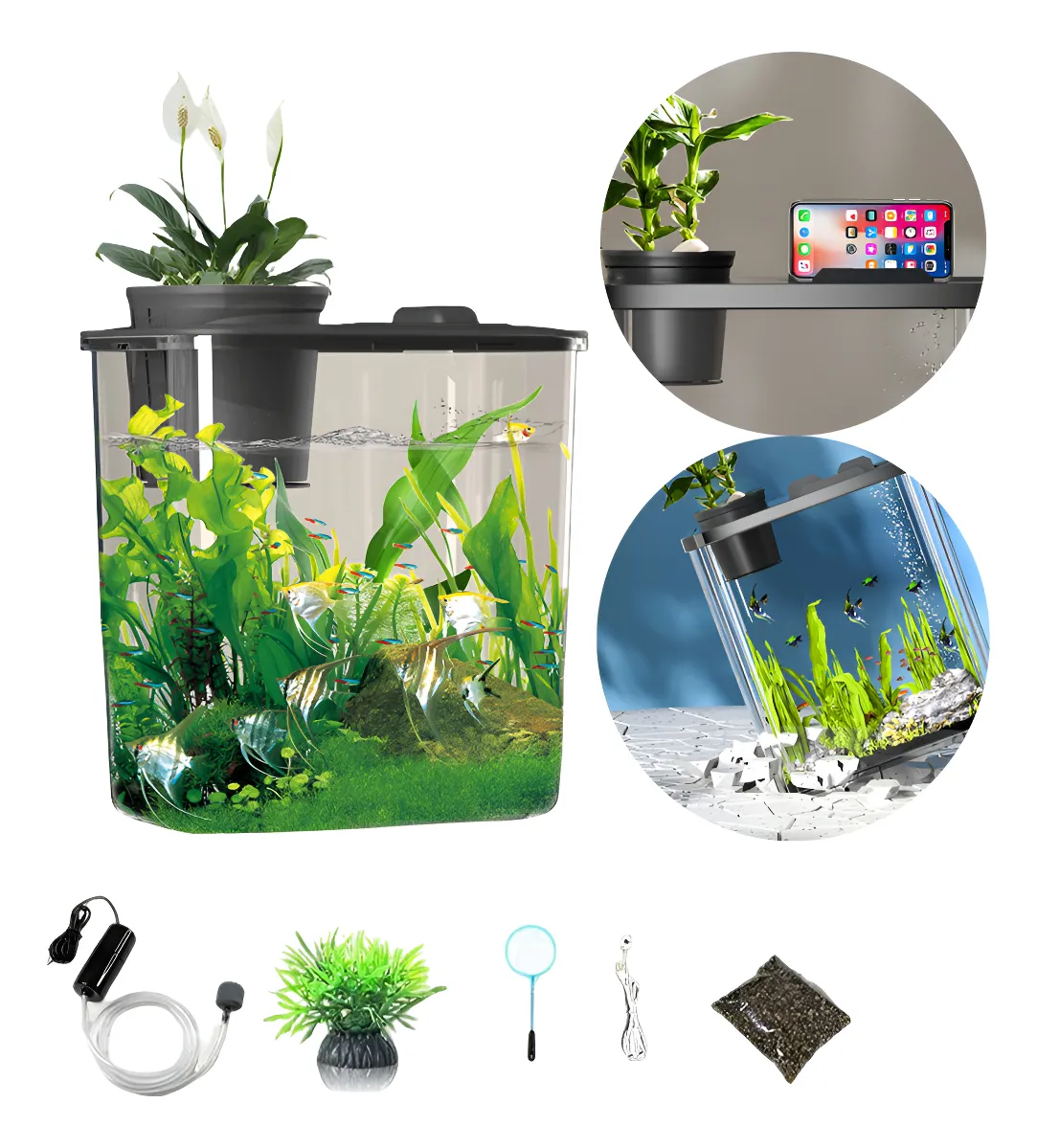
In practical terms, that means it is aimed at compact systems. Small aquariums, decorative indoor fountains, miniature waterfalls, and pet water dispensers are the most natural use cases. In these environments, the goal is not raw pumping force. It is steady movement, basic recirculation, and enough flow to keep water from sitting still.
That distinction is important because many buyers see “submersible pump” and assume broader capability than the product can realistically provide. This is not the kind of unit you buy to move water through long hoses, push water upward over a significant height, or create a dramatic fountain effect. It is a utility piece for modest circulation.
Another positive point is the compact nature of this type of pump. Small pumps are easier to hide inside decorative builds, pet fountains, or compact tanks. They usually take less room, add less visual clutter, and are simpler to position in tighter spaces than more powerful alternatives.
Where most buyers get the decision wrong
The biggest mistake with pumps in this size range is buying by product title instead of buying by real use case. A 220L/H rating can sound stronger than it is, especially to first-time buyers who do not yet think in terms of actual flow loss, lift height, and daily usage conditions.
The first thing to understand is that maximum flow does not mean constant real-world flow in every setup. Once water has to move upward, pass through tubing, feed a small spout, or circulate through a narrow channel, effective output tends to drop. So while the pump may be enough for a compact tabletop fountain or a small pet fountain, it can feel weak in a larger layout.
The second common mistake is ignoring lift. A maximum lift of 60 cm is a clue that the product is meant for short vertical movement. If the water path rises close to that limit, performance will already be reduced. Buyers who want visible height, stronger splash, or more dramatic circulation are the ones most likely to feel underwhelmed.
The third error is treating every aquarium or fountain the same. A small pump can be ideal for a calm nano setup and still be a poor match for a wider tank, a multi-level fountain, or a system that needs stronger turnover. In other words, this is a size-sensitive purchase. The product can be perfectly adequate, but only when the setup is scaled accordingly.
What it does well in everyday use
The strongest advantage here is balance. For a small installation, a 220L/H pump with 2.5 W consumption offers a simple combination of modest flow and low energy demand. That makes it appealing for people who want continuous operation without stepping into a larger, more aggressive pump category.
Another strength is usability. Small submersible pumps are generally straightforward to install because the concept is simple: place the unit inside the water reservoir, route the outlet, and keep the pump submerged during operation. For beginners building a small fountain or replacing a worn pump in a pet water dispenser, that simplicity matters.
It also suits quieter water designs better than oversized pumps do. When the visual goal is a gentle stream, light circulation, or a soft bubbling effect, a compact pump often creates a more controlled result. A stronger unit can force the user to tame excess flow, while a small unit feels more in proportion from the start.
For small aquariums, the attraction is the same. Some users are not looking for intense current. They just want basic movement, light circulation, and a more active water surface in a limited volume. In that kind of context, this pump can serve the role without overcomplicating the setup.
- Low power demand: a 2.5 W pump is easier to run continuously.
- Compact format: more convenient for tight spaces and discreet placement.
- Light-duty flow: better suited to gentle circulation than forceful output.
- Versatile small-scale use: useful for aquariums, fountains, and dispenser-style builds.
What may feel limiting after installation
The main limitation is straightforward: this is a small pump. That sounds obvious, but it becomes more noticeable after installation than it does on a product page. Buyers who expect strong lift, visible pressure, or large-volume recirculation are the ones most likely to feel the gap between expectation and result.
A second limitation is headroom for future upgrades. If you are still undecided about the final size of your project, this type of pump leaves less room to grow. It works best when the system is already clearly defined as compact. If you think you may add longer tubing, extra height, more filtration, or a wider water path, the safe choice is often to size up rather than stretch a small unit beyond its comfort zone.
There is also the issue of category overlap. Some people shop for a pump when what they really need is a filter, an aeration system, or a stronger recirculation solution. This product helps move water, but it should not be confused with specialized equipment designed for more demanding filtration or oxygenation needs.
That is why the pump can feel excellent to one buyer and underwhelming to another. The difference is usually not quality alone. It is alignment. In the right setup, simplicity is a benefit. In the wrong setup, simplicity looks like limitation.
How the 2.5 W motor and 60 cm lift translate in practice
The most useful way to judge this pump is by reading its specifications as a real-world profile rather than isolated numbers. The 2.5 W power rating tells you the product is aimed at basic continuous circulation, not intense pressure. The 220L/H maximum flow suggests enough movement for small systems, but not enough authority for larger or more restrictive layouts.
The 60 cm maximum lift is especially revealing. For fountain and aquarium buyers, lift is one of the fastest ways to understand practical limits. A pump with this ceiling is naturally better suited to low-rise applications. The closer your layout gets to that maximum, the less convincing the flow will feel at the outlet.
Voltage information in the listing points to 127V and 220V availability, which is useful because buyers should match the version to the local electrical setup rather than assuming universal compatibility. That is a simple detail, but getting it wrong creates unnecessary friction before the product is even installed.
As a performance profile, then, the product is best read this way: modest power, modest lift, modest flow, and small-project usefulness. That does not make it weak in an absolute sense. It makes it specialized for compact circulation jobs where a larger pump would be excessive.
Who will get the best result from it
This pump is easier to recommend to buyers with a clear, limited objective. If you are building a small decorative fountain for a desk, shelf, balcony corner, or indoor ornamental piece, it has the right kind of profile. It is also a sensible option for small pet water dispensers where constant but not aggressive flow is the priority.
It can also make sense for small aquariums where the user wants light water movement rather than strong directional current. That includes beginner setups, temporary low-demand builds, and small circulation jobs where compact size matters as much as the pump itself.
Another good match is the replacement buyer. This is the person who already has a compact fountain or dispenser and simply needs a pump in the same general power class. In that scenario, the decision becomes more practical and less theoretical. If the previous setup did not require more lift or more pressure, a pump like this can be a direct and sensible fit.
It also suits buyers who value simplicity over advanced features. Not every project needs a larger body, stronger motor, or more complex configuration. Sometimes the best purchase is the one that does the basic job without excess.
Who should skip it and look higher
If your setup is medium to large, this pump is easier to rule out. That includes wider aquariums, larger decorative water features, taller fountain designs, or any project where water has to travel upward more significantly before returning.
You should also skip it if you already know you want visibly stronger circulation. Some users do not want subtle water movement. They want a more energetic stream, more noticeable output, or better margin for tubing, height, and flow loss. In those cases, buying a pump at the edge of the requirement usually leads to a second purchase later.
The same applies if you want more flexibility. A small pump is efficient when the project is fixed and compact. It is less convincing when the design is still evolving. If you are still experimenting with fountain height, reservoir size, or outlet shape, stepping into a higher-capacity class often gives a smoother experience.
This is also not the most logical choice for people who confuse pump size with overall water care. If the real need is filtration strength, broader aquarium support, or heavier recirculation, a different type of solution may be more appropriate than a basic small submersible pump.
How it stacks up against other options in the same category
Against smaller pumps, this one has a practical edge because 220L/H usually lands in a more useful middle zone for compact projects. It is stronger than ultra-basic models that only create minimal movement, but it still stays within the low-demand class. That makes it easier to use in small fountains and dispensers without overdoing the flow.
Against larger pumps, the trade-off becomes clear. Bigger alternatives tend to offer more lift, more pressure, and more tolerance for tubing length or design complexity. They are better for users who want extra margin. But they also take more space, can be harder to hide, and may feel unnecessary in a truly small setup.
Compared with pumps sold mainly as compact aquarium accessories, the appeal here is versatility. The product title itself already signals broader use across aquariums and fountains, and that matters because many buyers want one small pump class that can serve more than one type of home project.
So the strategic comparison is less about whether this is the strongest choice and more about whether it is the right-sized choice. If your project is compact and your expectations are realistic, the smaller footprint and lighter output are advantages. If your project is taller, broader, or less defined, a step up in capacity will usually be the safer call.
When this pump makes sense for a real setup
This product is worth considering when your expectations match its scale. If you need compact water circulation, low power draw, and a straightforward pump for a small fountain, pet dispenser, or light aquarium duty, it has a sensible profile. It does not need to do everything to be a good purchase. It only needs to do the right job well.
Where people go wrong is asking a small pump to behave like a larger one. If you avoid that trap, the value of this kind of product becomes much easier to see. It is compact, focused, and better at light circulation than at ambitious water movement.
So the buying decision comes down to one honest question: is your setup truly small and low-demand? If the answer is yes, this pump is a rational fit. If the answer is no, moving up to a stronger class will likely save frustration.
Is a 220L/H pump enough for a small aquarium?
Yes, for a small aquarium focused on light circulation it can be enough. The key is not just tank size, but how much water movement you actually want. If your goal is gentle flow rather than stronger turnover, this pump can make sense. If you expect more active circulation, it may feel limited.
Can this pump be used in a pet water fountain?
Yes, that is one of the most natural uses for a pump in this class. A compact submersible model with modest power and flow is often well suited to dispenser-style builds. The important part is checking fit, water path, and voltage compatibility before treating it as a direct replacement.
Does 60 cm of lift mean it can power a taller fountain?
No, not in a confident way. A 60 cm maximum lift is more of a performance ceiling than an ideal working target. The closer your design gets to that limit, the more flow drops in practice. It is better suited to low-rise water features than to taller or more dramatic fountain layouts.
Is this a strong enough pump for long tubing?
No, long tubing is where small pumps usually start to lose their advantage. Extra distance and resistance reduce effective output, especially in compact models built for modest circulation. If your design depends on longer tubing or narrower channels, choosing a stronger pump class is usually the smarter move.
Is a 2.5 W pump good for continuous use?
Yes, a 2.5 W profile is attractive for continuous light-duty operation. That low-consumption character is one reason pumps like this are popular in small fountains and dispenser setups. The trade-off is that low power also means limited authority, so efficiency comes with realistic expectations about performance.
Should first-time buyers choose this or a larger pump?
It depends on how clearly defined the project already is. If the setup is small, simple, and close to the pump, this size is easier to justify. If the design is still uncertain or may grow, going slightly larger often reduces the risk of buying something that feels undersized after installation.
What matters more here: flow rate or lift?
Both matter, but lift is often what exposes the real limit first. A 220L/H flow figure sounds useful, but once the water has to rise and travel through the system, output drops. That is why buyers should judge the pump by the whole profile, not by the flow number alone.
If you want a compact submersible pump for a small-scale job, this model sits in a practical zone. The 220L/H flow, 2.5 W consumption, and 60 cm lift profile point to exactly what it does best: gentle recirculation in modest layouts, not strong pumping in ambitious builds.
That makes it a good match for buyers who already know their project is small and uncomplicated. For everyone else, especially those planning extra height, more tubing, or stronger water movement, the wiser decision is usually to move up in capacity before the setup exposes the limit.