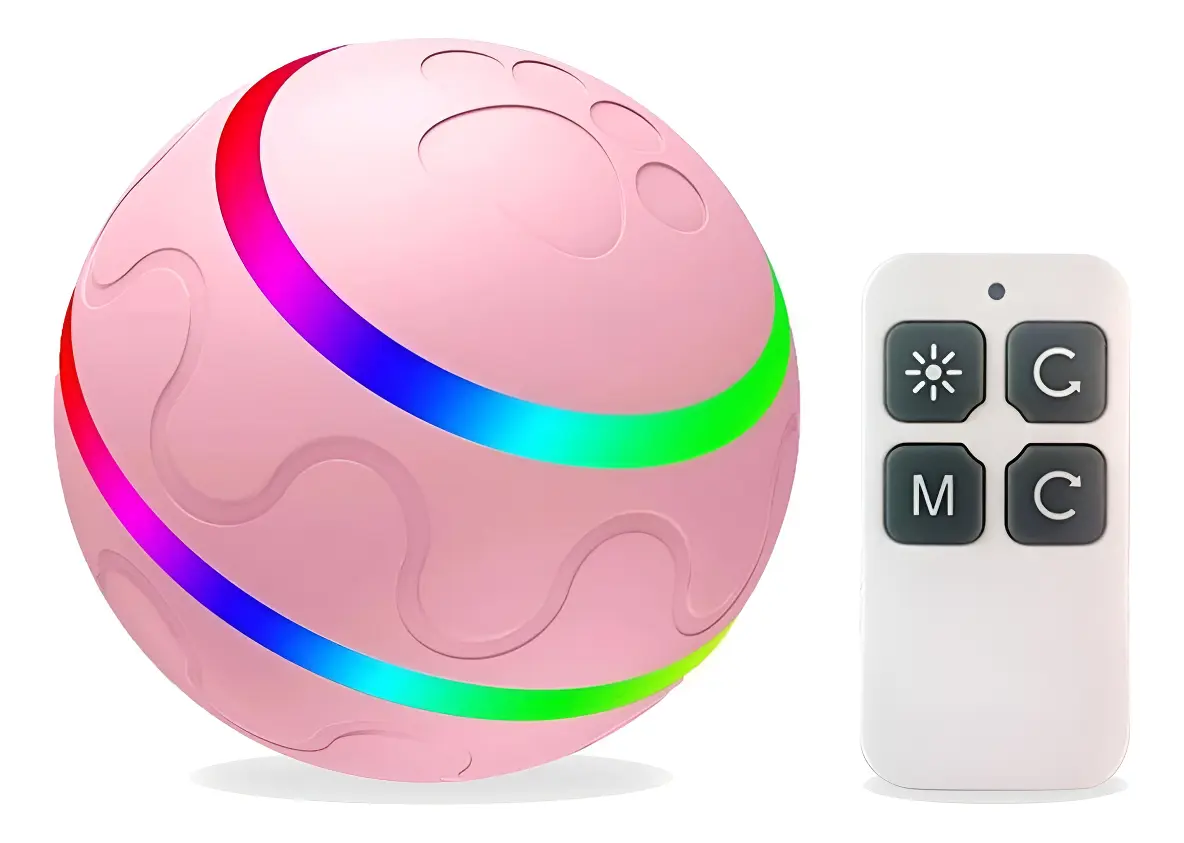
A practical look at the 80mm smart pet ball designed for dogs that need more active play, especially larger breeds that can get bored with passive toys.
The 80mm Smart Dog Ball for Large Breeds is worth considering if you want an interactive toy that encourages movement, curiosity, and short bursts of play. It makes the most sense for supervised indoor or controlled outdoor use, especially with dogs that enjoy chasing moving objects. It is not the safest choice for dogs that destroy toys aggressively or for owners expecting a completely indestructible chew product.
The 80mm Smart Dog Ball for Large Breeds sits in a useful space between a classic fetch ball and a more stimulating interactive pet toy. Instead of depending only on the owner throwing it, the ball is presented as a smart, moving toy with remote-control style interaction and automatic rolling behavior.
That changes the buying decision. This is not just about whether a dog likes balls. It is about whether the dog needs more movement, more mental stimulation, and a toy that can make play feel less repetitive during the day.
Why this 80mm smart pet ball stands out
The main appeal of this product is its combination of familiar shape and added movement. A ball is one of the easiest toys for a dog to understand, but a moving ball can create more curiosity because it does not behave exactly like a standard rubber or tennis-style ball.
The 80mm size is also important. It places the toy in a larger-ball category, which is usually more suitable for medium-to-large dogs than very small balls that may be easier to lose under furniture or become less comfortable for bigger mouths.
For large breeds, size matters because the toy needs to feel engaging without being too small. A larger dog often needs a ball that is visible, easy to track, and practical to chase. An 80mm diameter gives the product a stronger presence on the floor and makes it more appropriate for active play than many tiny interactive toys.
The product is also listed as a single-unit item, so the decision is straightforward. You are not buying a set with multiple textures, shapes, or backup pieces. You are choosing one interactive ball and judging whether its movement-based play style fits your pet.
Its strongest role is daily enrichment. Dogs that spend long periods indoors, dogs that lose interest in static toys, and pets that react well to moving objects are the best match. The ball can help turn a quiet floor space into a short activity session without requiring a complicated setup.
The size factor many buyers should check before choosing it
The biggest buying mistake in this category is choosing by appearance alone. A smart pet ball can look fun in a product photo, but the real question is whether the size, movement, and play style fit the dog’s mouth, energy level, and environment.
The 80mm format makes this product more appropriate for larger dogs than very small rolling toys. That said, size alone does not make any ball suitable for every dog. Some large breeds are gentle players, while others are heavy chewers that try to crush, tear, or dismantle anything they receive.
For dogs that love chasing and nudging, this type of ball can be a strong match. For dogs that mainly want to bite down and chew for long periods, expectations should be more cautious. A moving ball is usually better understood as an interactive activity toy, not as a dedicated chew substitute.
The space where the toy will be used also matters. A ball that rolls automatically needs room to move. It may be more enjoyable in a clear living room, hallway, patio, or other open area than in a cramped space full of furniture, cables, fragile items, or stairs.
Surface is another detail worth thinking through. Smooth floors usually allow a rolling toy to move more freely, while thick rugs or uneven outdoor ground may reduce the effect. If the dog becomes frustrated when toys get stuck, the best use is in an area where the ball can travel naturally.
How it helps with movement, attention, and daily play
The strongest advantage of an interactive dog ball is that it can make play feel less predictable. A standard ball waits for the owner to throw it. A moving smart ball can attract attention by changing position, encouraging the dog to follow, chase, paw, or investigate.
That can be useful for dogs that need more stimulation during the day. Many pets do not only need physical exercise; they also need small mental challenges. A toy that moves can activate curiosity and give the dog something to observe and respond to.
For larger breeds, this can be especially helpful when the dog has energy but the owner cannot start a full outdoor play session at that exact moment. The ball may support short play intervals indoors, giving the dog a controlled way to move without turning furniture, shoes, or household objects into entertainment.
The remote-control style element also adds value for owners who want to participate without constantly throwing the toy. This can make the experience more interactive between the person and the pet, because the owner can influence the movement and keep the dog engaged for short sessions.
Another useful point is versatility in multi-pet homes. Although the product is positioned mainly for dogs, this type of moving pet ball can also interest cats that enjoy chasing small moving objects. In a home with both dogs and cats, supervision becomes even more important, but the toy may attract more than one type of pet.
The ball also has a simple advantage: it is easy to understand. There are toys that require training, food placement, puzzle solving, or repeated demonstration. A moving ball usually needs less explanation. Most dogs either become curious quickly or show that the movement is not their preferred type of play.
Where expectations should stay realistic
This product should not be treated as a universal solution for boredom, anxiety, or destructive chewing. It can support activity, but it does not replace walks, training, human attention, scent games, or structured exercise.
The first point of attention is chewing behavior. If a dog’s main habit is to pin toys down and try to break them, any smart ball deserves careful supervision. Moving parts, electronic behavior, or control features make it different from a plain solid chew toy.
Another point is noise and sensitivity. Some dogs become excited by movement and lights, while others may be cautious at first. A nervous dog may need gradual introduction. It is better to let the dog observe the ball at a distance before expecting immediate play.
Battery or charging details should also be checked before purchase when available from the seller. With smart pet toys, daily convenience depends on how easy the toy is to activate, recharge, clean, and store. A fun toy becomes less useful if the owner finds the routine inconvenient.
Durability should also be judged with realism. A toy for large breeds should be robust enough for active play, but no moving ball should be assumed to be indestructible. The safest approach is to use it as an activity item and put it away after the session rather than leaving it available all day for unsupervised chewing.
Finally, it may not satisfy dogs that only enjoy food-based puzzles. Some pets are motivated by motion, while others prefer treats, scent work, or tug games. If your dog ignores balls in general, the smart movement may help, but it does not guarantee a complete change in preference.
Movement, controls, and everyday handling
The defining feature of this toy is its smart movement concept. A ball that rolls automatically can encourage a dog to react in a more natural chase pattern, especially when the motion is unpredictable enough to hold attention.
Remote-control style use can make the toy more engaging for the owner as well. Instead of watching passively, the person can help guide the play session and adjust the interaction based on the dog’s response. This is useful for dogs that need encouragement at first.
The 80mm size gives the ball a practical balance. It is large enough to be noticeable for bigger dogs, while still compact enough to roll through a room and remain easy to store. For a large-breed dog, this size is more convincing than very small interactive balls that may feel too delicate or too easy to ignore.
Cleaning is another practical factor. Any ball used by dogs will collect saliva, dust, hair, and floor debris. Because this is a smart-style toy, it should be cleaned with more care than a simple outdoor ball. The best approach is usually a gentle wipe-down rather than soaking it or treating it like a fully washable solid toy unless the seller confirms water resistance.
For daily use, short sessions are often better than leaving the toy running for too long. A few minutes of focused play can be enough to stimulate attention without overstimulating the dog. This also helps preserve the novelty of the toy.
Storage matters too. Keeping the ball away after use can make it more interesting the next time it appears. If the dog has constant access, the toy may become ordinary, or the dog may start treating it as a chew object rather than an interactive game.
Homes and dogs that can get the most from it
This product makes the most sense for owners of medium-to-large dogs that enjoy chasing movement. If your dog already reacts to rolling balls, moving shadows, tossed toys, or quick floor movement, this type of smart pet ball has a stronger chance of working well.
It is also a good fit for homes where the dog needs extra indoor enrichment. Not every day allows a long outdoor session, and not every owner has the space for intense play. A rolling ball can create a compact activity that still gives the dog something to follow and investigate.
Dogs with playful but not overly destructive behavior are the best match. The ideal user is a dog that chases, paws, nudges, and carries toys without immediately trying to tear them apart. This profile allows the toy’s movement feature to matter more than its resistance to extreme chewing.
It can also work for owners who like interactive participation. The remote-control idea is more attractive when the person wants to be involved in the play session. If the owner wants a toy that creates a shared moment without constant throwing, this product fits that purpose well.
For puppies of larger breeds, the decision depends on mouth size, chewing habits, and supervision. A young dog may love the movement, but puppies also explore with their teeth. That makes monitored play especially important.
It may also appeal to households with pets that get bored with plush toys or standard balls. The movement gives the toy a different kind of energy. It can become part of a rotation with chew toys, tug toys, food puzzles, and outdoor fetch items.
Cases where a simpler toy may make more sense
A simpler toy may be a better choice if your dog is an intense chewer. Dogs that destroy plastic, rubber, fabric, or hard toys quickly may need purpose-built chew products instead of a moving smart ball.
It may also be less suitable for dogs that are easily frightened by sudden movement. Some pets need slow, predictable toys. If a dog runs away from moving objects or becomes stressed by unfamiliar floor movement, the ball should be introduced very carefully or replaced by a calmer enrichment option.
Owners who want a toy for unsupervised all-day use should also be cautious. Smart moving toys are better for monitored sessions. A classic chew toy, durable treat dispenser, or safe rest-time toy may be more appropriate when no one is watching.
Very small pets may not be the ideal match for the 80mm format, depending on their size and confidence. While the product can attract different pets, the large-breed positioning suggests that it is not primarily designed as a tiny toy for miniature dogs.
It may also disappoint owners expecting a full training tool. This is mainly a play and enrichment product. It can support movement and attention, but it is not a substitute for recall training, impulse-control exercises, obedience work, or professional behavioral guidance.
How it compares with classic balls, treat toys, and plush toys
Compared with a classic dog ball, the 80mm smart pet ball offers more stimulation because it can move without depending entirely on a throw. A standard ball is better for outdoor fetch and rougher repetitive play, but a smart ball is more interesting for indoor curiosity and chase behavior.
Compared with a treat-dispensing toy, this ball is less food-focused. That can be a good thing for dogs that need activity without constant snacks. On the other hand, food-motivated dogs may stay engaged longer with a puzzle feeder than with movement alone.
Compared with plush toys, this product is more active and less comforting. Plush toys are often used for carrying, cuddling, or gentle chewing. A smart ball is better for movement, attention, and short play bursts. The right choice depends on whether the dog wants comfort or action.
Compared with heavy-duty chew toys, the smart ball is more dynamic but less focused on bite endurance. If the dog’s priority is chewing, a dedicated chew product is usually the safer category. If the goal is to encourage chasing and movement, the smart ball has the stronger proposal.
Compared with rope toys, it requires less physical pulling from the owner. Rope toys are great for tug sessions and bonding, but they demand more direct human involvement. The remote-control style of this ball allows a different kind of participation, with the owner guiding movement rather than pulling or throwing.
The best strategy is not to see this product as the only toy a dog needs. It works better as part of a toy rotation. Use it for active curiosity, use chew toys for chewing, use puzzles for food-based enrichment, and use outdoor balls for fetch.
The buying decision in practical terms
The 80mm Smart Dog Ball for Large Breeds is a smart choice when the goal is to add movement-based enrichment to a dog’s routine. Its main strength is not complexity. Its strength is taking a familiar object and making it more engaging through motion and interactive control.
It is most convincing for owners who already know their dog enjoys chasing toys. In that case, the smart movement can make play feel fresher and more stimulating than a passive ball lying on the floor.
The product is less convincing for dogs that treat every toy as something to destroy. In those cases, durability and supervision become the deciding factors. A moving ball can still be fun, but it should not be expected to perform like a heavy chew product.
For large breeds, the 80mm size is one of the most relevant details. It gives the toy a more suitable scale for bigger dogs and makes it easier to see, chase, and interact with during short sessions.
Overall, it is a good option for supervised play, indoor activity, and owners who want a more interactive alternative to a standard ball. It is not the best option for every dog, but for the right pet profile, it can add useful energy to the daily routine.
Is the 80mm Smart Dog Ball suitable for large breeds?
Yes, the 80mm size makes it more suitable for larger dogs than many smaller pet balls. It gives the toy better visibility and a more practical scale for chasing. The owner should still consider the dog’s chewing style, mouth size, and behavior, because large size alone does not make any toy indestructible.
Can this smart pet ball replace daily walks?
No, it should not replace daily walks or structured exercise. The ball can help with short play sessions and indoor stimulation, but dogs still need outdoor activity, sniffing time, training, and social interaction. It works better as an extra enrichment tool than as the main source of physical activity.
Is it safe to leave the dog alone with this ball?
No, supervised use is the safer approach, especially with large dogs or strong chewers. Smart moving toys are best used during controlled play sessions. Watching the dog helps prevent rough chewing, frustration, or misuse, and it also helps the owner understand whether the toy truly fits the pet’s behavior.
Does a remote-control dog ball help with boredom?
Yes, it can help reduce boredom for dogs that enjoy chasing moving objects. The automatic rolling behavior can create curiosity and encourage movement. However, it works best as part of a varied routine with walks, scent games, training, rest, and other toys that meet different needs.
Is the 80mm ball good for puppies?
It can be suitable for some puppies of medium-to-large breeds, but only with supervision. Puppies often bite, test, and chew toys intensely, so the owner should introduce the ball gradually. If the puppy tries to destroy it rather than chase it, a dedicated puppy chew toy may be more appropriate.
What kind of dog will enjoy this toy the most?
Dogs that like chasing, nudging, following movement, and reacting to rolling objects are the strongest match. The toy is especially useful for playful dogs that need more stimulation indoors. Dogs that prefer food puzzles, tug games, or chewing may still enjoy it, but it may not become their favorite toy.
Can cats also play with this smart pet ball?
Yes, cats may be interested in a moving pet ball, especially if they enjoy chasing small moving objects. Still, the product is positioned strongly around dogs and larger breeds, so multi-pet use should be supervised. The size and movement may be exciting for some cats and too intense for others.
How should this ball be introduced to a cautious dog?
Start slowly and let the dog observe it before using full movement. Place the ball on the floor while inactive, allow sniffing, then activate it briefly at a distance. Short, calm sessions help prevent fear. Reward curiosity and avoid forcing interaction if the dog seems unsure.
The 80mm Smart Dog Ball for Large Breeds is best understood as an interactive play enhancer. It gives dogs a moving target, gives owners a more engaging way to participate, and can make indoor activity more interesting when used in the right space.
It is a stronger choice for dogs that chase than for dogs that chew aggressively. It is also more useful for supervised sessions than for constant access. If your dog enjoys active toys and you want a simple way to add motion and curiosity to daily play, this 80mm smart pet ball is a sensible product to consider.