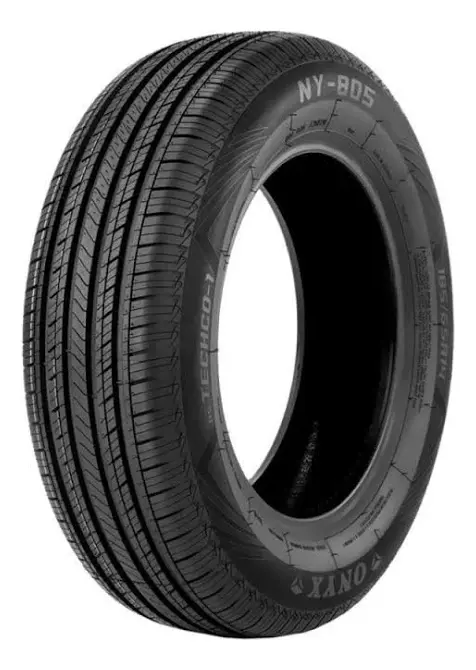
A practical look at the Onyx NY805 in size 175/70R14 for drivers who want a straightforward replacement tire for daily use, city routes and moderate highway driving.
The Onyx NY805 175/70R14 84T makes sense for drivers looking for a simple passenger-car tire with a balanced everyday proposal. It is not positioned as a sporty, premium or run-flat tire, so the best fit is routine driving, moderate speeds and vehicles compatible with the 175/70R14 size, load index 84 and T speed rating.
The Onyx NY805 175/70R14 84T tire is aimed at a very common buying situation: replacing worn tires on a compact or small family car without moving into a highly specialized product. Its main appeal is practical usability, with a size and specification set that suits many everyday vehicles that use 14-inch wheels.
Before choosing it, the key is not only asking whether the tire is good. The better question is whether this exact size, load index, speed rating and performance profile match your vehicle and the way you drive.
What the Onyx NY805 175/70R14 84T is designed to do
The Onyx NY805 is a passenger-car tire in the 175/70R14 size. That means it has a nominal tread width of 175 mm, a sidewall height equal to 70% of that width, and is made for 14-inch wheels. This combination is common in compact cars, older hatchbacks, sedans and everyday urban vehicles.
The 84 load index indicates a maximum load capacity of 500 kg per tire when used under the correct conditions. The T speed rating corresponds to a maximum speed capability of 190 km/h. These figures do not mean the tire should be pushed to the limit in daily use; they simply define the technical range for compatible vehicles.
It is also listed as a passenger-service tire and not a run-flat model. That matters because a non-run-flat tire should not be driven after a puncture or major pressure loss. If your vehicle originally uses run-flat tires, this model should not be treated as a direct substitute without checking compatibility and safety requirements.
The NY805 uses a symmetrical tread design. In practical terms, a symmetrical pattern is usually associated with predictable everyday behavior and simpler tire rotation strategies, depending on the vehicle and installation guidance. It is not a feature that automatically makes the tire superior, but it fits the product’s focus on conventional daily use.
The fitment details that decide whether this tire is right
The biggest mistake when buying the Onyx NY805 175/70R14 84T is choosing it only because the rim size looks correct. A tire is not defined by the wheel diameter alone. The full measurement, load index and speed rating all need to match the vehicle manufacturer’s recommendation.
The 175/70R14 size must be checked against the vehicle manual, tire placard or current approved tire specification. Using a different size can affect ride height, steering feel, speedometer reading, braking behavior and clearance inside the wheel arch. Even small changes can matter if the vehicle has limited space around the suspension or bodywork.
The 84 load index is also important. If the vehicle requires a higher load index, this tire should not be used as a downgrade. Load capacity is part of the safety specification, especially when the car carries passengers, luggage or frequent weight in the trunk.
The T speed rating is suitable for many everyday cars, but it should still match or exceed the vehicle’s required rating. Drivers who frequently travel long distances at higher speeds should pay extra attention to correct inflation, tire condition, alignment and overall vehicle maintenance.
For anyone replacing only one or two tires, matching the same size and comparable performance category across the axle is essential. Mixing very different tires can change grip balance, especially during braking or wet-road maneuvers.
Where the NY805 can make everyday driving easier
The Onyx NY805 is most appealing when viewed as a practical replacement tire rather than a high-performance upgrade. Its size, passenger-car specification and conventional construction point toward daily mobility, commuting, school runs, city driving and occasional highway use.
The 70-profile sidewall gives the tire a relatively taller sidewall compared with lower-profile sport tires. This can help with ride comfort on uneven streets, potholes and imperfect pavement. It does not replace suspension quality, but it can make the driving experience less harsh than very low-profile alternatives.
The 175 mm width also fits the needs of compact vehicles that do not require a wide contact patch. Wider tires can look more aggressive, but they are not always the best choice for fuel efficiency, steering weight or compatibility. For cars designed around this size, staying with the approved specification is usually the most sensible path.
The symmetrical tread design supports the tire’s simple daily-use character. For drivers who want a tire that does not demand a specialized use case, this is a practical advantage. It keeps the focus on predictable road manners rather than niche performance.
Another useful point is that the NY805 is not presented as a run-flat tire. For many standard vehicles, that is normal and expected. It also means the driver should keep the spare tire, repair kit or emergency plan in good condition, because the tire is not intended to continue driving after losing pressure.
Trade-offs to check before fitting it to your car
The Onyx NY805 175/70R14 84T is not the best match for drivers expecting premium refinement, sporty cornering or advanced wet-road performance. Its confirmed ratings place it in a more basic practical category, so expectations should be realistic.
Fuel efficiency and wet grip are listed with E ratings. That does not make the tire unusable, but it does mean it should be chosen with an understanding of its positioning. Drivers who prioritize shorter wet braking distances, stronger rain performance or lower rolling resistance may prefer a higher-rated alternative.
The external noise figure is listed at 70 dB. In real driving, perceived cabin noise depends on the car, road surface, speed, tire pressure and insulation. Still, this specification is useful for comparing it with other options in the same size.
Because it is a standard tire, it should be maintained carefully. Correct tire pressure, regular rotation when recommended, wheel balancing and alignment all make a significant difference. A budget-friendly or practical tire can feel worse than it should if installed on a car with worn suspension, incorrect camber or neglected pressure checks.
It may also frustrate drivers who want an aggressively sporty look. The 175/70R14 format is more about practicality and compatibility than visual impact. For many cars, that is exactly what is needed, but it is not the emotional choice for someone building a performance-oriented setup.
Technical behavior behind the 175/70R14 84T specification
The 175/70R14 size tells you a lot about how this tire is likely to behave. The 175 mm width supports easy steering and suitable contact for compact vehicles. The 70 aspect ratio provides a taller sidewall, which usually favors comfort and absorption over sharp steering response.
The 14-inch wheel fitment is common in practical, economical and older vehicle platforms. These cars usually benefit from tires that preserve ride comfort, keep steering effort manageable and maintain the original rolling diameter as closely as possible.
The load index 84 is equivalent to 500 kg per tire. This matters for safety and stability, especially when the car is fully occupied. The tire should always be used within the load limits defined by the vehicle manufacturer, not only by the tire specification itself.
The T speed rating indicates a maximum rated capability of 190 km/h under appropriate conditions. This does not encourage high-speed driving; it simply confirms the technical category. Road conditions, heat, tire age, pressure and vehicle load all influence real-world safety.
The NY805 is also identified as a radial tire. Radial construction is the standard for modern passenger-car tires and is expected in this category. It supports normal road use, stable contact and everyday durability when maintained correctly.
The confirmed Inmetro-style performance indicators place fuel efficiency and wet grip at E, with external noise listed at 70 dB. These ratings are important because they help the buyer understand the tire’s profile without relying only on marketing language.
Drivers who are most likely to be satisfied with this tire
The Onyx NY805 175/70R14 84T makes the most sense for drivers who want a conventional tire for a compatible passenger car. It suits someone who drives mostly in the city, keeps moderate speeds and wants a simple replacement with the correct size and basic technical clarity.
It also fits drivers who value comfort over sporty response. The taller sidewall can be more forgiving on imperfect roads than lower-profile tires. For daily commuting, this can be more useful than having a sharper steering feel that the vehicle was not designed to exploit.
The tire is also suitable for buyers who prefer to keep the car close to the original specification. If the vehicle requires 175/70R14 with compatible load and speed ratings, choosing the correct fit is often wiser than experimenting with wider or lower-profile alternatives.
It can also work for drivers who want a practical tire for routine replacement across all four wheels. Replacing a full set with matching tires helps preserve balanced behavior, especially in wet conditions and emergency braking.
Situations where another tire may be the safer choice
The Onyx NY805 should not be the first choice if your car requires a higher load index, a higher speed rating or a different approved size. Tire compatibility is not flexible when safety specifications are involved.
It is also not ideal for vehicles originally equipped with run-flat tires, unless a qualified professional confirms that the change is appropriate and the vehicle has an alternative emergency solution. A non-run-flat tire behaves differently after pressure loss.
Drivers who regularly face heavy rain, fast highway travel or demanding road conditions may want to compare tires with stronger wet-grip ratings. Wet braking is one of the most important safety criteria, and a higher-rated option may be worth considering for that profile.
It may also be less satisfying for drivers who want premium refinement. If low cabin noise, advanced tread technology, sharper handling and stronger all-weather confidence are priorities, this tire’s practical positioning may feel too basic.
For commercial use, frequent heavy loading or rough-road punishment, the buyer should be especially cautious. This is a passenger-car tire, not a reinforced utility tire for demanding cargo applications.
How it compares with other 175/70R14 options
Compared with more premium 175/70R14 tires, the Onyx NY805 is more focused on basic mobility than advanced performance. Premium alternatives may offer better wet grip, lower rolling resistance, quieter rolling behavior or more refined steering feel, depending on the model.
Compared with entry-level alternatives, the NY805 should be judged by its confirmed specifications rather than by brand recognition alone. The size, load index, speed rating, symmetrical tread, non-run-flat construction and performance ratings give a clearer picture than generic claims.
Against sportier tire formats, the 175/70R14 size is more comfort-oriented. A lower-profile tire may feel more responsive, but only if the vehicle supports that change and the driver accepts the trade-off in comfort and possible impact sensitivity.
Against tires with stronger wet ratings, the NY805 may be less compelling for drivers who prioritize rain confidence. That does not mean it cannot be used in wet conditions, but it does make tire pressure, tread depth and cautious driving even more important.
For buyers choosing between this tire and another model in the same size, the most relevant comparison points are wet grip rating, noise rating, rolling resistance, manufacturing date, warranty terms, installation quality and whether the seller provides proper documentation.
The buying decision in practical terms
The Onyx NY805 175/70R14 84T is a sensible choice when the goal is a straightforward tire for a compatible passenger car and normal daily driving. It should be considered by drivers who want correct fitment, basic usability and a comfort-friendly sidewall profile.
The decision becomes weaker if the driver expects premium wet-road performance, a run-flat safety structure, sport handling or the most refined ride quality available in the category. In those cases, comparing higher-rated options is the safer path.
The most important step before buying is confirming the exact tire size and specification required by the vehicle. If the car manual, door placard or current approved tire set matches 175/70R14 with compatible load and speed ratings, the NY805 becomes a practical candidate.
After purchase, installation quality matters. The tire should be mounted by a qualified professional, balanced correctly and inflated to the vehicle’s recommended pressure. Poor installation can make even a suitable tire feel unstable, noisy or uncomfortable.
Is the Onyx NY805 175/70R14 84T suitable for city driving?
Yes, it is suitable for city driving when the vehicle is compatible with the 175/70R14 84T specification. Its passenger-car profile and taller sidewall make sense for everyday urban use, moderate speeds and routine commuting. The driver should still maintain correct pressure and avoid using it beyond the vehicle’s approved load and speed requirements.
Can I use the Onyx NY805 175/70R14 84T on the highway?
Yes, it can be used on the highway if the car manufacturer approves this size, load index and speed rating. The T rating corresponds to 190 km/h, but safe highway use depends on road conditions, tire pressure, vehicle load and tread condition. It is best suited to moderate, responsible highway driving rather than aggressive use.
Is the Onyx NY805 a run-flat tire?
No, the Onyx NY805 175/70R14 84T is listed as a non-run-flat tire. This means it should not be driven after a puncture or severe pressure loss. Drivers should keep a spare tire, repair kit or roadside assistance plan available, especially if the vehicle does not include an emergency wheel.
What type of car can use the 175/70R14 size?
The 175/70R14 size is commonly used on compact cars, small sedans and practical passenger vehicles with 14-inch wheels. Compatibility must be confirmed through the vehicle manual, tire placard or approved tire specification. The rim size alone is not enough because width, sidewall profile, load index and speed rating also matter.
How important is the 84 load index?
The 84 load index is very important because it defines the maximum supported load per tire under correct use. For this tire, the index corresponds to 500 kg per tire. If your vehicle requires a higher load index, this model should not be used as a substitute, even if the physical size appears similar.
Is the wet grip rating a concern?
Yes, it is a point to consider if you frequently drive in heavy rain or on wet highways. The listed wet grip rating is E, which places it in a more basic performance range. Careful driving, correct pressure and adequate tread depth become especially important when wet-road confidence is a priority.
Does the symmetrical tread design matter?
Yes, it matters mainly for everyday practicality and predictable use. A symmetrical tread design is common on conventional passenger-car tires and can support straightforward rotation practices when allowed by the vehicle and tire condition. It does not automatically mean superior performance, but it fits the NY805’s practical daily-driving profile.
Should I replace only one tire with the Onyx NY805?
Usually, replacing only one tire requires caution because differences in tread depth, model and grip can affect vehicle balance. If possible, tires should be matched on the same axle. For the safest result, a tire professional should inspect the remaining tires and confirm whether a single replacement is appropriate.
The Onyx NY805 175/70R14 84T is best understood as a practical everyday tire for compatible passenger cars, not as a premium or performance-focused option. Its strongest argument is simple: it gives drivers a conventional fitment, a comfort-friendly profile and clear technical specifications for routine use.
Choose it if your car requires this exact size or an approved equivalent, your driving is mostly urban or moderate, and you want a straightforward tire without expecting advanced wet-road or sport behavior. Look elsewhere if your priority is maximum rain confidence, premium refinement, run-flat capability or a higher-performance driving feel.