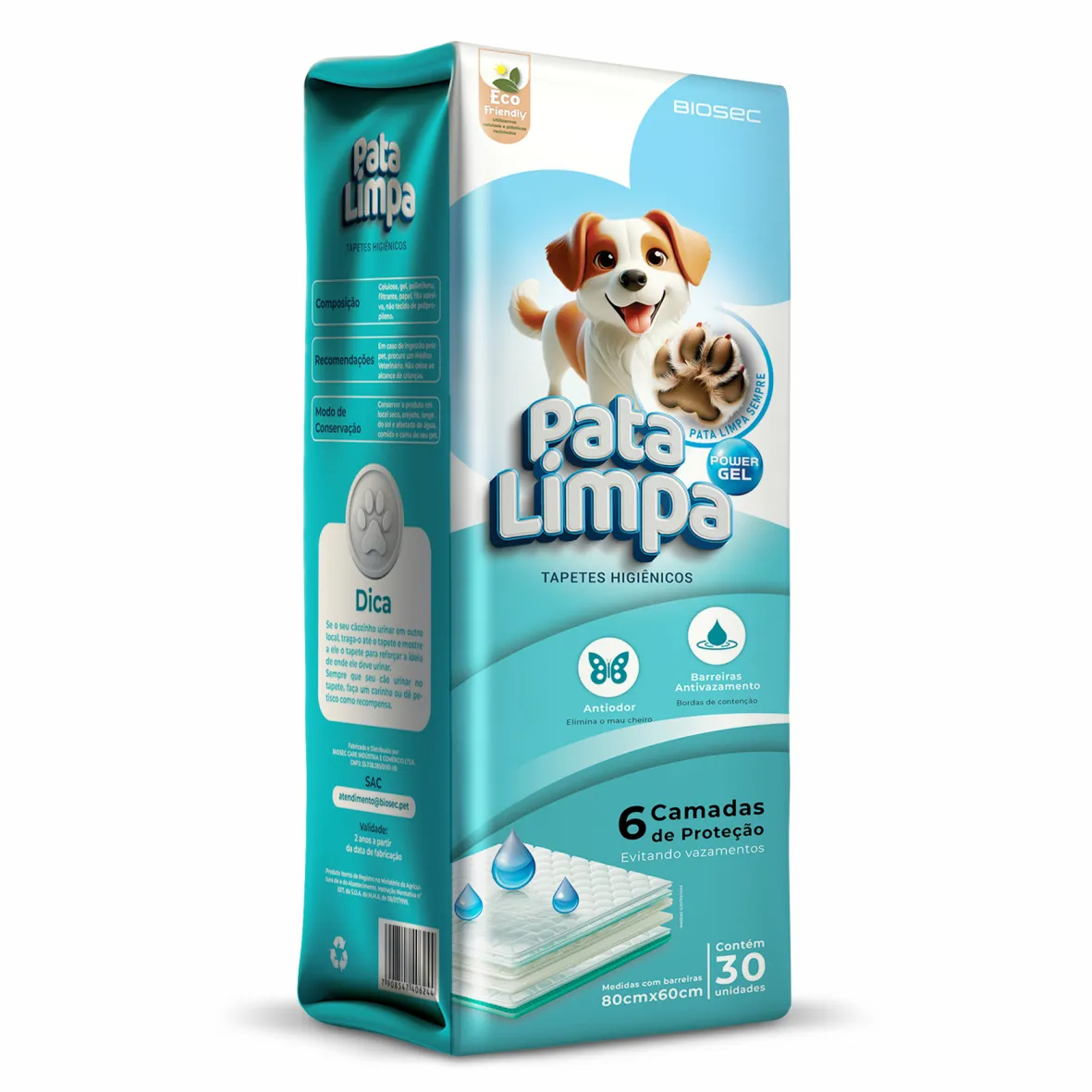
The Pata Limpa 80 x 60 pee pad is a larger disposable option designed for indoor dog training, daily hygiene support, and homes that need a wider target area with less mess around the edges.
Yes, for the right routine. This 30-count pad makes sense for puppy training, for small and medium dogs that spend part of the day indoors, and for owners who want more coverage than compact pads usually provide. It is less impressive for very heavy wetters, multi-dog homes, or anyone expecting a particularly thick, premium-feel pad.
The main reason people look at a product like this is simple: they do not want accidents spreading across the floor, and they do not want a training pad that feels too small from day one. A review of the Pata Limpa 80 x 60 pee pad matters because size, absorption, and day-to-day practicality are exactly where buyers usually get disappointed.
On paper, the format is easy to like. It comes in a 30-pack, uses a larger 80 x 60 cm footprint, and is presented as a disposable dog pee pad with odor-control claims, adhesive strips, absorbent gel, side barriers, and a five-layer build. In real use, the question is not whether those features sound good, but whether they match your dog’s routine, body size, and training stage.
What the Pata Limpa 80 x 60 pad delivers from the start
This product sits in a very practical part of the category. It is not a tiny emergency pad for occasional use, and it is not positioned like a specialty reusable mat. It is a disposable training pad meant to make daily life easier for owners who want a familiar, low-effort hygiene setup.
The 80 x 60 cm size is one of its strongest selling points. That extra surface area matters more than many buyers expect, especially in the first weeks of house training, when puppies miss the center of the pad even when they understand where they should go.
The pack size also fits a common household rhythm. Thirty units is usually enough to test whether the pad suits your dog before committing to a much larger stock, and it works well for owners who want a balance between convenience and storage space.
Another reason the product can appeal quickly is that it does not try to complicate the experience. Disposable use, adhesive strips, odor-control language, and side leak barriers all point to the same promise: less cleanup, easier placement, and a more controlled training zone.
That does not automatically make it the best pad for every home. What it does mean is that the product is easy to understand. It is built for owners who value simple setup, faster cleanup, and a larger landing area more than advanced materials or premium-level absorbency claims.
The size mistake that causes most buying regret
The most common error in this category is choosing a pad based only on the dog’s current size, not on how the dog actually uses the pad. Many owners buy too small, then blame the product when the real issue is that the target zone leaves very little room for awkward angles, excited circling, or late positioning.
That is where this Pata Limpa dog pee pad has a practical advantage. An 80 x 60 dog pee pad gives more forgiveness to puppies, to dogs still learning a routine, and to owners placing the pad in corners, laundry areas, or apartment service spaces where movement is a bit tighter.
For small dogs, this larger footprint can feel generous. For medium dogs, it can feel more realistic than compact pads, especially when the pad is part of an indoor schedule and not just a backup plan. For larger dogs, it may still help, but expectations need to stay grounded because body position and urine volume become a bigger part of performance.
The other mistake is forgetting the space around the pad. A larger disposable dog training pad still needs a sensible placement area. If it sits too close to a wall, food station, or bed, the dog may avoid it or step partly off it, which reduces the benefit of the extra dimensions.
In other words, the pad size is a real strength, but only when matched with a proper routine. Buyers who understand that usually get more value from a product like this than buyers who expect the pad alone to solve training consistency.
Where it helps most in daily use
The biggest practical benefit here is not glamour. It is friction reduction. A pad like this can make everyday life smoother because it creates a predictable indoor relief spot and reduces the number of partial misses that lead to extra cleaning.
The adhesive strips matter more than they seem. When a dog steps onto a loose pad and the sheet folds, slides, or bunches up, confidence drops fast. A pad that stays more stable can help both with training consistency and with general cleanliness around the edges.
The wider shape also helps households that want a bit more breathing room between one accident and a fully messy floor. That is especially useful with puppies, older dogs with less precise control, or dogs that need a pad during certain hours of the day instead of full outdoor access.
The odor-control positioning is another useful part of the package, but it should be understood correctly. It is best treated as a support feature, not as a promise that a used pad will become invisible in the room. Owners who change pads on time and keep the area ventilated will get a better experience than owners expecting the pad to mask neglect.
The disposable format is also a real advantage for people who want a fast reset. There is no washing cycle, no drying time, and no need to manage a reusable fabric routine. For busy homes, that simplicity is exactly why disposable pads stay popular.
What may disappoint some owners
The first point of attention is material expectation. The listing points to a tissue-based construction with five layers, which can sound reassuring, but not every five-layer pad feels equally robust in practice. Some buyers hear “five layers” and imagine a thick, premium structure, when the real experience may feel more straightforward and utility-focused.
The second issue is absorbency expectations. The product is described as ultra absorbent and includes absorbent gel, which is encouraging, but absorbency in this category always depends on timing, urine volume, and how concentrated the moisture lands in one spot. A pad can perform well for routine use and still feel average under heavy saturation.
This matters most in multi-dog homes, with adult dogs that release larger volumes at once, or when the owner wants to stretch replacement intervals too far. In those situations, even a larger pad can feel less impressive than expected.
Another possible frustration comes from the way people interpret odor control. Odor reduction is helpful, but it is not the same as odor elimination under all conditions. If a buyer wants a pad that stays in place for long periods without noticeable smell, disappointment becomes more likely.
There is also the usual disposable-pad trade-off: convenience versus long-term repeat use. Buyers focused on easy cleanup will appreciate the format. Buyers already leaning toward washable solutions may see this type of product as practical but not ideal for their routine.
How the materials and build affect real-world performance
The Pata Limpa 80x60 pee pad is presented with a five-layer build, disposable use, odor-control support, and leak-reduction features such as side barriers. That combination suggests a familiar structure for modern pet training pads: a soft top layer, absorbent inner system, and a backing intended to keep moisture from reaching the floor.
The inclusion of absorbent gel is important because that usually helps lock liquid more effectively than a very basic flat sheet design. For everyday indoor training, that can improve the sense of cleanliness and reduce the chance of moisture spreading too widely across the surface right after use.
The side barriers are another relevant detail because leaks do not only happen through the middle. They often happen when the dog uses the edge, when the liquid hits near the border, or when the pad gets stepped on after use. A barrier system does not make leaks impossible, but it improves the product’s argument as a daily-use pad rather than a bare minimum disposable sheet.
The adhesive strips support stability, which indirectly supports performance. A pad that stays flatter is easier for the dog to trust and easier for the owner to position. That seems small until you deal with a dog that paws at the corners, drags the sheet, or shifts it just enough to ruin the protection zone.
The material listing also tells you what this product is not. It is not washable, and it is not meant to be a semi-permanent household fixture. It is a replace-and-discard solution for owners who prefer speed and simplicity over a reusable system that asks for more handling.
In practical terms, the product appears strongest when used the way this category is meant to be used: consistent replacement, sensible expectations, and a match between pad size and dog behavior. Buyers who want dependable routine support are more likely to be happy than buyers chasing an all-in-one miracle fix.
Homes and routines that match this pad best
This pad makes the most sense for puppy owners in the training phase. The larger footprint gives more margin for error, and the disposable setup makes daily reinforcement easier for people who are still teaching timing, location, and repetition.
It also fits well in apartments and homes where outdoor potty breaks are not always immediate. That can include owners with long hallways to the outside, rainy-day routines, early-morning schedules, or dogs that need a predictable indoor backup point.
Small and medium dogs are probably the clearest fit. They can benefit from the larger target area without demanding the same absorption margin that some bigger dogs might require. That makes the 30 pack dog pee pad format feel practical instead of excessive.
It can also work for older dogs, post-procedure rest, or temporary indoor support, provided the owner is realistic about replacement frequency. In those cases, the value is not just hygiene. It is also about making daily care less stressful.
When another pad style may fit better
If your dog is large, urinates heavily, or uses pads as a primary full-time bathroom solution, you may want a thicker or more premium-style option. The larger size here helps, but size alone does not replace the need for stronger absorbency in demanding use cases.
If your home has multiple dogs using the same zone, a standard disposable format can start feeling temporary very quickly. In that situation, either a higher-capacity disposable pad or a different system altogether may make more sense.
Washable mats may also be the better path for owners who dislike recurring disposal and prefer a reusable routine. They demand more effort, but some households value that trade-off more than the speed of replacing a used sheet.
And if your dog already has excellent outdoor discipline and only needs occasional emergency backup, a smaller compact pad could be enough. In that case, the extra surface area of this product might be nice to have, but not necessary.
How it stacks up against other pee pad options
Compared with smaller disposable pads, the main advantage here is forgiveness. The bigger footprint gives puppies and inconsistent users a wider landing area, which often matters more than a slight difference in marketing language around absorption.
Compared with very thick premium disposable pads, this product looks more like a balanced everyday option than a top-tier specialist pad. That is not a criticism by itself. It simply means the strongest argument is practical daily use rather than extreme absorbency positioning.
Compared with washable mats, the gap is about convenience. This pad is easier to replace, easier to keep rotating through the day, and easier for owners who do not want laundry added to the pet-care routine. Washable products can win on reusability, but they do not always win on speed or simplicity.
Compared with charcoal-focused or heavily deodorizing alternatives, the appeal here is broader and more straightforward. It aims at the core needs of the category: a decent surface size, absorbent structure, some odor support, and placement stability. That makes it suitable for buyers who want a general-purpose indoor training pad rather than a niche feature-first product.
As a buying decision, the real comparison is not “best versus worst.” It is “best match for the job.” If the job is training support, daily indoor backup, and easier cleanup with a larger format, this pad has a clear reason to exist. If the job is maximum capacity under harder conditions, there may be more suitable alternatives.
Should this be the pad in your routine?
The strongest case for this product is not hype. It is fit. The Pata Limpa 80 x 60 pee pad looks like a sensible match for owners who want a larger disposable training surface, useful placement support from adhesive strips, and a straightforward daily-use format that does not overcomplicate indoor hygiene.
Its best qualities are easy to understand: practical size, familiar disposable convenience, and a feature set aimed at reducing common mess points such as shifting, edge leakage, and everyday odor buildup. Those are meaningful advantages for the right buyer.
The caution is just as clear. This is not the kind of product you should buy while expecting premium-level thickness, unlimited holding power, or a no-smell guarantee under delayed changes. Buyers who stay realistic about that are much more likely to come away satisfied.
If your goal is better puppy training support, a more forgiving indoor target area, and a simple replace-and-go solution, it is a solid pick. If your situation is heavier, more demanding, or more permanent, another pad profile may serve you better.
Common buying doubts before choosing a pee pad
Is the 80 x 60 cm size good for puppy training?
Yes, for many puppies it is a very helpful size. The wider surface gives more room for mistakes during the learning phase, which reduces misses around the edges. That makes it easier for owners to reinforce the right habit without cleaning the floor after every imperfect attempt.
Can this pad work for adult dogs too?
Yes, but it depends on the dog’s size and output. Small and many medium dogs can use an 80 x 60 pad more comfortably than compact formats. For larger dogs or very heavy wetters, the size may still help, but absorption expectations should stay realistic.
Do the adhesive strips really make a difference?
Yes, they often do. A pad that stays flatter and more stable is easier for a dog to trust and less likely to bunch up during use. That improves daily cleanliness and helps owners keep the protected area exactly where they intended it to be.
Does odor control mean the room will stay smell-free?
No, not completely. Odor control helps reduce the impact of use, but it does not replace timely pad changes and a clean surrounding area. Owners usually get the best result when they treat odor control as support, not as a substitute for good routine.
Is this a better choice than a washable mat?
Yes, if convenience is your priority. Disposable pads are easier for fast cleanup, quicker replacement, and simpler daily handling. Washable mats may suit homes that want a reusable setup, but they ask for more involvement and do not always feel as effortless.
How often should a pad like this be replaced?
It depends on the dog and how the pad is being used. Puppies, multiple uses in one day, and stronger urine volume all shorten the ideal replacement window. The best rule is to change it before saturation, odor buildup, or edge moisture starts to compromise hygiene.
Is this the right type of pad for apartment living?
Yes, it can be a very practical apartment option. The larger surface helps in tighter indoor spaces where owners want a reliable target area without upgrading to oversized specialty pads. It is especially useful for training, rainy days, or routines with delayed outdoor access.
If your priority is a larger disposable dog pee pad that keeps the buying decision simple, this one has a convincing profile. The format, size, and day-to-day features line up well with training support and general indoor hygiene.
It makes the most sense for puppy owners, small and medium dogs, and households that want more floor coverage without moving into a more specialized product tier. It makes less sense for heavy-demand routines that need stronger absorption margins or a reusable long-term system.
For the right home, the Pata Limpa 80 x 60 pee pad is not hard to justify. It is a practical product with a clear use case, and that clarity is exactly what many buyers need before choosing a training pad.