A practical look at the 15W 48 cm to 60 cm LED aquarium light with three color effects, plant-focused positioning and a slim format for small to medium tanks.
The AAA Top planted aquarium LED light review points to a simple, practical fixture for freshwater aquariums where the goal is better visibility, stronger visual color and basic support for aquatic plants. It makes the most sense for tanks around the 48 cm to 60 cm range, especially when the setup is decorative, low-tech or moderately planted.
It is not the best match for aquarists who need advanced intensity control, precise spectrum tuning, professional aquascaping performance or a dedicated reef lighting system. The main decision is simple: choose it for everyday planted aquarium lighting, not for demanding high-tech projects.
The AAA Top Planted Aquarium LED Light 15W 48 cm to 60 cm 3 Colors is aimed at people who want a compact aquarium lamp that is easy to place, visually brighter than basic lighting and more suitable for planted tanks than a generic decorative lamp.
The appeal is clear: it offers LED lighting, three color effects, a slim body, adjustable fit for a common aquarium size range and a practical installation style. The important point is understanding what kind of aquarium it serves well and where its simpler design may start to feel limited.
What this AAA Top aquarium light is built to do
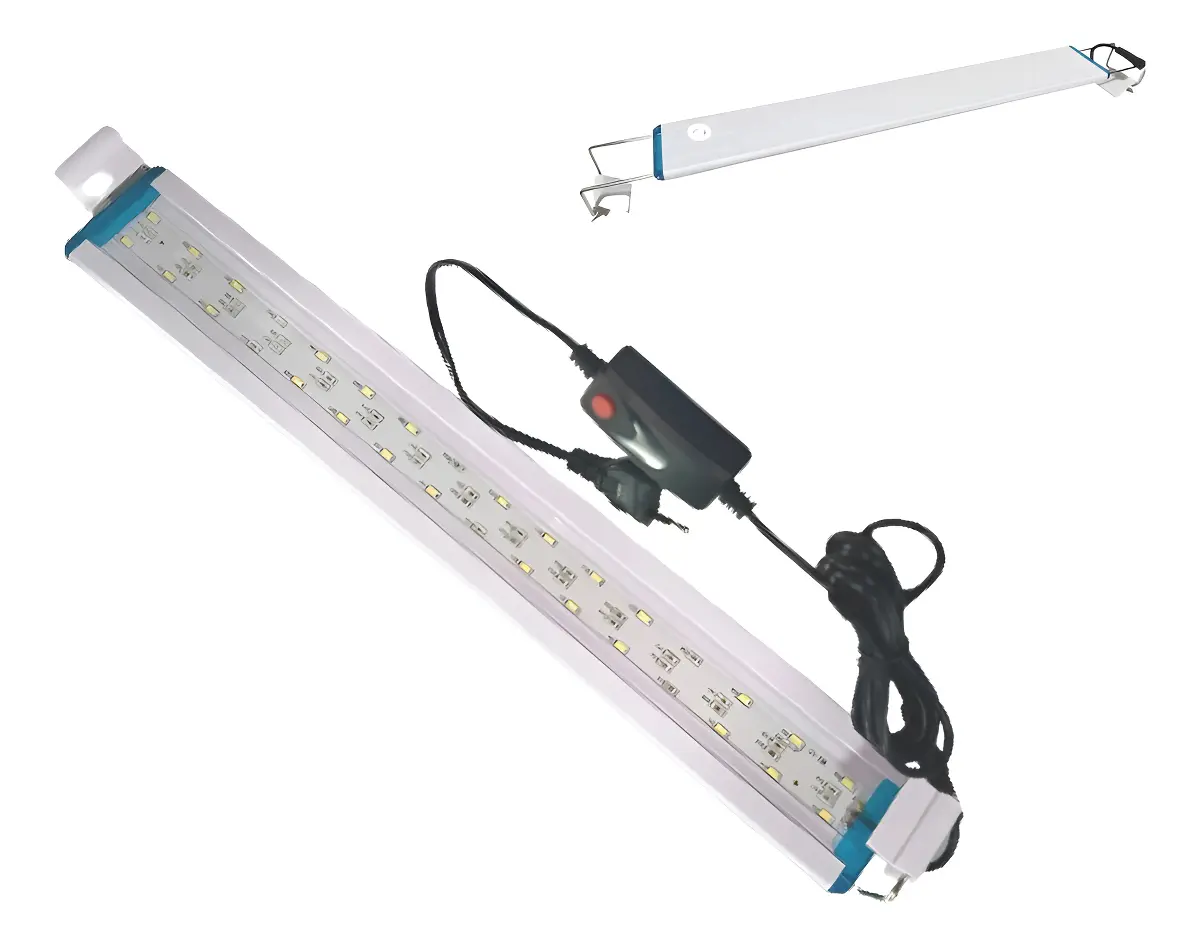
This model is a 15W LED aquarium light designed for aquariums in the 48 cm to 60 cm range. It is listed with a 48 cm body, 64 LED points and support for three color effects, making it more versatile than a plain white light bar.
The product is positioned mainly for planted aquariums and decorative freshwater tanks. That means its role is not only to illuminate the water, but also to help plants receive usable light while improving the appearance of fish, substrate, hardscape and greenery.
The three-color concept is useful because aquarium lighting is not only about brightness. White and blue tones can create a cleaner, cooler look, while combinations involving red, green and blue can make the tank look more vivid and decorative. This matters if the aquarium sits in a living room, office, bedroom or shop display.
The fixture is also described as bivolt, which helps with installation flexibility. That is useful for buyers who do not want to worry too much about matching one fixed voltage, although it is still important to confirm the selected version before installing it.
Another relevant detail is the slim design. A slim LED light usually looks cleaner on top of the tank and avoids the heavy visual presence of older aquarium hoods. This can be a real advantage for open-top aquariums or tanks where the aesthetic of the setup matters.
The product listing also presents it as suitable for plant growth. That makes it more interesting than a purely decorative lamp, but it does not automatically mean it will satisfy every aquatic plant. Light demand changes according to plant species, tank depth, fertilization, CO₂ use and photoperiod.
The fit question that matters before mounting it
The biggest purchase mistake with this type of aquarium light is choosing by wattage alone and ignoring the actual tank size, depth and plant demand. A 15W LED fixture can work well in the right aquarium, but the result depends heavily on how the light reaches the plants.
The recommended range of 48 cm to 60 cm is the first filter. If your aquarium is shorter than that, the fixture may not sit naturally or may look oversized. If the aquarium is longer, the ends of the tank may receive less balanced coverage.
The second filter is tank depth. A shallow planted aquarium is usually easier to illuminate than a deeper tank with demanding carpeting plants. Even if the light looks bright to the eye, that does not always mean enough usable light is reaching plants close to the substrate.
The third filter is the style of planting. Easy plants such as anubias, java fern, cryptocorynes and many low-demand stems are more forgiving. More demanding layouts, especially dense carpeting plants or high-tech aquascapes, usually need stronger control over intensity, spectrum and consistency.
This is why the AAA Top 15W LED makes more sense for aquarists who want a straightforward improvement over basic lighting. It is a practical choice for common planted aquariums, not a specialized fixture for advanced aquascaping competitions.
There is also the question of how the light is positioned. If the fixture sits too far from the water or is blocked by lids, condensation covers or floating plants, the actual effect inside the tank may be reduced. Proper placement matters as much as the lamp itself.
Where the 15W LED setup helps in daily use
The first practical advantage is clarity. A good LED bar can make the aquarium easier to view, especially if the previous light was weak, yellowish or uneven. Fish colors tend to stand out more, plants look livelier and the hardscape becomes more visible.
The second advantage is the three-color behavior. This gives the user more visual flexibility than a single-tone lamp. You can choose a cleaner look for daily viewing or a more colorful effect when the tank is used as a decorative focal point.
The third advantage is the size range. Many small and medium home aquariums fall around this 48 cm to 60 cm category. A light designed for that range is easier to choose than a generic bar that requires more guesswork.
The 64 LED points also matter for distribution. More points across the fixture can help spread the light along the aquarium rather than concentrating it in one harsh central beam. That is useful for plants and also makes the tank look more balanced from the front.
Energy efficiency is another positive aspect of LED aquarium lighting. Compared with older lighting technologies, LED fixtures usually deliver practical brightness with lower heat output and more efficient everyday use. For aquariums that stay lit for several hours a day, this is a meaningful advantage.
The slim structure helps keep the aquarium visually clean. Instead of turning the top of the tank into a bulky piece of equipment, the fixture can blend more discreetly into the setup. This is especially relevant for decorative aquariums where the overall look matters.
Installation also appears to be simple. A light that uses support pieces and an adjustable fit is easier for beginners than systems requiring suspension, drilling or separate mounting hardware. For many users, that simplicity is part of the appeal.
Trade-offs to check before choosing this light
The first trade-off is control. This model focuses on simple color effects, not advanced programming. If you want sunrise simulation, gradual dimming, timer integration, app control or very precise intensity adjustment, a more advanced aquarium light will be a better fit.
The second trade-off is plant intensity. The product is presented for planted aquariums, but not all planted aquariums have the same lighting needs. A low-tech tank with easy plants is very different from a dense aquascape with demanding foreground plants.
The third trade-off is reef suitability. The listing presents the light as suitable for corals, but marine and reef tanks often require more specific lighting decisions. Coral growth depends on spectrum, intensity, depth and stability, so reef-focused buyers should be more careful before relying on this type of general-purpose fixture.
The waterproof claim also deserves a practical reading. Aquarium lights are exposed to humidity and splashes, but that does not mean every light should be submerged or handled carelessly around water. Unless the manual clearly confirms submersible use, it should be treated as an above-tank fixture.
Another point is coverage at the edges. In a tank near the upper end of the recommended size, the light can still fit, but coverage may feel less intense at the far sides depending on the layout. This matters if plants are spread heavily across the entire aquarium.
Build expectations should also stay realistic. This is a simple LED fixture with a practical proposition. Buyers expecting a premium aquascaping light with detailed spectrum data, PAR charts and advanced mounting options may feel that the product is too basic.
Size, power and lighting behavior in real aquariums
The core specifications are straightforward: LED light type, 15W power, 48 cm body length, 64 LED points and recommended use for aquariums up to around 60 cm. These details position the product in the small to medium aquarium segment.
In daily use, the 15W power is more relevant when matched with the correct tank profile. For a compact freshwater aquarium with easy plants, it can provide a useful step up from weak lighting. For deeper or heavily planted tanks, it may feel more modest.
The three color effects are mainly about visual flexibility and atmosphere. They can help highlight fish, plants and décor in different ways. Still, buyers should not confuse color variety with full professional spectrum control.
The white and blue combination should appeal to users who prefer a bright, clean and cooler aquarium look. The combinations involving red, green and blue can create a more colorful display, which may be attractive in decorative tanks.
The listed support for plant growth is useful, but the final result still depends on the whole aquarium routine. Plants need stable lighting hours, adequate nutrients, suitable substrate, proper water conditions and, in some setups, CO₂ support. A light helps, but it does not solve every plant-health issue by itself.
The bivolt design is convenient for different electrical environments. Still, the buyer should check the selected option before use, because marketplaces may display variations and the final version must match the intended installation.
The 48 cm body with adjustable use up to around 60 cm gives it a practical range for many tanks. The best visual result will usually come when the fixture sits evenly, remains stable and is not blocked by covers or decorations above the waterline.
Aquarium setups where this model makes sense
This light makes sense for beginners who are building a planted aquarium and want something more appropriate than a generic lamp. It gives a clear product direction: LED lighting, plant-focused use, three color effects and a size range that matches common home tanks.
It also makes sense for aquarists who keep low-demand plants. If your aquarium uses hardy plants and you want better visual quality without moving into complex lighting systems, this model has a practical profile.
Decorative aquariums are another good match. The three color effects can make the tank more attractive in a room, especially when the goal is to enjoy the movement of fish, the contrast of plants and the overall ambience of the water.
The fixture is also suitable for users who want a slim and simple light rather than a bulky aquarium hood. That can make the tank look more modern and less visually heavy.
It may also be a good choice for replacement use. If the original light of the aquarium is weak, old or too basic, this model can provide a more focused upgrade without forcing the user into a high-end lighting ecosystem.
For small shops, waiting rooms or office aquariums, the simple setup and decorative color options can be useful. It creates a cleaner display without requiring complex configuration from the person responsible for maintenance.
Cases where a different light will be safer
A different model will be safer if your aquarium is larger than the recommended range. A light that technically sits on the tank but does not cover it well can create dark areas, uneven plant growth and a less polished look.
You should also consider another option if your plants are demanding. Carpeting plants, red plants that require strong light and high-tech aquascapes usually benefit from more powerful fixtures with better control over intensity and spectrum.
Marine aquariums and reef tanks deserve extra caution. Although the product is presented with broad suitability, coral-focused systems often need lighting chosen with much more precision. In that case, a reef-specific light is usually the more responsible route.
This model may also disappoint users who want automation. There is no strong reason to choose it if your priority is app control, programmable schedules, dimming curves or advanced lighting profiles.
It is not the ideal choice for users who want a professional-level data sheet. If you need confirmed PAR values, detailed spectrum graphs and exact performance comparisons, you will likely feel more comfortable with a specialized aquarium lighting brand.
Finally, it may not satisfy someone trying to solve algae or plant issues only by changing the light. Aquarium balance depends on lighting, nutrients, water changes, filtration, plant mass and feeding habits. A new lamp can help, but it should be part of a complete routine.
How it compares with simpler and more advanced aquarium lights
Compared with a basic white aquarium lamp, the AAA Top 15W LED is more flexible because of its color effects and plant-focused positioning. It is better suited for users who want more than simple visibility.
Compared with decorative LED strips, it is more appropriate for aquarium use because the format is designed for placement over a tank. Generic strips can look attractive, but they often lack the practicality, stability and aquarium-focused structure that a dedicated fixture provides.
Compared with more advanced planted aquarium lights, this model is simpler. It does not aim to compete with professional fixtures that offer stronger output, detailed controls and data-driven spectrum design. Its strength is accessibility of use, not technical sophistication.
Compared with larger LED bars, the key difference is coverage. A larger tank needs a larger or stronger light. Using a compact fixture on a tank beyond its intended range can make the aquarium look uneven, even if the center appears bright.
Compared with reef lighting, the difference is specialization. Reef systems usually require lights selected around coral needs, tank depth and spectrum stability. This model is better understood as a freshwater planted and decorative aquarium light.
The right comparison is therefore not “simple versus professional” in a generic sense. The better question is whether your aquarium needs a practical everyday LED light or a highly controlled plant-growth system. For common home setups, this fixture can be enough. For demanding projects, it is only a basic starting point.
The buying decision in plain terms
The AAA Top Planted Aquarium LED Light 15W 48 cm to 60 cm 3 Colors is a sensible choice when the aquarium matches its size range and the user wants a simple, attractive and plant-oriented lighting upgrade.
Its strongest points are the dedicated aquarium format, LED efficiency, 64 light points, three color effects, slim design and suitability for many small to medium freshwater planted tanks. It gives the tank a cleaner appearance and can make plants and fish look more alive.
The main caution is not to overestimate it. It should not be treated as a professional aquascaping light, a guaranteed solution for demanding plants or a complete reef lighting system. Its real strength is everyday usability.
Choose it if your goal is to improve a low-tech planted tank, refresh a decorative aquarium or replace weak basic lighting with a more fitting LED fixture. Look elsewhere if your setup requires stronger output, automation, precise spectrum control or confirmed performance data for demanding aquatic life.
Is the AAA Top 15W LED good for a planted aquarium?
Yes, it can be a good fit for planted aquariums with easy to moderate plants, especially when the tank sits within the recommended 48 cm to 60 cm range. It is better for common freshwater setups than for demanding aquascapes. Plant results will still depend on nutrients, water stability, tank depth and lighting schedule.
Does this aquarium light fit a 60 cm tank?
Yes, the product is designed for aquariums up to around 60 cm, with a 48 cm light body and adjustable placement. The best result depends on how evenly it sits over the tank. If the aquarium is heavily planted from edge to edge, check coverage carefully before relying on one fixture.
Can it be used for low-tech aquarium plants?
Yes, it makes good sense for low-tech plants that do not require very intense lighting. Plants such as hardy rhizome plants and many beginner-friendly species are more realistic matches. For high-light carpeting plants or advanced layouts, a stronger and more controllable light is usually the safer choice.
Are the three colors useful or just decorative?
Both, depending on how you use them. The color effects can improve the visual look of fish, plants and décor, while also giving the aquarium a more flexible atmosphere. However, color variety should not be confused with advanced spectrum control. It is useful, but still simple.
Is this light suitable for marine aquariums with corals?
It should be approached carefully for coral-focused systems. Even when a listing presents broad compatibility, reef aquariums usually need lighting chosen with more precision. Coral health depends on intensity, spectrum, placement and tank depth. For a serious reef tank, a dedicated marine light is usually the better path.
Can the fixture be placed close to water?
Yes, aquarium lights are designed to work near water, but safe handling still matters. Even when a product is described as waterproof, it should not be treated as submersible unless the manual clearly states that use. Keep electrical parts secure, avoid careless splashing and install it as an above-tank light.
Will this light solve algae problems?
No, a light change alone does not automatically solve algae. Algae usually appears from imbalance between light duration, nutrients, plant mass, water changes and feeding. This fixture can improve illumination, but it should be used with a stable photoperiod and a balanced aquarium routine to avoid new problems.
Is it better than a generic LED strip?
Yes, for most aquarium users it is a better choice than a generic LED strip because it is made for tank placement and has an aquarium-focused format. Generic strips may look bright, but they often lack stable mounting, suitable protection and the practical design needed for everyday aquarium use.
The most convincing reason to choose this AAA Top LED light is its balance between simplicity and aquarium-specific use. It gives small and medium planted tanks a cleaner look, better visual presence and a more appropriate lighting format than basic decorative alternatives.
It is a good match for aquarists who want practical improvement without entering advanced lighting systems. It is less convincing for high-tech planted tanks, large aquariums or reef setups where stronger, more measurable and more controllable lighting is required.
For the right tank, this 15W 48 cm to 60 cm three-color LED fixture is a useful upgrade. The best result will come when it is matched with the correct aquarium size, realistic plant choices and a consistent maintenance routine.