

A practical look at a large portable evaporative cooler made for ventilation, humidity support and fresher airflow in bigger indoor or semi-open areas.
The 80-liter portable air cooler makes sense for people who want stronger air circulation, a large water tank and a more economical cooling approach than traditional air conditioning. It is best for warm, dry or ventilated spaces where evaporative cooling can work naturally. It is not the right choice for anyone expecting the same cold, sealed-room performance of an air conditioner.
The 80-liter portable air cooler is aimed at users who need more than a small personal fan but do not necessarily want a fixed air-conditioning system. Its main appeal is the combination of a large reservoir, portable structure, ventilation and humidifying function in one appliance.
This type of product is especially relevant for homes, shops, garages, workshops, covered outdoor areas and larger rooms where simple fans feel weak. The buying decision, however, depends on understanding how evaporative cooling works and what it can realistically deliver.
A large-reservoir cooler built for airflow and daily practicality
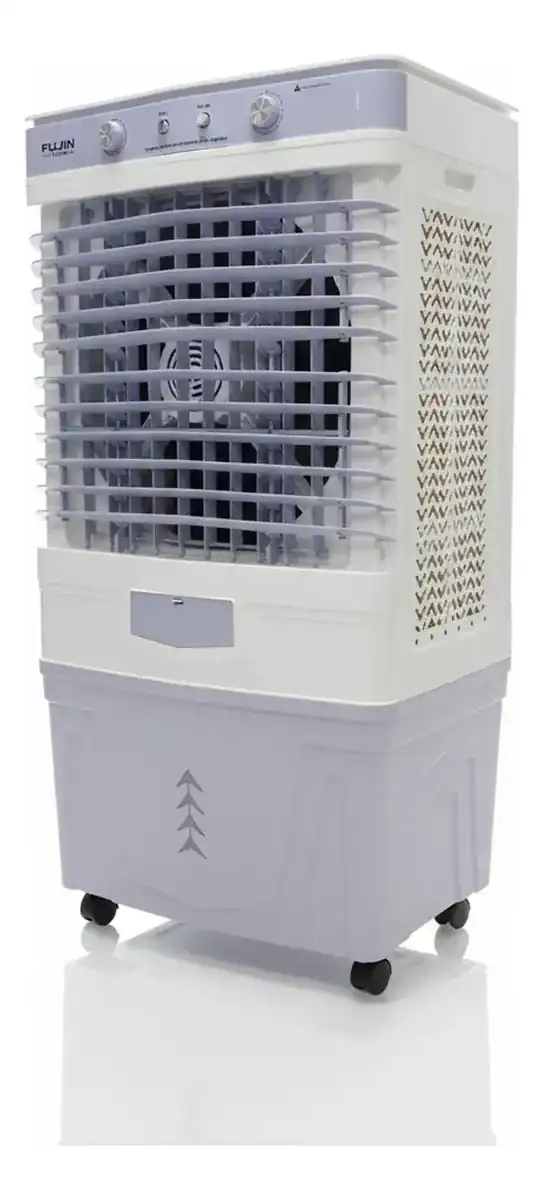
This product is presented as a large portable air cooler with an 80-liter water capacity, three speed settings, ventilation, humidifying function and 280 W of power. That places it in a different category from compact tabletop coolers or small bedroom units, because the reservoir size is clearly designed for longer operating periods and broader air movement. :contentReference[oaicite:0]{index=0}
The core idea is simple: the appliance moves air through a cooling and humidifying process, helping the environment feel fresher without relying on the same refrigeration cycle used by an air conditioner. This makes it more interesting for people who want air movement with added moisture and a cooler sensation, especially in places that are hot, dry or not fully sealed.
The large tank is one of the most important points. With 80 liters, the user does not need to refill it as frequently as a small portable cooler. That is useful when the unit is used for several hours, in a business space, during hot afternoons or in areas where constant refilling would quickly become annoying.
The three speeds also matter because they allow the user to adjust intensity according to the moment. A lower setting can be more comfortable for continuous use, while a stronger setting makes more sense when the goal is to push air across a larger area. This flexibility is important because evaporative coolers are strongly affected by room size, airflow direction and local humidity.
The biggest buying mistake is expecting air-conditioner behavior
The most common frustration with an evaporative air cooler comes from comparing it directly to an air conditioner. These are different appliances. A traditional air conditioner removes heat from a closed room using a refrigeration system, while an evaporative cooler improves the sensation of freshness by moving and humidifying air.
That means this 80-liter model can be a good choice when the goal is to make a hot area more tolerable, improve ventilation and create a cooler airflow. It should not be treated as a substitute for split air conditioning in a sealed bedroom, a humid coastal apartment or a room where the expectation is a sharply controlled temperature.
Before buying, the most important question is not only the size of the reservoir. The real question is where the appliance will be used. Evaporative coolers tend to make more sense in spaces with air renewal, some circulation and lower humidity. In very humid environments, the cooling sensation can be weaker because the air is already holding a lot of moisture.
It can also disappoint users who expect the entire room to become cold quickly. The effect is usually more noticeable near the airflow path. For that reason, placement matters. The unit should be positioned where the air can move toward the people or work area, instead of being blocked by furniture, walls or corners.
What feels useful in everyday use
The strongest practical advantage is the large water capacity. A bigger tank supports longer use and reduces the maintenance rhythm during the day. For users who plan to use the cooler in a shop, studio, garage or living area, this can be more convenient than a smaller cooler that needs attention too often.
The second advantage is portability. A portable cooler can be moved to where it is needed, which is valuable in homes and workspaces with changing routines. It can serve a living area during the day, a covered balcony in the afternoon or a workshop during working hours, depending on access to power and available space.
The humidifying function is also relevant for dry climates or rooms where the air feels uncomfortable. While it is not a medical device and should not be treated as one, adding moisture to dry air can make the environment feel less harsh. For many buyers, this is one of the reasons to choose an evaporative cooler instead of a simple fan.
Another useful point is energy perception. A 280 W appliance has a different usage profile from conventional air-conditioning systems. It is still an electrical appliance and should be used responsibly, but its proposal is clearly more economical in operation than compressor-based cooling. :contentReference[oaicite:1]{index=1}
The three speed levels help adapt the product to different moments. During milder heat, a moderate airflow may be enough. In stronger heat, the highest setting can create a more noticeable breeze. This control makes the appliance more versatile than a fixed-intensity fan, especially in larger areas.
Where expectations need to stay realistic
This cooler is not the best match for every room. If the space is small, closed and already humid, the product may feel excessive in size and less effective in cooling sensation. In that situation, a smaller fan, a compact cooler or a true air conditioner may make more sense depending on the desired result.
The water tank is large, which is convenient for autonomy, but it also means the unit needs physical space. Buyers should consider where it will stand, whether it can be moved easily through the intended area and whether there is enough room for airflow. A large portable appliance is still portable, but it is not as discreet as a compact device.
Maintenance is another point to consider. Any appliance that uses water requires basic care. The tank should not be ignored, and the internal humidifying system should be kept clean according to the manufacturer’s instructions. This is important for hygiene, performance and long-term use.
Noise perception can also vary. The listing confirms three speed settings but does not provide a detailed acoustic profile. Because of that, it is safer to assume that higher airflow will be more noticeable. For work areas and open spaces, this may be acceptable. For light sleepers or very quiet rooms, it is a point to consider before choosing this type of appliance.
The product can also frustrate anyone looking for exact temperature control. An evaporative cooler works with environmental conditions, water, airflow and humidity. It can improve comfort, but it does not offer the same precision as an air-conditioning unit with thermostat control.
Capacity, power and cooling behavior in practical terms
The confirmed specification that stands out most is the 80-liter reservoir. In practical use, that positions the product for people who want longer operation and fewer refills. It is a feature that makes more sense in medium-to-large environments than in very small rooms.
The 280 W power rating also helps define the product’s category. It suggests a more robust appliance than small personal coolers, while still keeping the proposal aligned with economical ventilation and evaporative cooling. This is important for buyers comparing it with high-consumption cooling solutions. :contentReference[oaicite:2]{index=2}
The three speed settings are useful because airflow needs change throughout the day. A space may need strong circulation when the heat is intense, then a softer setting later. This flexibility helps avoid using maximum intensity all the time, which can improve comfort and reduce unnecessary noise.
Because the product is an evaporative cooler, performance depends on the environment. It tends to be more satisfying when the air is dry, when there is ventilation and when the airflow is directed properly. In a sealed and humid room, the perceived effect may be less impressive.
It is also important to understand that “cold air” in this category does not mean compressor-refrigerated air. The sensation comes from air movement and evaporation. For many users, that is enough to make a hot space more comfortable. For others, especially those who want a cold room with controlled temperature, it will not replace air conditioning.
The type of user who gets the most value from this cooler
This 80-liter portable air cooler fits users who want to improve comfort in larger spaces without installing a fixed cooling system. It makes sense for people who need stronger airflow than a regular fan and appreciate the humidifying effect of evaporative cooling.
It is also a good match for covered areas where air circulation matters. Workshops, garages, stores, service areas and larger living spaces can benefit from a mobile unit that can be positioned according to where people are actually staying.
Users in drier regions are more likely to appreciate this type of cooler. In dry heat, evaporative cooling tends to feel more natural and effective. The added humidity can also make the air feel less aggressive, especially during long periods of heat.
It also suits buyers who prioritize practical operation. The large tank reduces refill frequency, while the speed options help adjust airflow. For a business or a busy home, this convenience can matter more than having advanced digital features.
When another cooling solution will make more sense
This is not the ideal choice for someone who wants a room to become cold in the same way it would with air conditioning. If the main goal is strong temperature reduction in a closed bedroom or office, a compressor-based system is more appropriate.
It may also be too large for users who only need personal cooling beside a desk or bed. In that case, a compact fan or smaller air cooler could be easier to place, move and maintain. Bigger is useful only when the space and usage pattern justify it.
People living in very humid regions should think carefully before choosing an evaporative cooler. Since the system adds moisture to the air, the comfort gain may be smaller when humidity is already high. In that scenario, airflow may still help, but the cooling sensation may not be as strong.
It is also not the best fit for users who dislike any water-based maintenance. A large tank is convenient, but it still requires responsible cleaning and care. Anyone who wants a completely dry appliance with minimal maintenance may prefer a traditional fan.
How it compares with smaller coolers, fans and air conditioning
Compared with a small air cooler, this 80-liter model has a much stronger practical identity for longer sessions and larger spaces. The main advantage is autonomy. A small unit may be easier to place in a bedroom or office corner, but it cannot offer the same reservoir convenience for extended use.
Compared with a regular fan, the difference is the water-based cooling and humidifying proposal. A fan only moves the existing air. This cooler adds an evaporative effect, which can make the airflow feel fresher in suitable conditions. For dry heat, that can be a meaningful improvement.
Compared with air conditioning, the advantage is not maximum cooling power. The advantage is flexibility, lower installation complexity and a more economical usage profile. It is easier to move, does not require the same fixed setup and can be used in places where installing an air conditioner would not be practical.
However, air conditioning remains superior for sealed-room cooling, humidity control and precise temperature reduction. The choice depends on the desired result. For intense cold and controlled climate, air conditioning wins. For airflow, portability and a fresher sensation in ventilated spaces, this cooler becomes more attractive.
Compared with industrial-style evaporative units, this model should be evaluated carefully by space size and airflow needs. Some alternatives may offer higher airflow or different power levels, while others may be easier to move or maintain. Without verified details such as airflow volume, dimensions or filter structure, the safest comparison is by reservoir size, confirmed power, speed control and intended use.
A sensible choice for the right environment
The 80-liter portable air cooler is a strong option when the buyer understands its category. It is not a magic replacement for air conditioning, but it can be a practical way to improve comfort in warm, ventilated and larger areas.
Its strongest arguments are the large water tank, three speed settings, humidifying function and portable format. These points make it appealing for users who need ongoing airflow and do not want a small appliance that requires frequent refilling.
The purchase makes the most sense when the user wants a fresher breeze, better air movement and added humidity in a space where evaporative cooling can work properly. It makes less sense when the goal is strong refrigeration, silent bedroom use or exact temperature control.
Does an 80-liter portable air cooler really cool the room?
Yes, it can improve the sensation of freshness, but it does not cool like an air conditioner. This type of appliance works through airflow and evaporation, so the result depends on room ventilation and humidity. It is better for making a hot area more comfortable than for sharply reducing the temperature of a sealed room.
Is this air cooler good for large rooms?
Yes, it is more suitable for larger spaces than compact personal coolers because it has an 80-liter tank and three speed settings. The best result will still depend on where it is placed and how the air circulates. It works better when the airflow is directed toward the occupied area.
Can this model replace an air conditioner?
No, it should not be seen as a direct air-conditioner replacement. It is a portable evaporative cooler, not a compressor-based cooling system. It can be more practical and economical for airflow and comfort, but it will not deliver the same cold air or precise temperature control as air conditioning.
Is the humidifying function useful?
Yes, the humidifying function can be useful in dry environments where the air feels harsh or uncomfortable. It adds moisture while ventilating, which can improve comfort during hot and dry periods. In already humid places, however, this feature may feel less useful and can reduce the cooling sensation.
How many speeds does this portable cooler have?
It has three speed settings, which helps adjust the airflow to different situations. A lower speed can be better for continuous use, while a stronger setting helps when the space feels hotter or needs more air movement. This flexibility is important for comfort across the day.
Is an 80-liter tank too large for home use?
No, it is not too large if the home has enough space and the user wants longer operation with fewer refills. It may be excessive for a very small bedroom or desk area. For living rooms, covered areas, garages or larger spaces, the large tank becomes a practical advantage.
What should I check before choosing this cooler?
Check the size of the space, local humidity, available floor area and your real cooling expectation. This product is better for ventilation and evaporative freshness than for sealed-room refrigeration. It is also important to consider water maintenance, placement and whether the airflow path will reach the people in the room.
Is this air cooler better than a fan?
Yes, it can be better than a fan when you want airflow with an added evaporative and humidifying effect. A fan only moves air, while this cooler uses water to create a fresher sensation. In dry and ventilated spaces, that difference can be noticeable. In humid rooms, the advantage may be smaller.
The 80-liter portable air cooler is a smart option for buyers who want strong airflow, long water autonomy and a more comfortable environment without installing a fixed cooling system. It is especially convincing for warm, dry or semi-open areas where a standard fan feels insufficient.
The best decision is to buy it for what it actually is: a large evaporative cooler for ventilation, humidity support and fresher airflow. When used in the right context, it can be practical, economical and comfortable. When chosen as if it were an air conditioner, it can easily disappoint.