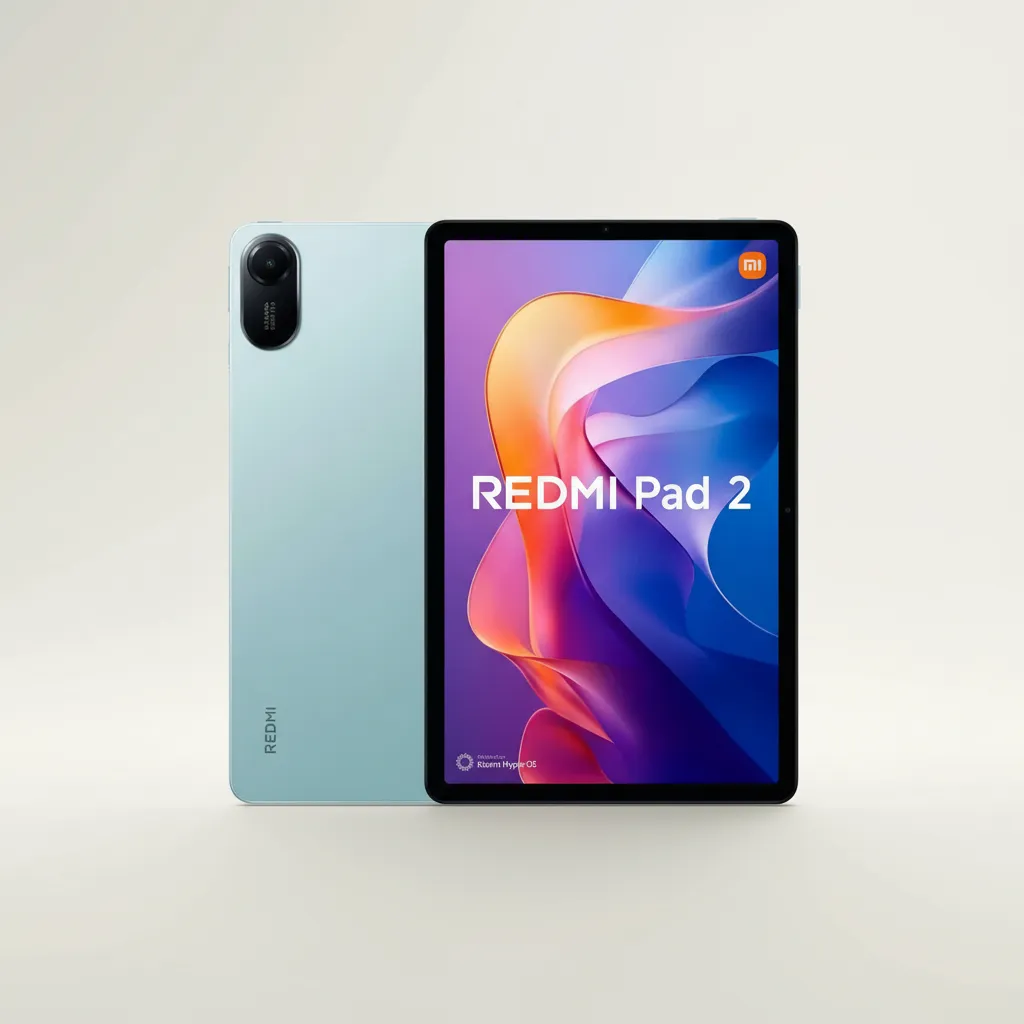
A practical look at the 256GB Wi-Fi version with 8GB RAM, an 11-inch display, long battery life and a Mint Green finish for entertainment, study and light productivity.
The Xiaomi Redmi Pad 2 11-inch makes sense for users who want a large-screen Android tablet for streaming, reading, video calls, note-taking and everyday apps without moving into a premium tablet category. Its strongest points are the sharp 2.5K display, generous storage, large battery, quad speakers and clean metal-style design. It is less convincing for users who need cellular internet, advanced gaming performance, a laptop replacement or professional camera quality.
The Xiaomi Redmi Pad 2 11-inch review is mainly about expectations. This is a tablet built for daily comfort, not for replacing a high-end notebook or competing with flagship tablets.
Its appeal is clear: a large display, a modern Android experience, a strong entertainment setup and enough memory and storage for users who do not want to feel limited too quickly. The key is understanding where it performs well and where it remains a practical mid-range device.
What the Redmi Pad 2 11-inch delivers in real use
The Redmi Pad 2 is an Android tablet aimed at people who want a bigger screen than a phone for everyday tasks. It fits well into routines such as watching videos, reading articles, browsing, studying, managing documents, joining video calls and using social media with more visual space.
The version with 8GB RAM and 256GB storage is one of the more interesting configurations because it gives the tablet more breathing room. More RAM helps with switching between apps, while the internal storage is useful for downloads, documents, offline videos, photos, apps and study material.
The Mint Green finish also gives the tablet a softer and more modern appearance than the usual dark tablet design. It is not just a technical device; it is also a product that looks pleasant on a desk, in a backpack or beside a notebook.
The 11-inch screen is one of the central reasons to consider it. This size is large enough for entertainment and reading, but still portable enough for casual use around the house, at school, at work or while traveling.
The screen is the detail that most affects the purchase decision
In this category, many people buy a tablet thinking only about storage and memory, but the screen is usually what defines satisfaction. A tablet is held, watched and touched constantly, so display quality matters more than it may seem at first.
The Redmi Pad 2 uses an 11-inch LCD panel with 2.5K resolution. That gives it a sharper image than basic HD tablets and makes text, videos and app interfaces look more refined. For reading, studying and browsing, the extra resolution helps reduce the feeling of looking at a stretched phone screen.
The refresh rate goes up to 90Hz in supported apps and situations. This makes scrolling feel smoother than on standard 60Hz panels, especially when moving through web pages, feeds, menus and long documents.
There are still realistic limits. This is not an OLED screen, so users should not expect the deepest blacks or the strongest contrast available in more premium tablets. It also does not position itself as a professional color-accurate display for advanced creative work.
For everyday entertainment, however, the screen is one of its best arguments. It is large, sharp and smooth enough to make videos, reading and casual gaming feel more comfortable than on smaller or lower-resolution tablets.
Why it feels stronger for entertainment and study
The Redmi Pad 2 has a clear advantage for people who use a tablet mainly for content consumption. The large display and quad speakers create a better experience for movies, series, online classes and casual games than a compact budget tablet.
Dolby Atmos support adds to the media-focused profile. It does not turn the tablet into a dedicated sound system, but it helps create a fuller audio experience when watching videos or listening to music without headphones.
The presence of a 3.5mm headphone jack is also useful. Many newer devices remove this port, but here it remains practical for students, children, travelers and anyone who still uses wired headphones.
The 256GB internal storage is another major advantage. A tablet can quickly fill up with apps, downloaded videos, PDFs, games, photos and system files. Having more internal storage makes the device easier to live with over time.
Expandable storage support gives even more flexibility. Users who keep a large offline library of videos, books, school files or personal media can benefit from adding a memory card, while keeping the internal storage focused on apps and system performance.
For study use, the tablet is comfortable for reading PDFs, opening educational platforms, watching classes and taking basic notes. It is not automatically a full productivity setup on its own, but it becomes more useful when paired with the right accessories and apps.
Where expectations need to stay realistic
The Redmi Pad 2 is a very capable tablet for its proposal, but it should not be treated as a flagship device. Its processor is made for efficient everyday performance, not for the most demanding workloads.
The MediaTek Helio G100-Ultra is suitable for browsing, streaming, reading, video calls, light editing, social media and casual games. It can handle normal multitasking well, especially in the 8GB RAM version, but heavy games and intensive creative apps may expose its limits.
The cameras are functional rather than impressive. The rear camera can help with document scans, quick photos and basic recording, while the front camera is more relevant for video calls. Anyone expecting smartphone-level photography will likely be disappointed.
The Wi-Fi-only nature of this version is another point to consider. It depends on a wireless network or a shared phone connection when away from home. That is fine for many users, but it is not ideal for people who need independent mobile internet everywhere.
It also lacks some premium extras. This is not the best choice for users who require cellular connectivity, advanced biometric features, professional stylus performance, high-end gaming power or a tablet that can fully replace a laptop.
Performance, battery and storage in daily rhythm
The Redmi Pad 2 combines an octa-core MediaTek Helio G100-Ultra processor with 8GB RAM in this configuration. In practical use, that should be enough for smooth navigation through common apps, video platforms, browsers, reading apps, cloud services and messaging tools.
The 256GB storage configuration is one of the strongest reasons to choose this version over more basic models. System files and preinstalled apps always reduce the available space, so starting with a larger storage option gives the user more comfort over time.
Expandable storage support up to a high capacity also helps the tablet remain useful for media-heavy users. It is especially convenient for people who download videos before traveling or keep large folders of books, study documents and personal files.
The 9000mAh battery gives the tablet a strong endurance profile. Battery life always changes according to brightness, apps, volume, Wi-Fi signal and usage pattern, but the capacity is well aligned with long reading sessions, video playback and everyday use.
Charging support is more modest than the battery capacity. This means the device is better suited to users who charge it overnight or between long sessions, rather than those who expect very fast top-ups throughout the day.
The tablet runs on Xiaomi’s HyperOS generation, which gives it a modern software base. Users already familiar with Xiaomi phones may appreciate the interface logic and ecosystem features, while new users should still find it approachable after a short adaptation period.
Best fit for the right type of user
The Redmi Pad 2 11-inch is a strong match for someone who wants a tablet mainly for entertainment, reading, study and light productivity. It is especially appealing for users who want a large screen without paying for a premium tablet experience they may not fully use.
Students can use it for digital books, PDFs, online classes, notes, research and video lessons. The screen size helps with reading and split attention between content and notes, although heavy multitasking still depends on the apps used and the accessories available.
Families may also find it useful as a shared tablet for streaming, casual games, recipes, children’s educational apps and browsing. The large battery and generous storage make it more practical for this kind of mixed routine.
It also works well for users who want a second screen at home. Reading news, watching videos in bed, following tutorials in the kitchen or joining video calls feels more comfortable on an 11-inch tablet than on a smartphone.
For travelers, the combination of screen, battery, storage and headphone jack is attractive. The Wi-Fi-only design means offline preparation matters, but downloaded content and stored files can make it a useful travel companion.
Cases where another tablet may make more sense
This tablet is not the most logical option for someone who needs mobile data built into the device. If the user often works outside Wi-Fi coverage and does not want to depend on phone tethering, a cellular tablet is a better direction.
It is also not the ideal pick for demanding gamers. Casual games and lighter titles are within its natural profile, but users focused on high graphics settings, heavy 3D titles and sustained peak performance should look at more powerful hardware.
Creative professionals may also need more. The Redmi Pad 2 can help with basic sketching, editing and document work, but it is not positioned as a professional drawing tablet or color-critical editing device.
Anyone expecting premium camera quality should also be cautious. Tablet cameras are generally secondary, and this model is better evaluated as a screen-first device rather than a photography tool.
If the goal is to fully replace a laptop for complex office work, file management, advanced spreadsheets or desktop-style multitasking, the Redmi Pad 2 may feel limited. It can support lighter productivity, but it is still primarily a tablet for flexible everyday use.
How it compares with other tablet options
Compared with basic entry-level tablets, the Redmi Pad 2 stands out because of its sharper screen, larger storage configuration, better speaker setup and stronger everyday usability. It feels more complete for users who want a device that will remain comfortable beyond the first few months.
Compared with more premium tablets, the difference is in power, display technology, accessory ecosystem and advanced productivity features. Premium models may offer stronger processors, better panels, more refined stylus support and more laptop-like workflows.
The Redmi Pad 2 sits in a balanced middle position. It is not trying to be the cheapest possible tablet, and it is not trying to be a flagship. Its proposition is to give the user a large and pleasant screen, good endurance and enough storage for daily digital life.
Against smaller tablets, the 11-inch size is better for videos, reading and study. The trade-off is portability: it is still easy to carry, but not as pocketable or one-handed as a compact tablet.
Against tablets with cellular support, this Wi-Fi version is simpler. It works best for people who mostly use the device at home, school, office, hotels or places with available wireless internet.
A practical decision for everyday Android tablet users
The Redmi Pad 2 11-inch is a smart choice when the priority is a comfortable screen, reliable battery life, strong media use and generous storage. It is the kind of tablet that fits naturally into daily routines without demanding a premium-device mindset.
The 8GB RAM and 256GB storage version is particularly attractive because it reduces two common frustrations: app switching that feels too tight and storage that fills too quickly. For long-term usability, this configuration is easier to recommend than a very basic memory option.
The main caution is not to expect too much from it. It is not a high-performance gaming tablet, not a full laptop substitute and not a professional creative workstation. It is a well-rounded Android tablet for users who know they mainly want entertainment, reading, study and light productivity.
When judged by that purpose, the Redmi Pad 2 11-inch has a clear and convincing identity. It is practical, modern, visually pleasant and strong enough for the tasks most people actually do on a tablet.
Is the Xiaomi Redmi Pad 2 11-inch good for studying?
Yes, it is a good option for studying because the 11-inch display gives enough space for reading PDFs, watching classes, browsing research material and using educational apps. The 256GB storage version is especially useful for saving files offline. It is best for light to moderate study routines, not for replacing a full computer setup.
Can the Redmi Pad 2 run games smoothly?
Yes, it can run casual and moderately demanding games well enough for everyday entertainment. The Helio G100-Ultra and 8GB RAM provide a solid base for common Android games. However, users who want high graphics settings, competitive gaming or heavy 3D titles should consider a more performance-focused tablet.
Does the Wi-Fi version work without a SIM card?
Yes, the Wi-Fi version is designed to work without a SIM card. It connects to the internet through Wi-Fi networks, and it can also use a phone hotspot when needed. This is fine for home, school and office use, but it may not suit people who need independent mobile internet everywhere.
Is the 256GB storage version better than the smaller storage options?
Yes, the 256GB version is easier to live with over time because apps, downloads, videos, documents and system files can take up space quickly. It gives more freedom to store content offline and reduces the need for constant file cleanup. For many users, this is the more comfortable configuration.
Is the Redmi Pad 2 good for watching movies and series?
Yes, media consumption is one of its strongest uses. The 11-inch 2.5K display, 90Hz refresh rate support and quad speakers with Dolby Atmos create a more immersive experience than basic tablets. It is especially appealing for streaming, offline videos and casual entertainment at home or while traveling.
Are the cameras good enough for video calls?
Yes, the front camera is suitable for video calls, online classes and casual meetings. It should not be expected to match the quality of a strong smartphone camera, but it covers the basic communication role well. The rear camera is more useful for document scans and quick practical photos.
Can the Redmi Pad 2 replace a laptop?
No, it should not be treated as a full laptop replacement for demanding work. It can help with browsing, documents, reading, email, video calls and light productivity, especially with accessories. For complex spreadsheets, professional workflows and desktop-style multitasking, a laptop or more advanced tablet is still more appropriate.
Who will get the most value from this tablet?
The best fit is a user who wants a large Android tablet for videos, reading, study, family use, travel entertainment and everyday apps. It is especially suitable for people who care about screen comfort, battery life and storage capacity more than premium gaming power or professional productivity features.
The Xiaomi Redmi Pad 2 11-inch in the 8GB RAM and 256GB Wi-Fi configuration is a strong everyday tablet for users who want a balanced device with a large display, generous storage and a media-friendly experience. It does not try to be the most powerful tablet in its category, and that is important to understand before choosing it.
Its best role is simple: making daily digital tasks more comfortable than on a phone. For streaming, reading, studying, browsing, video calls and casual use, it delivers a well-rounded package. For cellular independence, heavy gaming or professional workflows, another type of device will be more appropriate.
For the right user, the Redmi Pad 2 is an easy tablet to understand and an easy tablet to use. It is practical, pleasant to look at and strong where most everyday tablet users need it most.