A practical look at Apple’s compact flagship-style phone for users who want reliable performance, strong cameras and a familiar iOS experience without jumping to the newest generation.
The iPhone 14 128GB makes sense if you want a polished iPhone for everyday use, social media, photos, video, messaging, banking apps and long-term ecosystem convenience. It is less compelling if you need USB-C, the newest Apple AI features, a high-refresh display, a dedicated telephoto camera or more internal storage for heavy video recording.
The Apple iPhone 14 128GB sits in an interesting position: it is no longer the newest iPhone, but it still feels modern for many daily users. Its appeal is not about being the most advanced model available; it is about delivering a balanced iPhone experience with a strong screen, dependable cameras, smooth performance and the familiar build quality people expect from Apple.
This iPhone 14 128GB review focuses on the real buying decision. The key question is not whether newer iPhones are more powerful. They are. The better question is whether this model still gives enough performance, camera quality and comfort for the way you actually use a phone every day.
What the iPhone 14 128GB actually delivers
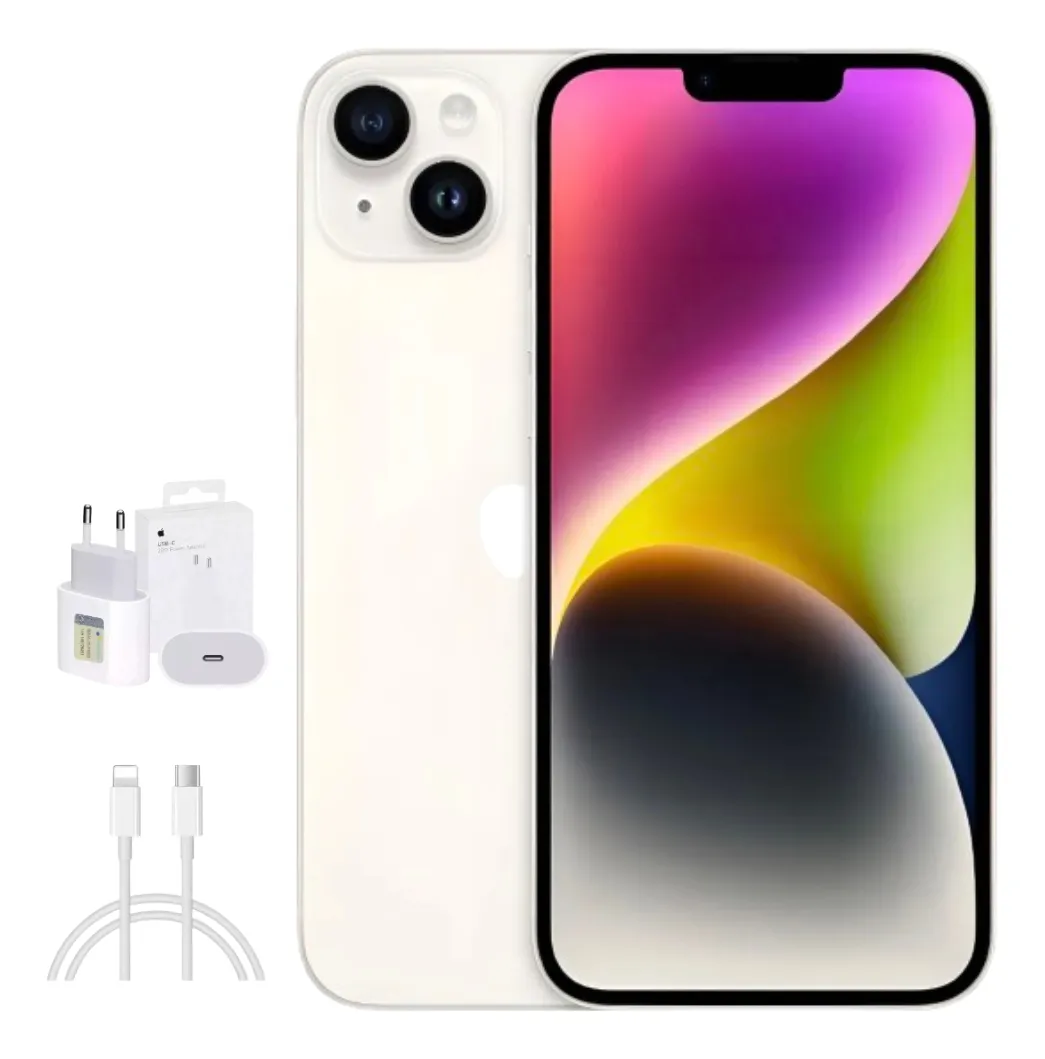
The iPhone 14 is a 6.1-inch smartphone with Apple’s Super Retina XDR OLED display, Face ID, a dual rear camera system, 5G connectivity and the A15 Bionic chip. In the 128GB version, it offers the entry storage configuration for this model, which is enough for many users but not ideal for everyone.
The design is familiar and easy to understand. It has flat aluminum sides, glass on the back, Ceramic Shield on the front and a compact shape that feels manageable in one hand compared with larger phones. It is not tiny, but it is comfortable enough for daily use, especially for people who dislike oversized devices.
The screen is one of its strongest everyday features. It is sharp, colorful and bright enough for normal outdoor use, with HDR support for streaming and photo viewing. The refresh rate is standard rather than high refresh, so users coming from premium Android phones or Pro iPhones may notice that scrolling is not as fluid as on faster displays.
Performance is still very solid for common tasks. Apps open quickly, multitasking feels smooth, and the phone handles social networks, maps, calls, messaging, photography and video without feeling dated. The A15 Bionic chip remains capable for casual gaming and content creation, although buyers focused on future-heavy AI tools or advanced mobile gaming should look at newer models.
The storage and connector choices buyers should check first
The biggest purchase mistake with the iPhone 14 128GB is assuming that the base storage will fit every user. For someone who mostly streams music, uses cloud photos and keeps apps under control, 128GB can be perfectly workable. For someone who records a lot of 4K video, downloads many games or keeps years of photos locally, it can become restrictive.
The camera is good enough to encourage frequent shooting, and that is exactly why storage matters. High-quality photos, long videos and app data accumulate quickly. If you rarely clean your gallery and prefer to keep everything on the device, the 128GB version requires more discipline.
The other point to check is the Lightning connector. The iPhone 14 does not use USB-C. That is not a problem if you already own Lightning cables or MagSafe accessories, but it matters if your newer devices have moved to USB-C. A buyer who wants one universal cable for phone, tablet, laptop and accessories may find the iPhone 14 less convenient.
SIM support also deserves attention. Depending on the model and market, iPhone 14 units may rely on eSIM or include a physical SIM tray. Anyone who depends on a physical chip, travels often or changes carriers frequently should confirm the exact model before choosing this phone.
Where it feels strongest in daily use
The iPhone 14 128GB works best as a reliable everyday phone. It is fast enough for normal routines, easy to use, and consistent across apps. That consistency is one of the reasons this model still makes sense for users who want a phone that simply works without constant tweaking.
The camera system is a major strength. The 12MP main camera uses sensor-shift optical stabilization, which helps reduce blur and improve handheld shots. The ultra-wide camera is useful for landscapes, interiors, group photos and travel moments. It does not offer a dedicated zoom lens, but for casual and social photography, the results remain strong.
Video quality is another reason to consider this model. The iPhone 14 can record 4K Dolby Vision video and includes modes such as Cinematic mode and Action mode. That makes it a good option for people who create short videos, record family moments, film products, capture travel clips or post frequently on social platforms.
Battery life is dependable for a normal day of mixed use. Streaming, messaging, browsing, calls, photos and navigation are all within the kind of routine this phone handles comfortably. Heavy gaming, constant mobile data, maximum brightness and long camera sessions will drain it faster, but that is expected from a compact flagship-style device.
The ecosystem value is also important. If you already use AirPods, Apple Watch, iCloud, Mac or iPad, the iPhone 14 fits naturally into that setup. Features like AirDrop, iMessage, FaceTime, shared photos, password syncing and device continuity can make the overall experience feel smoother than comparing specifications alone suggests.
Trade-offs that matter before choosing it
The iPhone 14 is not the right choice for buyers who want the newest Apple hardware experience. It keeps the notch design, does not have Dynamic Island, does not use USB-C, and does not include a high-refresh display. These details do not ruin the phone, but they do define its place in the lineup.
The lack of a telephoto camera is another important trade-off. The ultra-wide lens is useful, but zoom quality is not the same as on Pro models with a dedicated telephoto lens. If you often photograph concerts, sports, pets from a distance or portraits with optical zoom, a Pro iPhone will be more satisfying.
The 128GB capacity can also be a weak point for power users. It is enough for moderate use, but not generous for people who keep large offline libraries, edit videos, store many messaging attachments or record long clips in high quality. Storage cannot be expanded later, so this decision should be made carefully.
Another point is Apple Intelligence support. The iPhone 14 remains a capable iOS phone, but it is not the model to choose if your priority is Apple’s newest on-device AI features. Buyers who want the most future-facing iPhone software experience should compare it with newer models before deciding.
When offered with accessories, the extras should be seen as a convenience, not the central reason to buy. Cases, chargers, films or other included items can be useful, but the real decision should come from the phone’s condition, model, storage, warranty clarity and suitability for your routine.
Display, camera, battery and performance in real use
The 6.1-inch OLED display is one of the reasons the iPhone 14 still feels premium. Text is crisp, colors look rich, and HDR content has good contrast. It is a strong screen for watching videos, reading, using maps and editing photos casually.
The main camera performs well in daylight and remains dependable indoors. Apple’s image processing tends to produce balanced colors, natural skin tones and consistent exposure. Night mode helps in darker scenes, although newer models can offer stronger low-light detail and better dynamic range.
The ultra-wide camera is useful, but it should be used with realistic expectations. It adds flexibility, especially for travel and interiors, but the main camera is the stronger lens. For the best quality, especially in low light, the main camera should be the default choice.
Video recording is one of the most convincing parts of the iPhone 14. Stabilization, color consistency and audio capture make it easy to create good-looking clips without manual settings. For creators who post reels, stories, product videos or family content, this phone still delivers a very polished result.
The A15 Bionic chip keeps the phone responsive. It is not just about benchmark power; it is about how the phone feels when switching apps, taking photos, editing clips, using navigation and answering messages. For most buyers, the performance difference between this and newer models will not be dramatic in routine use.
Charging is flexible but not cutting-edge. The iPhone 14 supports MagSafe wireless charging and standard Qi wireless charging, while wired charging uses Lightning. Buyers who already have MagSafe accessories will appreciate the convenience. Buyers building a new tech setup around USB-C may prefer a later iPhone.
Buyers who will get the most from this model
The iPhone 14 128GB is a strong match for users upgrading from an older iPhone, especially models with weaker battery life, older cameras or smaller screens. It gives a clear jump in display quality, photography, video stability and overall smoothness without needing to move into the most advanced tier.
It also makes sense for people who want a dependable phone for work and personal use. Calls, email, calendars, banking apps, messaging, maps, document scanning and video meetings are all handled well. The phone feels premium without being too large or complicated.
Content creators with moderate needs can also enjoy it. If your work involves short-form video, product clips, casual photography, social media posts and daily stories, the iPhone 14 is capable enough to produce clean results. It is especially attractive for users who value easy recording over manual camera controls.
Families buying an iPhone for a teenager, student or less technical user may also find it practical. Face ID is simple, iOS is familiar, and Apple’s app ecosystem is mature. The size is comfortable, the camera is strong, and the performance ceiling is higher than what many casual users will ever need.
Cases where another iPhone makes more sense
Another iPhone makes more sense if you want USB-C as a priority. The iPhone 14 still depends on Lightning, which can feel less convenient if most of your accessories, chargers and devices use a newer connector. This is a practical issue, not just a technical one.
Another model is also a better fit if you want the most advanced Apple software features tied to newer chips. The iPhone 14 remains smooth, but it is not the best choice for someone buying specifically for the newest AI-driven tools.
If photography is your main reason to upgrade, consider whether you need optical zoom. The iPhone 14 camera is very good for everyday shots, but it does not replace the flexibility of a Pro camera system. Users who shoot events, portraits from a distance or detailed travel photos may appreciate a higher-tier model.
Heavy storage users should also think carefully. If your current phone is already close to full, 128GB may repeat the same problem. In that case, choosing a larger storage version or a different model with more internal capacity can be a smarter long-term decision.
How it compares with nearby options
Compared with older iPhones, the iPhone 14 feels like a meaningful upgrade because of its OLED display, improved cameras, better video tools, stronger battery behavior and modern design. Users coming from older LCD iPhones will notice the screen difference immediately.
Compared with newer standard iPhones, the iPhone 14 gives up conveniences such as USB-C and newer camera improvements. It still performs well, but newer models may offer a more future-facing package, especially for buyers planning to keep the phone for many years.
Compared with Pro iPhones, the iPhone 14 is simpler. It does not have the Pro display experience, the telephoto camera or the same advanced camera flexibility. The advantage is that it stays easier to understand and remains focused on the needs of everyday users rather than advanced creators.
Compared with many Android phones in the same general class, the iPhone 14 stands out for video quality, long-term app polish, ecosystem integration and resale appeal. Android alternatives may offer faster charging, higher refresh displays or more storage flexibility, but the iPhone experience remains more cohesive for users already inside Apple’s ecosystem.
The practical buying verdict
The iPhone 14 128GB is still a smart choice when the priority is a dependable iPhone with strong cameras, smooth performance, a compact premium feel and reliable daily usability. It does not need to be the newest model to make sense for the right buyer.
Its best audience is the practical user who wants an iPhone that feels modern, takes good photos, records excellent video and handles daily tasks without stress. It is especially appealing for people upgrading from older iPhones and for anyone who values Apple’s ecosystem more than chasing every new hardware feature.
The decision becomes less favorable if you need more storage, USB-C, a telephoto lens, a high-refresh display or the newest AI-focused Apple features. In those cases, a newer or higher-tier iPhone will align better with your expectations.
As a new unit with accessories, the iPhone 14 128GB can be a very attractive package, but only if the phone itself fits your routine. Treat the accessories as a bonus. The real value is in the device’s balance of screen quality, camera reliability, performance and long-term everyday comfort.
Is the iPhone 14 128GB still good for everyday use?
Yes, the iPhone 14 128GB is still very good for everyday use. It handles messaging, calls, social media, navigation, banking apps, photos, video and streaming smoothly. The A15 Bionic chip remains strong for normal routines, and the OLED display helps the phone feel modern even beside newer devices.
Is 128GB enough storage on the iPhone 14?
Yes, 128GB can be enough if you stream content, use cloud storage and avoid keeping too many large videos locally. It may feel tight for users who record a lot of 4K video, install many games or keep years of photos on the device. Storage habits matter more than the number alone.
Does the iPhone 14 have a good camera?
Yes, the iPhone 14 has a strong camera for daily photography and video. The main camera is reliable in daylight, indoors and many low-light situations, while the ultra-wide lens adds flexibility. It is not the best choice for optical zoom, but it remains excellent for social media, travel and family content.
Does the iPhone 14 use USB-C?
No, the iPhone 14 uses a Lightning connector. This is fine if you already have Lightning cables or MagSafe accessories, but it can be less convenient if your other devices use USB-C. Buyers who want one shared charging cable across devices should consider this before choosing it.
Is the iPhone 14 good for videos and social media?
Yes, the iPhone 14 is especially strong for videos and social media. It records high-quality 4K video, offers good stabilization and keeps colors consistent. For reels, stories, product clips and casual creator work, it delivers polished results without needing complicated settings or extra editing knowledge.
What should I check before choosing the iPhone 14 128GB?
Check storage needs, connector preference, SIM compatibility and whether the included accessories are truly useful. The phone itself is the main reason to buy, not the extras. If you depend on a physical SIM, record many videos or want USB-C, those details should be reviewed carefully.
Is the iPhone 14 better than buying an older iPhone?
Yes, in many cases the iPhone 14 is a better choice than older iPhones because it offers a stronger display, better cameras, improved video tools and more modern performance. The upgrade feels especially noticeable when coming from older models with weaker battery life, LCD screens or outdated camera systems.
Should I choose the iPhone 14 or a newer iPhone?
Choose the iPhone 14 if you want a reliable iPhone experience and do not need the newest features. Choose a newer iPhone if you want USB-C, newer camera hardware, broader future-facing software features or a more advanced display experience. The right choice depends on your routine, not only the generation.
The iPhone 14 128GB remains a strong option for buyers who want a smooth, polished and practical iPhone without paying attention only to the latest release. It delivers where most users feel the difference every day: screen quality, camera consistency, video performance, app speed and ecosystem convenience.
It is not the most advanced iPhone available, and that should be clear before choosing it. But for a buyer who wants a dependable Apple phone for daily life, photos, videos, communication and work essentials, the iPhone 14 128GB still offers a balanced and convincing experience.