A practical look at BYD’s compact electric hatchback for city drivers who want low running effort, easy parking, modern equipment and a more accessible first step into electric mobility.
The BYD Dolphin Mini makes the most sense for drivers who spend most of their time in urban and suburban routes, want a compact electric car with strong efficiency, and value safety equipment, simple charging and everyday convenience over long-distance performance. It is not the best match for those who need a large trunk, frequent highway range, high-speed acceleration or a family car with generous rear-seat and cargo space.
The BYD Dolphin Mini review starts with a simple question: does this compact electric car solve real daily mobility needs, or is it only attractive because it is small and electric? For many city drivers, the answer depends less on emotion and more on routine, charging access and expectations about space.
This is a car designed around urban practicality. It focuses on efficiency, easy maneuvering, low maintenance demands and a modern cabin experience, while keeping its strongest argument in day-to-day use rather than in sporty driving or long-trip flexibility.
What the BYD Dolphin Mini actually delivers
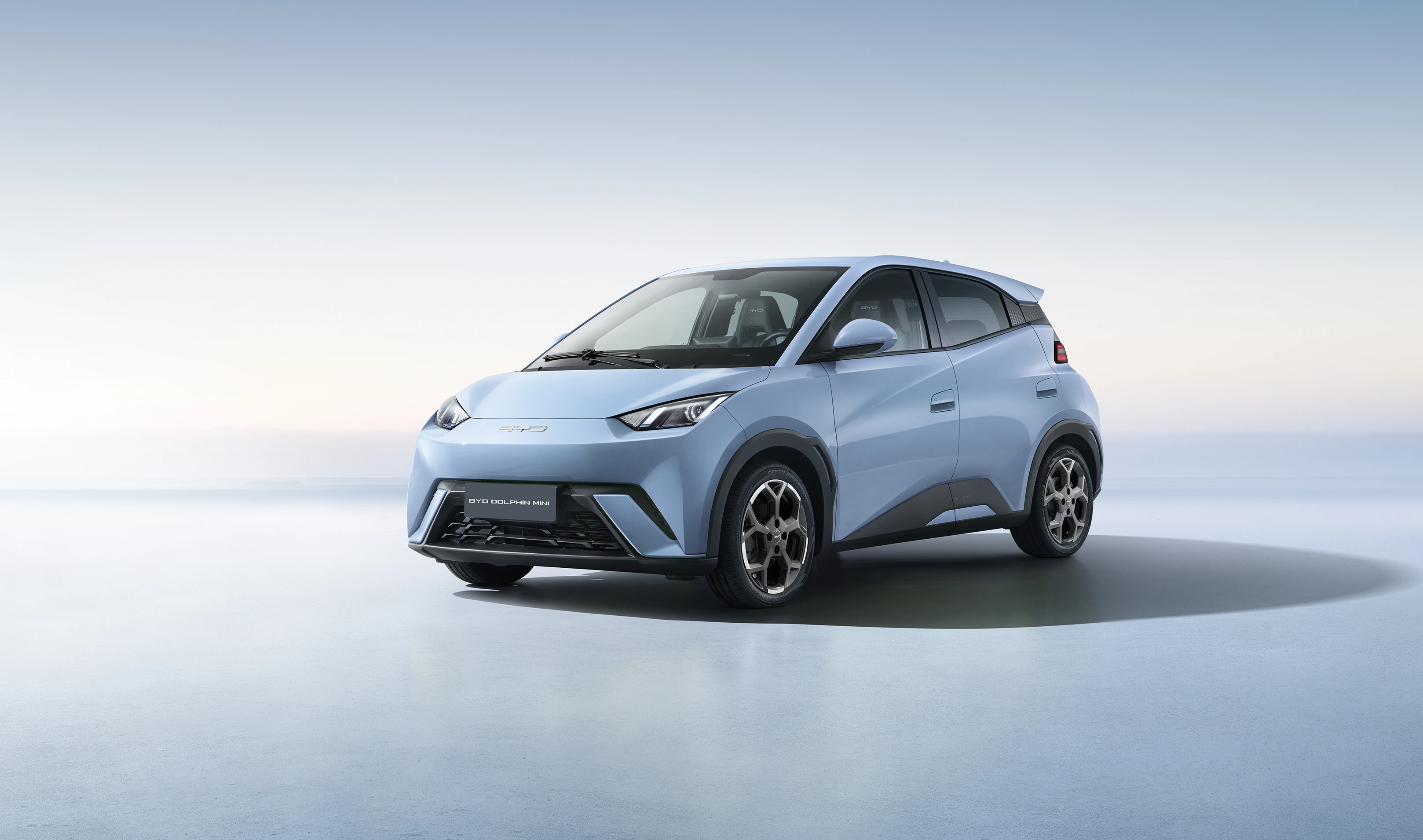
The BYD Dolphin Mini is a compact fully electric hatchback aimed at drivers who want an EV primarily for the city. Its proposal is clear: small external dimensions, electric efficiency, a practical cabin, modern multimedia features and safety equipment that makes it feel more complete than many entry-level urban cars.
It uses BYD’s electric vehicle architecture and the brand’s Blade Battery technology, which is one of the most important elements behind the product’s positioning. The battery chemistry is LFP, a lithium iron phosphate solution known for thermal stability and durability in electric vehicle applications.
In practical terms, the car is built for people who drive predictable routes. Work commutes, school runs, errands, shopping, short intercity stretches and app-based navigation inside urban areas are the kind of use cases where the Dolphin Mini fits naturally.
The official Brazilian product information highlights an urban-focused character, with PBEV range depending on version. The version with the larger battery is positioned around a declared range of 280 km, while the GL technical sheet indicates a lower declared range because it uses a smaller battery pack.
That difference matters because many buyers compare the Dolphin Mini as if all versions delivered the same range and charging capacity. They do not. The version choice affects not only autonomy but also the way the car feels in ownership, especially for drivers who cannot charge at home every night.
The compact body also shapes the experience. With a length under four meters, a short turning radius and a hatchback format, the Dolphin Mini is easy to place in traffic and easier to park than larger electric SUVs. This is one of its strongest arguments for dense cities.
The daily range question buyers should solve first
The main risk when choosing a compact electric car is buying only by declared range and ignoring the real routine. Electric range is influenced by driving style, load, traffic, elevation, climate control use and highway speed, so the right way to evaluate the Dolphin Mini is to compare it with your weekly pattern.
If your routine is mostly city driving, the Dolphin Mini’s proposal is very convincing. Electric cars are naturally efficient in stop-and-go traffic, and regenerative braking helps recover energy during deceleration. This makes urban driving one of the best environments for this type of vehicle.
The decision becomes more sensitive if your routine includes frequent highway use. At higher speeds, energy consumption increases, and a compact EV with a smaller battery can feel less flexible than a larger electric car. That does not make it a poor car, but it changes the ownership profile.
A buyer who can charge at home or at work will experience the car very differently from someone who depends only on public charging. With home charging, the Dolphin Mini can behave like a smartphone: used during the day and replenished during downtime. Without that convenience, planning becomes more important.
The version with the larger battery offers more flexibility for drivers who want extra margin. The GL version, with the smaller battery and lower declared range, makes more sense for tighter urban routines where charging access is reliable and long routes are not frequent.
This is the detail that can prevent frustration. The Dolphin Mini is not trying to be a road-trip electric car first. It is an urban EV with enough capability for many daily routes, and it works best when the buyer accepts that role before choosing it.
Everyday strengths that matter in city driving
The strongest advantage of the BYD Dolphin Mini is how well its size matches real city use. It is compact enough for tight parking spaces, narrow streets and crowded traffic, but it still offers a cabin with the modern features expected from a new electric vehicle.
The 10.1-inch rotating multimedia screen gives the interior a more technological feel. Support for Apple CarPlay and Android Auto is especially important because most drivers rely heavily on smartphone navigation, music and messaging integration during daily use.
The cabin also includes practical details such as USB Type-A and Type-C ports, automatic air conditioning, a multifunction steering wheel and a digital instrument display. Depending on version, convenience features can include wireless smartphone charging and electric driver seat adjustment.
Safety equipment is another key point. The model is promoted with six airbags and disc brakes on all four wheels, which helps position it as a serious urban EV rather than a stripped-down city car. Systems such as traction control, electronic brake distribution, hill-start assist and tire pressure monitoring reinforce that impression.
The compact electric powertrain also supports smooth driving. Electric acceleration is immediate at low speeds, which makes urban starts, lane changes and traffic gaps easier to manage. Even without being a performance car, it should feel responsive where city drivers most need response.
Maintenance is part of the appeal as well. A fully electric vehicle has fewer routine mechanical service items than a combustion car. There is no engine oil, spark plugs or exhaust system, which can make ownership feel simpler when the car is used as intended.
The Dolphin Mini also benefits from the quietness of electric driving. For people who spend many hours in traffic, reduced vibration and lower cabin noise can become a meaningful quality-of-life improvement, especially compared with older compact combustion cars.
Where expectations need to stay realistic
The BYD Dolphin Mini is not designed to satisfy every driver. Its compact size is an advantage in the city, but it also means the buyer should be realistic about rear-seat comfort, luggage capacity and family use with multiple passengers.
The trunk volume is 230 liters, which is useful for groceries, backpacks, small bags and daily errands. It is not ideal for frequent travel with several suitcases or for families that regularly carry strollers, sports equipment or bulky objects.
Performance should also be understood in context. The official technical sheet lists 75 cv and 135 Nm of torque, with front-wheel drive. That is enough for calm urban driving, but it is not aimed at buyers looking for strong acceleration or a sporty driving character.
The official acceleration figure from 0 to 100 km/h is 14.9 seconds, which reinforces the car’s urban personality. The instant response at lower speeds can still feel pleasant in town, but highway overtaking requires more planning than in more powerful electric cars.
Charging capability also depends on version. The GL technical sheet indicates DC charging capacity of 30 kW, while the larger-battery technical sheet indicates 40 kW. Both are compatible with a practical urban EV routine, but they are not ultra-fast charging figures for drivers who frequently depend on rapid highway stops.
Another point of attention is the spare tire solution. The technical sheet indicates a repair kit in case of a puncture. Some drivers accept this easily, while others prefer a conventional spare tire for peace of mind, especially outside major urban areas.
The Dolphin Mini can be a very smart purchase when expectations are aligned. It can disappoint buyers who expect it to behave like a larger, more powerful and more travel-oriented EV. Its value is in efficiency and convenience, not in trying to be everything at once.
Battery, charging and equipment in daily use
The BYD Dolphin Mini uses a Blade Battery with LFP chemistry. In the version with the larger battery, the official capacity is 38 kWh and the declared PBEV range is 280 km. In the GL version, the technical sheet lists 30.08 kWh and a declared PBEV range of 224 km.
Those numbers should be read as decision tools, not as guaranteed daily results in every scenario. City traffic, driving style, air conditioning use and route conditions all affect consumption. A calm driver in urban routes will usually be closer to the car’s natural comfort zone than someone who drives fast on highways.
Charging from 30% to 80% on DC is listed at around 30 minutes. For AC charging, the technical sheet indicates a Type 2 port with 6.6 kW capacity. The car also uses a CCS 2 DC charging port, which is relevant for compatibility with many public charging stations.
Vehicle-to-load functionality is another useful feature because it allows the car to supply power to external devices within its designed limits. This can be practical in leisure situations or occasional utility scenarios, although it should not be treated as a replacement for dedicated backup power systems.
The dimensions reinforce its compact purpose. The technical sheet lists 3,780 mm in length, 1,715 mm in width, 1,580 mm in height and a 2,500 mm wheelbase. The minimum ground clearance is listed at 155 mm, and the turning radius is 4.95 meters.
The suspension setup is conventional for the segment, with McPherson suspension at the front and a torsion beam at the rear. This configuration is common in compact cars and supports a balance between packaging efficiency, predictable behavior and cost-conscious engineering.
Inside, the technology package is one of the elements that helps the Dolphin Mini feel more modern than many basic city cars. The rotating 10.1-inch screen, voice control, over-the-air updates, 4G connection, digital cluster and smartphone integration all support the idea of a connected urban EV.
Drivers who will get the best match
The BYD Dolphin Mini is best suited to drivers who want a first electric car and have a mostly predictable routine. It fits people who commute daily, drive mostly in the city and want to reduce visits to fuel stations and traditional maintenance routines.
It also makes sense for households that already have another car for long trips. In that scenario, the Dolphin Mini can serve as the efficient daily vehicle, while a larger car handles vacations, heavy luggage and routes where charging infrastructure may be less convenient.
Urban professionals are a natural audience. The car is easy to park, quiet in traffic and equipped with enough digital features to feel current. For office commutes, client visits, short errands and dense traffic, its compact format is an asset.
Small families can also consider it when the main use is school runs and short daily mobility. The ISOFIX system helps with child-seat practicality, although families should still check rear-seat space and trunk capacity in person before deciding.
It may also appeal to drivers who care about sustainability but do not want a large electric SUV. The Dolphin Mini offers an electric driving experience in a smaller footprint, which can feel more coherent for city life.
For new EV buyers, the car’s strongest advantage is psychological as much as technical. It makes electric mobility feel approachable, especially for people who want something simple, compact and easy to understand instead of a large technology-heavy vehicle.
Drivers who may need a different electric car
The Dolphin Mini is less suitable for drivers who regularly travel long distances and do not want to plan charging stops. It can handle occasional longer routes with preparation, but that is not its main strength.
It is also not the best choice for buyers who need generous cargo room. The 230-liter trunk is appropriate for daily use, but it may be restrictive for families with heavy luggage needs, frequent weekend trips or bulky equipment.
Drivers who prioritize acceleration should also look elsewhere. The Dolphin Mini is tuned for practical efficiency, not performance. The power and acceleration figures make this clear, even though the car should feel responsive enough at urban speeds.
People without home or workplace charging should evaluate their local charging infrastructure carefully. Public charging can work, but relying on it as the only solution changes the ownership experience and may reduce the convenience that makes an EV attractive.
Another buyer who may need a different vehicle is someone who wants a higher driving position and SUV-like visibility. The Dolphin Mini is a compact hatchback, so drivers coming from larger crossovers should test the seating position and cabin feel before deciding.
The car also may not satisfy those who want a more premium cabin atmosphere. It includes modern technology and practical features, but the core proposal remains that of a compact city EV rather than a luxury electric model.
How it compares with other small electric cars
Against other small electric cars, the BYD Dolphin Mini stands out for its combination of compact size, recognizable EV technology, safety equipment and efficient urban focus. It is not only a small hatchback converted into an electric format; it is part of BYD’s broader electric vehicle ecosystem.
Compared with larger electric hatchbacks, it gives up space, power and long-route flexibility. In exchange, it becomes easier to drive in traffic, easier to park and generally more aligned with short daily journeys.
Compared with compact combustion cars, the Dolphin Mini offers a smoother and quieter driving experience, stronger low-speed response and reduced routine mechanical complexity. The trade-off is that charging habits must replace refueling habits, which requires planning and adaptation.
Compared with hybrid alternatives, the Dolphin Mini is cleaner in daily electric operation and simpler mechanically, but it depends more directly on charging access. A hybrid may be more flexible for drivers who frequently travel without planning, while the Dolphin Mini is more coherent for predictable electric use.
Compared with more powerful EVs, it is clearly more modest in performance. That is not necessarily a weakness if the buyer’s priority is urban efficiency. It becomes a weakness only when the buyer expects highway power, larger space and faster charging behavior typical of higher-positioned models.
The most strategic way to compare it is by lifestyle. If your car spends most of its life in the city, the Dolphin Mini’s small dimensions and efficiency are major advantages. If your car needs to be the only vehicle for every type of trip, a larger EV may be easier to live with.
A clear purchase decision for urban EV buyers
The BYD Dolphin Mini is a strong option for drivers who want an electric car with a clear purpose. It is compact, efficient, modern enough inside and supported by relevant safety and charging features for daily use.
Its best argument is not luxury or performance. Its best argument is practicality. It takes the strongest qualities of an electric car and places them in a format that makes sense for traffic, parking, predictable routes and everyday commuting.
The version choice deserves attention. Buyers who want more flexibility should look carefully at the larger battery version, while those with shorter routines and reliable charging access may find the GL version sufficient. The wrong version can make the car feel either perfectly matched or slightly restrictive.
The car’s compact nature should also be respected. The trunk, acceleration and long-distance flexibility are not its strongest points. Anyone buying it should do so because they want a smart urban EV, not because they expect it to replace a larger family car in every scenario.
For the right driver, the Dolphin Mini is easy to understand: charge it regularly, use it mostly in the city and enjoy the smoothness, silence and efficiency of electric driving. That is where it feels most convincing.
Is the BYD Dolphin Mini good for daily city driving?
Yes, the BYD Dolphin Mini is especially well suited to daily city driving. Its compact size, short turning radius, electric response and efficient powertrain make it practical for traffic, parking and short commutes. It works best when the driver has predictable routes and regular charging access.
What is the range of the BYD Dolphin Mini?
The declared range depends on the version. The larger-battery version is listed with 280 km of PBEV range, while the GL version is listed with 224 km. Real-world range can vary with speed, traffic, air conditioning, route profile, load and driving style.
How long does the BYD Dolphin Mini take to charge?
The DC charging time from 30% to 80% is listed at around 30 minutes. The car also supports AC charging through a Type 2 port with 6.6 kW capacity. Charging experience will depend on the version, charger capacity and battery level at the beginning of the session.
Is the BYD Dolphin Mini suitable for highway trips?
Yes, it can be used on highways, but it is not primarily designed as a long-distance electric car. Its modest power, compact battery options and urban focus mean it is better for city and suburban use. Longer trips require more planning around charging stops and range margin.
Does the BYD Dolphin Mini have enough space for a family?
It can work for a small family with mostly urban routines, especially for school runs and daily errands. However, the 230-liter trunk and compact body may feel restrictive for frequent travel, bulky luggage or larger families. A test drive and a space check are important before deciding.
What safety equipment does the BYD Dolphin Mini offer?
The model is promoted with six airbags and disc brakes on all four wheels. It also includes electronic driver assistance and stability-related systems such as traction control, electronic brake distribution, hill-start assist and tire pressure monitoring, depending on configuration and market specification.
Is the BYD Dolphin Mini a good first electric car?
Yes, it can be a very good first electric car for drivers with urban routines. It offers a simple way to enter electric mobility, with compact dimensions, modern connectivity and manageable charging needs. The experience is best when the owner can charge at home or at work.
What should buyers check before choosing the BYD Dolphin Mini?
Buyers should check their weekly mileage, charging access, trunk needs and version differences. The key decision is whether the smaller or larger battery matches the routine. It is also important to test rear-seat space, driving position and cargo capacity before committing.
The BYD Dolphin Mini is most convincing when judged as a compact electric car for real urban life. It is not trying to be the most powerful, spacious or travel-oriented EV in the market. Its purpose is more focused: make electric driving easier, quieter and more practical for everyday routes.
Choose it if your routine is predictable, your charging access is realistic and your priority is a compact EV that feels modern without becoming complicated. Consider a larger alternative if you need more cargo space, stronger performance or frequent long-distance flexibility.