A practical look at the KD high-speed blender for kitchens that need more capacity, faster blending and a sturdier proposal than a basic household model.
The KD 2-Liter High-Speed Industrial Blender makes sense if you want a larger-capacity blender for juices, smoothies, sauces, creams and everyday liquid preparations. It is a better fit for users who prioritize volume and speed over compact size. It may not be the best choice if you need a quiet appliance, a very small blender for occasional use or a model with highly detailed confirmed technical specifications.
The KD 2-Liter High-Speed Industrial Blender enters a category that attracts two very different buyers: people who want something stronger than a standard home blender, and small food businesses that need more capacity for repeated preparation. That makes the buying decision more important, because the word “industrial” can create expectations that are not always the same from one product to another.
This review focuses on what can be evaluated safely from the product proposal: a high-speed blender with a 2-liter capacity, aimed at practical daily preparation and positioned above basic compact models. The key is understanding whether that proposal fits your actual routine, your available space and the type of recipes you expect to make.
What the KD 2-Liter High-Speed Blender is built to do
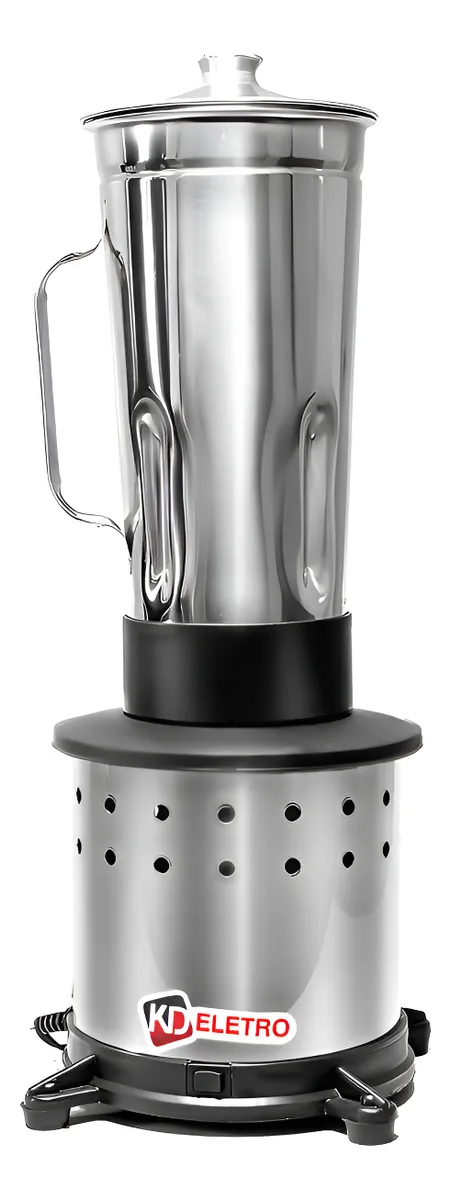
The KD 2-Liter High-Speed Industrial Blender is designed for people who need a blender with more working capacity than smaller household units. Its 2-liter jar is the most important practical feature, because it allows larger batches of liquids, creams and blended preparations without requiring as many repetitions.
This kind of blender is usually considered by users who prepare juices, fruit drinks, milkshakes, simple sauces, soups, batters and similar mixtures. In that context, the larger jar can save time and reduce the stop-start rhythm that happens when a small blender needs to be filled several times.
The product also carries a high-speed positioning. That matters because speed is one of the main factors behind smoother liquid blending, especially when the preparation includes fruit pulp, softer vegetables or ingredients that need to be broken down quickly. For users who value practical results and do not want to spend too much time processing each batch, this is one of the main reasons to consider it.
Its industrial-style proposal should be interpreted with care. It suggests a blender made for more demanding use than a very basic domestic model, but it should not automatically be treated as suitable for every heavy commercial task. The best reading is that it is aimed at higher-volume everyday preparation, especially where capacity and speed matter more than compactness.
The capacity question that can change the whole purchase
The biggest mistake when choosing a blender like this is looking only at the word “industrial” and ignoring capacity, space and real use. A 2-liter blender can be very useful, but it is not automatically the right choice for every kitchen.
If you normally prepare single servings, small sauces or occasional drinks, a larger jar may feel unnecessary. It can take more counter space, be less convenient to wash than a compact model and feel oversized for light use. In that case, the extra capacity may not translate into real advantage.
If you prepare drinks for more than one person, repeat recipes during the day or work with small food-service routines, the 2-liter size becomes much more relevant. It can reduce the number of batches and make the preparation flow faster. That is where this type of blender starts to make sense.
The other point is ingredient style. A high-speed 2-liter blender is usually more convincing for liquid and semi-liquid preparations than for tasks that demand a specialized processor. If your goal is mainly dry grinding, kneading, crushing very hard ingredients or replacing several kitchen machines, it is better to be cautious. A blender can be versatile, but it is not always the best tool for every texture.
Where it can make daily preparation easier
The first practical advantage is batch size. A 2-liter jar gives more room for recipes that would be inconvenient in a small blender. For juices, smoothies and blended creams, that extra volume can make the process faster and less repetitive.
The second advantage is the high-speed character. For users who want a quick blend, this type of model is attractive because it is made for fast ingredient movement inside the jar. When the preparation has enough liquid and the ingredients are suitable for blending, the result can be more efficient than using a low-capacity entry-level appliance.
The third advantage is the more robust positioning. Even without assuming unconfirmed details, the product is clearly not presented as a tiny personal blender. It is aimed at users who expect a stronger presence on the counter and a more practical workflow for larger preparations.
It can also be useful for small business routines that involve repeated blending during the day. Snack bars, small cafés, juice preparation points and home-based food production may benefit from a blender that handles more volume at once. The product makes more sense when the user actually needs that rhythm.
Another practical strength is simplicity. A blender focused on capacity and speed can be easier to understand than appliances full of secondary features. For many users, the priority is not having many functions, but having a machine that blends common preparations quickly and consistently.
What to consider before using it for heavier kitchen work
The KD 2-Liter High-Speed Industrial Blender should not be chosen only because the name sounds powerful. Before buying, it is important to think about what “industrial” means in your own routine. If you expect a machine for intense, continuous, professional-grade use, you should confirm whether the model’s construction and specifications match that expectation.
Noise can also be a concern. High-speed blenders tend to be louder than small low-power models, especially when used with a larger jar and denser preparations. If you need a very quiet appliance for early mornings, shared apartments or noise-sensitive environments, this point deserves attention.
Cleaning is another practical factor. A larger jar is convenient during preparation, but it also requires more sink space and more care when washing. If your kitchen is small, or if you use the blender only occasionally, that daily handling may feel less comfortable than expected.
There is also the question of texture. A blender works best when the mixture has enough liquid to circulate. Very thick, dry or sticky preparations may require pauses, stirring or a different type of appliance. This is not a weakness exclusive to this model; it is a normal limitation of the blender category.
The available product information does not justify assuming advanced features that are not clearly confirmed. That means the decision should be based on the essentials: 2-liter capacity, high-speed proposal, industrial-style positioning and suitability for larger liquid preparations.
What to expect from the 2-liter high-speed setup
The confirmed capacity is the central specification for buying decisions. A 2-liter blender is large enough for family use, repeated drink preparation and small operational routines where a compact blender would slow the process down.
The high-speed proposal indicates a focus on fast blending. In practical use, this is most relevant for fruit-based drinks, smoothies, sauces, liquid mixtures and recipes where ingredient circulation inside the jar is easy. The smoother the circulation, the better the appliance can perform.
The product is presented in a 220-line configuration. Before buying, it is essential to match this with the electrical standard of the place where it will be used. A blender that does not match the local electrical setup can create inconvenience or require additional care that many buyers prefer to avoid.
Because the listing name emphasizes a high-speed industrial blender, the expected user profile is someone who wants more than a basic domestic appliance. Still, it is better to evaluate the product as an industrial-style blender for higher-volume preparation, not as a guaranteed replacement for specialized commercial equipment.
Performance will depend heavily on recipe type. Soft fruits, liquids, creams and sauces are more aligned with the product’s proposal. Very hard, dry or dense ingredients should be approached with more caution, especially if the product information does not clearly confirm specialized blades, reinforced materials or continuous-duty operation.
Kitchens and routines that match this blender best
This blender fits best in kitchens where volume matters. If you often prepare drinks for several people, make larger recipes or repeat the same preparation several times, the 2-liter capacity becomes a real advantage.
It also suits users who want a more serious appliance than a basic home blender. For someone who feels limited by small jars, slower blending or frequent refilling, the KD 2-Liter High-Speed Industrial Blender offers a more practical direction.
Small food-service routines can also be a good match, as long as expectations are realistic. A small café, snack point or home production setup may benefit from the larger capacity for juices, creams and blended mixtures. The important point is to use it within the type of preparation that a blender is naturally suited for.
It can also work well for families that prepare natural juices, smoothies or batch recipes regularly. In that scenario, the jar size helps because the user can prepare more at once and avoid splitting the same recipe into several smaller portions.
The product is most attractive for people who value practicality over compactness. It is not the smallest or most discreet type of blender, but that is part of the trade-off. The reason to choose it is volume, speed and a more robust kitchen presence.
When a different appliance will be the smarter choice
This model is not ideal for people who only make occasional single-serve drinks. If the blender will be used rarely and in small portions, a compact household model may be easier to store, wash and handle.
It may also frustrate users who expect one appliance to replace a food processor, mixer, grinder and heavy-duty commercial machine. A blender can be versatile, but it is still primarily designed for blending ingredients, especially with liquids.
If your kitchen has limited counter or storage space, the 2-liter format should be considered carefully. Larger capacity is useful only when the extra volume is actually needed. Otherwise, the appliance can feel bigger than necessary for the routine.
Users who need very precise technical features should also be cautious if those details are not clearly available before purchase. When motor power, jar material, blade composition, operating cycle or warranty terms are decisive, it is better to confirm those details directly before deciding.
Another case where a different product may make more sense is heavy commercial use throughout the day. If the machine will be used continuously in a demanding business environment, the buyer should compare it with models specifically documented for that level of operation.
How it compares with household and larger commercial blenders
Compared with a basic household blender, the KD 2-Liter High-Speed Industrial Blender has a stronger capacity argument. The 2-liter jar makes it more suitable for larger batches, while the high-speed proposal gives it a more performance-oriented character.
A standard home blender may still be better for users who prioritize compact size, lower noise expectations and occasional use. It is often easier to store and may be enough for simple recipes. The KD model becomes more relevant when the user repeatedly feels that a smaller blender is slowing the kitchen routine.
Compared with larger commercial blenders, the KD model should be evaluated with more caution. Bigger professional machines may offer more documented construction, specialized motors, heavier jars or features designed for intense daily service. Without confirmed details, it is safer to compare by proposal rather than assume the same level of endurance.
Against personal blenders, the KD 2-liter model serves a completely different purpose. Personal blenders are convenient for one person, quick shakes and direct-to-cup use. This KD model is more appropriate when the goal is to prepare a larger amount at once.
Against food processors, the comparison depends on texture. A blender is better for liquid movement, while a processor is usually better for chopping, thicker mixtures and less liquid-based preparation. If your routine involves both, the blender may not fully replace the processor.
The strongest competitive position of this model is clear: it sits between small domestic convenience and heavier commercial expectations. It is most convincing for people who need more capacity and speed, but who still want a relatively straightforward blender for common preparations.
The buying decision that makes the most sense
The KD 2-Liter High-Speed Industrial Blender is a sensible choice when the buyer understands exactly why the 2-liter capacity matters. If your routine involves larger portions, repeated drinks, sauces, creams or family-size recipes, the product has a clear reason to exist in your kitchen.
It is less convincing if the word “industrial” is the only reason you are considering it. A good purchase here depends on matching the appliance to realistic use, not expecting it to perform every kitchen task. The safest expectation is a larger high-speed blender for liquid and semi-liquid preparations.
The main attraction is the combination of capacity and practical speed. The main point of attention is the need to verify any technical detail that matters to your specific routine before relying on it for heavier work.
If you want a blender that feels more capable than a small domestic model and your recipes justify the larger jar, this product can be a good fit. If you need compactness, quiet operation, advanced confirmed specifications or continuous heavy commercial performance, another type of appliance may be more appropriate.
Is the KD 2-Liter High-Speed Industrial Blender good for home use?
Yes, it can be good for home use if your household prepares larger quantities of drinks, creams or sauces. The 2-liter capacity is useful for families and frequent use. For occasional single servings, however, it may feel larger than necessary and less convenient than a compact blender.
Can this blender be used in a small business?
Yes, it can make sense for a small business that prepares juices, smoothies or liquid recipes in moderate routines. The larger jar helps reduce repeated batches. For intense continuous use, the buyer should confirm detailed construction and operating specifications before treating it as a heavy commercial machine.
What kind of recipes fit this blender best?
Liquid and semi-liquid recipes fit it best, especially juices, smoothies, shakes, creams, sauces and similar preparations. These recipes allow the ingredients to circulate properly inside the jar. Very dry, thick or hard mixtures may require more caution or a different appliance designed for that specific task.
Is a 2-liter blender too large for everyday cooking?
No, it is not too large if you regularly prepare bigger portions or cook for more than one person. The size becomes helpful when it reduces repeated blending. It can feel excessive only when the user normally makes small recipes, has little storage space or prefers a lighter appliance.
Does the high-speed proposal guarantee smoother results?
No, high speed helps, but smoothness also depends on ingredients, liquid amount and recipe density. Soft fruits and liquid preparations usually work better than dry or heavy mixtures. A high-speed blender can improve efficiency, but it should still be used within the natural limits of the category.
What should be checked before buying this model?
The most important points are electrical compatibility, jar capacity, confirmed technical specifications and the type of use expected. If the blender will be used for heavier routines, details such as motor information, materials and operating guidance become more important. The safer purchase is the one matched to real use.
Is this better than a standard household blender?
Yes, it can be better if you need more capacity and a more performance-oriented proposal. A standard household blender may still be better for small kitchens, light use and simple occasional recipes. The KD model becomes more attractive when the smaller appliance no longer keeps up with your routine.
Who should avoid this type of blender?
People who need a very compact, very quiet or highly specialized appliance should consider other options. It is also not ideal for users expecting one blender to replace several kitchen machines. This model is more logical for larger liquid preparations than for every possible food-prep task.
The KD 2-Liter High-Speed Industrial Blender is most compelling for buyers who need more capacity than a basic domestic blender and want a practical machine for larger liquid preparations. Its strongest argument is simple: more volume in each batch, with a high-speed proposal aimed at faster preparation.
The safest decision is to see it as a larger, industrial-style blender for juices, smoothies, sauces and everyday high-volume blending. When used for that purpose, it can be a useful upgrade. When expected to replace specialized commercial or processing equipment, the purchase becomes less certain.
Choose it if capacity and speed are the priorities in your routine. Look for another option if compact size, detailed technical guarantees or heavy continuous operation are the deciding factors.